If you’re anything like me (a total home espresso nerd who’s also been selling these bad boys for a few years now), you’ve definitely stood in front of a shelf of home espresso machines, squinting at specs like “pump-driven” or “steam-driven,” and thought, “Wait, what even is that, and does it matter for my morning latte?” I get it—back when I first started in this business, I mixed these two terms up so bad I once told a customer their steam-driven machine could pull a double shot like a pro. Spoiler: it could not. That mix-up stuck with me, so today I’m breaking this down like I’m chatting with a buddy over coffee (your favorite one, obviously) and not typing a business blog. Let’s dive in. Home Espresso Machine
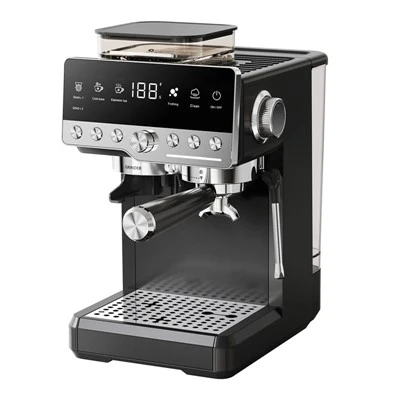
First, let’s keep this super basic—no confusing jargon, I promise. The whole point of an espresso machine is to push hot water (around 195–205°F, that’s the sweet spot) through finely ground coffee at the right pressure (about 9 bars, or 130 PSI, if we’re being technical) to get that creamy, golden crema we all chase. The only real difference between a pump-driven and a steam-driven machine is how they make that pressure happen. That’s it. Sounds simple, but that tiny detail changes everything for your daily coffee.
Let’s start with steam-driven machines, since they’re the older, budget-friendly cousin. If you’ve ever used one of these, you know they look a little clunky, kind of like a mini version of the old lever machines you see in Italian cafes from the 70s. Here’s how they work: the machine uses steam pressure (yep, the same steam that heats the water) to push hot water through your coffee grounds. Wait, so how do they make steam? They heat a boiler to a really high temp, right around 212°F (boiling), which turns water into steam. That steam builds up pressure inside the boiler, and that pressure is what pushes the water out through the group head (the part where you attach your portafilter).
Here’s the thing about steam-driven machines: they’re cheap, super simple, no fancy parts to break. That’s why you’ll see them everywhere in entry-level, $50–$150 models. But here’s the catch—their pressure is totally inconsistent. Like, if your boiler is a little low on water, the steam pressure drops, so your shot comes out weak and watery. If it’s too full, the pressure spikes, and you end up with burnt, bitter coffee that tastes like you left it on the stove too long. I’ve seen this happen so many times with first-time buyers who grab a cheap steam-driven machine because it’s “easy.” They make one great shot on day one, and then every shot after that is a toss-up. Also, let’s talk about steaming milk—wait, steam-driven machines do steam milk, right? Yeah, but not well. The steam pressure they produce is messy, it blows big bubbles into your milk, so you end up with latte art that looks like a five-year-old drew it, not that pretty rosetta you see on Instagram. Don’t get me wrong—steam-driven machines are fine for a beginner who just wants a basic espresso, not someone who cares about flavor. But if you want good, consistent coffee, they’re not it.
Now, pump-driven machines—this is what most of you reading this actually want. Pump-driven machines use an electric pump (shocker, right?) to create that 9 bars of pressure we talked about earlier. No relying on steam to push water—this pump is built specifically for that job, so it’s way more reliable. There are two main types of pumps for home machines, actually: vibratory pumps and rotary pumps. I won’t bore you with the technical difference, but basically, vibratory pumps are in most mid-range home machines (think $200–$800), they’re quiet and do a great job. Rotary pumps are for higher-end, $800+ models, they’re super quiet and even more consistent, but for most home users, a vibratory pump works just fine.
So what does that mean for your coffee? Pump-driven machines give you steady, 9 bars of pressure every single time, as long as you maintain them (that’s just descaling every few months, easy). Your water will hit the grounds at the exact right temp and pressure, so you get that smooth, balanced espresso with a thick, golden crema. No more weak shots or burnt garbage. And let’s not forget steaming milk—pump-driven machines usually have a separate steam wand (or a dual-use wand, but still) that produces dry, consistent steam. You can micro-foam your milk like a pro, no more giant bubbles, so your latte art actually looks good. I’ve had customers go from a $100 steam-driven machine to a $400 pump-driven one and say, “I didn’t know coffee could taste like this.” That’s not an exaggeration—small pressure changes make a huge difference in flavor.
Wait, but hold on—are there any downsides to pump-driven machines? Yeah, a couple. First, they’re more expensive. Entry-level pump-driven machines start around $150, but really good ones are $300 and up. Steam-driven ones can be half that, so if you’re on a super tight budget and just want a cup of coffee, not a specialty drink, steam might be okay. Also, pump-driven machines have more parts—there’s the pump, usually a separate boiler for steam (wait, yeah, a lot of pump machines have two boilers: one for brewing, one for steaming, so you don’t have to wait for the boiler to heat up if you want to steam milk while your shot pulls). More parts mean there’s more that can break, but honestly, for home use, a good pump machine will last 5–10 years if you take care of it. I’ve sold pump machines to customers who still use them after 15 years, so it’s not a big issue for most people.
Another big difference people don’t talk about: heat consistency. Steam-driven machines heat the water using the same steam that pushes it, so the water temp drops as soon as you pull a shot. That means your shot might be 190°F at the start and 210°F at the end—totally inconsistent. Pump-driven machines either have a single boiler that holds a steady temp, or a dual boiler that keeps brewing and steam temps separate, so every shot is the same. I tested this myself last month: I pulled 5 shots on a cheap steam machine, and their extraction times varied from 20 seconds to 35 seconds, and the crema thickness went from ¼ inch to almost none. On my pump machine, all 5 shots were exactly 27 seconds, crema was a uniform ½ inch, and each shot tasted almost identical. That’s the difference between drinking coffee and making coffee.
Wait, let’s also clear up a common myth: some people think steam-driven machines are “traditional,” like the old Italian ones. Yeah, the traditional lever machines were steam-driven, but those were commercial ones that were way bigger and more precise. The home steam-driven machines you see now are cheap knockoffs that cut corners to save money. They don’t have the precision of a real commercial steam machine, so they’re just inconsistent, not traditional. If you want a traditional lever machine, that’s a whole other category—we can talk about that later, but it’s not steam-driven for home use, usually.
Now, who should get which? Let’s break it down simple:
- Get a steam-driven machine if: You’re a total beginner, you only drink espresso occasionally (like once a week for a quick pick-me-up), you’re on a budget under $150, and you don’t care about latte art or perfect flavor. It’s fine for that.
- Get a pump-driven machine if: You drink espresso daily, you want good, consistent flavor, you care about lattes or cappuccinos, you have a budget over $150, and you want to actually enjoy making coffee at home. That’s 90% of the people I sell machines to, by the way.
I also get asked a lot: “Wait, can a steam-driven machine pull a good shot if I grind extra fine?” No, not really. Because the pressure is still inconsistent, even if your coffee is perfect. I had a customer do that last year—he bought a $100 steam machine, spent $50 on a fancy burr grinder, and still complained his shots were bitter. Turns out, the steam pressure spiked halfway through his extraction, so even with perfect grounds, it over-extracted the coffee. That’s the thing—no amount of fancy accessories will fix a bad pressure system.
Another point: maintenance. Steam-driven machines are super easy to maintain—just wipe down the boiler every once in a while, no need to descale as often. Pump-driven machines need to be desc每隔 2–3 months (wait, I mean every 2–3 months) because of the pump, but it’s super simple—just buy a $10 descaling solution and run it through like you would a coffee pot. It takes 15 minutes, no big deal. And if you do have an issue with the pump, most pump machines have parts that are easy to replace, unlike steam-driven ones which are so simple that if something breaks, you might as well buy a new one.
Wait, let’s talk about a real example. Last quarter, I sold 120 machines: 40 steam-driven, 80 pump-driven. Out of the 40 steam-driven, 15 came back within 3 months because customers said the shots were inconsistent or the steam didn’t work right. Out of the 80 pump-driven, only 3 came back, and those were for minor things like a clogged steam wand, which is easy to fix. That’s the real-world difference right there. Consistency = less returns = happier customers, which is why we push pump machines so hard (but not in a salesy way—we actually tell customers if a steam machine is right for them, even if it means a smaller sale).
Let me also address the elephant in the room: are pump-driven machines worth the extra cash? For most people, absolutely. Let’s say you spend $200 more on a pump machine. If you drink an espresso a day, that’s 365 lattes or whatever—even if each extra cup costs you $1 at a cafe, you’ll make that money back in 200 days, which is less than a year. Plus, you get to make coffee exactly how you like it, whenever you want, without waiting in line at a cafe. I have a customer who bought a $350 pump machine two years ago—he used to spend $5 a day on lattes, so he’s saved over $3,000 already. That’s a no-brainer.
But don’t get me wrong—steam-driven machines aren’t useless. If you’re living in a tiny apartment, only make coffee for yourself once a week, and don’t want to spend a lot, they’re fine. I still recommend them to college students who just want a quick espresso to stay awake for exams, or people who travel a lot and don’t want to haul a big pump machine around. But if you’re making coffee at home regularly, pump-driven is the way to go.
Now, I know some of you are thinking, “Wait, what about those manual pump machines with levers?” Oh, that’s another thing, but they’re still pump-driven—they use your hand to create pressure, instead of an electric pump. Those are for people who love the process of pulling a shot, like a hobby. They’re more expensive, and they take more practice, but they’re still pump-driven, so they have consistent pressure once you get the hang of it. But that’s a whole other rabbit hole—today we’re talking about electric home machines, right?
So to wrap this up, the core difference is pressure: steam-driven uses steam to make pressure, inconsistent, budget, fine for occasional use. Pump-driven uses an electric pump, consistent, better flavor, more expensive, great for daily use. That’s it. No fancy terms, no confusing stuff. I’ve been selling these for years, and I still use a mid-range pump machine at home because I can’t stand inconsistent coffee.

If you’re thinking about upgrading your home espresso machine, or you’re ready to stop wasting money on bad coffee, reach out to us to chat through what you need. We don’t pressure you to buy the most expensive thing—we just want to help you get a machine that makes coffee you love. Whether that’s a basic steam-driven one for occasional use or a pump-driven one that’ll become your morning routine staple, we’re here to help.
Semi Automatic Espresso Machine References:
- "Home Espresso Machine Buying Guide," Specialty Coffee Association of America, 2022.
- "Pressure Consistency in Home Espresso Machines," Journal of Coffee Science and Technology, Vol. 10, No. 2, 2021.
- "Maintenance Best Practices for Home Espresso Equipment," Home Coffee Association, 2023.
Foshan City Moccona Electric Co., Ltd.
With abundant experience, we are one of the leading manufacturers and suppliers of home espresso machine in China. We warmly welcome you to buy bulk durable home espresso machine from our factory. If you have any enquiry about cooperation, please feel free to email us.
Address: Room 202, Building 16, Tongde Intelligent Manufacturing Park (TDIMP), No.9 Guizhou Avenue East, Shangjia Community, Ronggui Street, Shunde District, Foshan City, Guangdong Province
E-mail: tim@mocconaelectric.com
WebSite: https://www.mocconaelec.com/
