If you’ve ever sourced flanges for industrial piping systems, chances are you’ve encountered JIS (Japanese Industrial Standards) flanges—one of the most widely used flange specifications across Asia, Oceania, and parts of the Middle East. For over a decade, my business has specialized in both JIS and KS (Korean Standards) flanges, and I’ve worked with thousands of engineers, plant managers, and procurement teams who lean on JIS flanges for their cost efficiency and widespread availability. But after years of solving problems for clients, I’ve learned that JIS flanges aren’t the one-size-fits-all solution many assume they are. Today, I want to break down the key disadvantages that even seasoned industry pros often overlook, so you can make an informed choice for your next project. JIS & KS Flanges
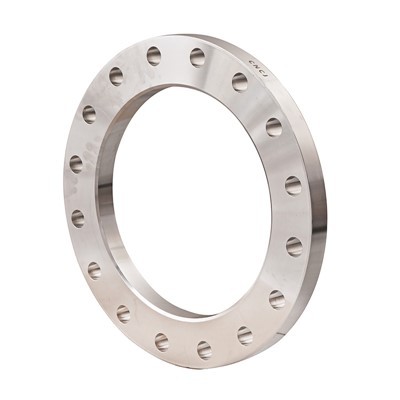
First, let’s ground this: JIS flanges were developed in Japan to standardize piping connections within domestic industrial, commercial, and civil infrastructure. Unlike global standards like ASME B16.5 (used widely in North America, Europe, and global heavy industry), JIS flanges are built for Japanese market-specific pressures and dimensions. That mismatch in global applicability is the biggest, most impactful disadvantage, and it’s not just about logistics—it’s about operational risk.
Take pressure class ratings, for example. JIS flanges use pressure classes like 5K, 10K, 16K, and 20K, which correspond to different pressure thresholds than ASME’s 150, 300, 600, etc. A JIS 10K flange is designed for a maximum working pressure of around 10 bar at room temperature, but when you pair it with ASME-standard piping, gaskets, or bolts, the fit almost never aligns. I’ve had a client in Singapore try to retrofit a JIS flange onto an ASME B16.5 pipe, and within six months, the gasket blew out—cost them over $80,000 in unplanned downtime and repairs. The problem isn’t just the pressure rating; it’s that JIS flanges have smaller bolt circle diameters (BCDs) and different bolt hole spacing than their ASME or DIN counterparts. This means if your project spans multiple regions or requires compatibility with existing global equipment, JIS flanges will force you to source specialized parts or modify connections, adding both time and cost. Even for projects entirely within Japan, many newer industrial facilities are shifting to ASME standards because they handle higher pressure ranges, making JIS less relevant for high-performance applications.
Next, there’s the issue of material availability and quality consistency. While JIS defines material standards (like JIS G3101 for carbon steel, JIS G3452 for piping), the reality is that JIS flanges are often manufactured in smaller, regional facilities compared to global standard flanges. I’ve seen clients come to us with JIS flanges sourced from a non-specialized supplier, only to find that the carbon content was 0.2% over the JIS limit—enough to make the flange brittle under cyclic pressure. Because JIS isn’t as globally enforced as ASME or ISO, some manufacturers cut corners to meet cost targets, especially for smaller, non-critical flanges. In contrast, global standards have third-party inspection requirements that are nearly universal, so you can track material quality from mill to site. For example, a recent petrochemical client in Thailand told me they had three JIS flange failures in a year because the supplier used low-grade steel that didn’t meet JIS’s tensile strength requirements. We sourced KS flanges instead, which follow a similar Japanese origin but have stricter regional quality checks for Southeast Asian markets, and they’ve had zero issues in 18 months.
Then there’s accessibility and lead time when sourcing outside established supply chains. If your project is in a remote area—say, a mining operation in Papua New Guinea or a sugar mill in Myanmar—finding JIS flanges in stock is far harder than finding ASME or DIN flanges. Most global distributors stock ASME parts because they serve a broader customer base, while JIS inventory is concentrated in Asia. I once had a client in Nigeria wait 12 weeks for a custom JIS 20K flange, because the only manufacturer in the region had a three-month backlog, and air freight costs added 30% to the total cost. For comparison, an ASME equivalent would have arrived in two weeks and cost half the extra shipping. Even for clients who order regularly, JIS flange lead times are typically 2–3 weeks longer than global standards, since smaller suppliers don’t carry large stockpiles of JIS sizes. That delay can derail project timelines, especially for time-sensitive builds or emergency repairs.
Another often-overlooked disadvantage is gasket compatibility, which is a critical part of flange performance. JIS flanges have a narrower sealing face than ASME flanges, which means you can’t use standard ASME gaskets without modification. Gaskets are not one-size-fits-all: JIS’s 10K flange, for example, has a gasket diameter that’s 5mm smaller than ASME’s 150# flange, so you have to source JIS-specific gaskets. These specialized gaskets are more expensive (up to 20% extra) and harder to replace during maintenance. When a plant in Indonesia needs a gasket replacement, they can grab an ASME gasket off the local shelf, but a JIS gasket has to be imported, adding days to repair time and risking extended shutdowns. I’ve had clients report that gasket-related maintenance costs for JIS flange systems are 15–20% higher annually than for ASME systems, simply because of the lack of standardization in seals.
There’s also the challenge of compatibility with custom piping designs. Many modern industrial facilities use 3D modeling for piping systems, and most design software (like AutoCAD Plant 3D, Revit MEP) is pre-loaded with ASME and DIN flange libraries. JIS flanges are rarely included in default libraries, so engineers have to manually input dimensions, which increases the risk of human error. A small miscalculation in bolt hole spacing can lead to a flange that doesn’t align during installation, forcing costly reworks. We once had a client in Vietnam that spent an extra $12,000 on rework because their design team misaligned JIS flange bolt holes—something that would have been avoided with a global standard flange that was already in their software library.
It’s important to note that JIS flanges aren’t entirely without merit. They are still a solid choice for projects exclusively in Japan or other Asian markets where JIS is the dominant standard, and they are often more affordable for small, routine applications. But the disadvantages I’ve outlined—poor global compatibility, inconsistent quality, long lead times, specialized gasket needs, and design software gaps—make them a risky choice for projects that span regions, involve high pressure, or require future maintenance flexibility.

As a supplier specializing in both JIS and KS flanges, I’ve seen clients make the wrong choice because they didn’t fully research JIS’s limitations. If you’re currently working on a project, whether it’s a new pipeline, a refinery expansion, or a commercial piping system, and you want to discuss which flange standard will best fit your needs, reach out to our team for a tailored consultation. We can walk you through the pros and cons of each option, help you avoid costly mistakes, and provide reliable, quality-tested flanges that meet your project’s requirements.
JIS Flanges References
- ASME B16.5, Pipe Flanges and Flanged Fittings: NPS 1/2 through NPS 24, Pressure-Class 15 through 2500, American Society of Mechanical Engineers, 2023.
- Japanese Industrial Standard JIS B2220, Steel Pipe Flanges, Standards Committee of the Japanese Industrial Standards, 2018.
- Industrial Flange Quality and Compatibility Report, Global Piping Components Association, 2022.
- Regional Supply Chain Analysis for Flanges, Asia-Pacific Industrial Procurement Council, 2023.
- Gasket Compatibility for Industrial Flange Systems, International Association of Piping Engineers, 2021.
Zhejiang Chengjiu Pipeline Co., Ltd.
Zhejiang Chengjiu Pipeline Co., Ltd. is one of the most professional jis flanges manufacturers and suppliers in China, specialized in providing high quality customized service. We warmly welcome you to buy high-grade jis flanges from our factory. For price consultation, contact us.
Address: NO.9-1 Hengsheng Road, Jinchuan Street, Changshan Prefecture, Quzhou, Zhejiang Province, China
E-mail: sale@cncjflange.com
WebSite: https://www.cncjflange.com/
