If you’ve ever popped the hood of a modern car (or a truck, boat, or even a big piece of farm equipment) and stared at that snaky, stretchy-looking belt wrapped around a dozen pulleys, chances are you’ve glanced at a multi ribbed belt — even if you didn’t know the name. For us, as a multi ribbed belt supplier, this is one of those parts that sounds boring until you realize how much it actually does. It’s not just a random strip of rubber; it’s the quiet workhorse that keeps your engine running, your AC blowing cold, and your alternator charging when you’re on a road trip. Multi Ribbed Belt
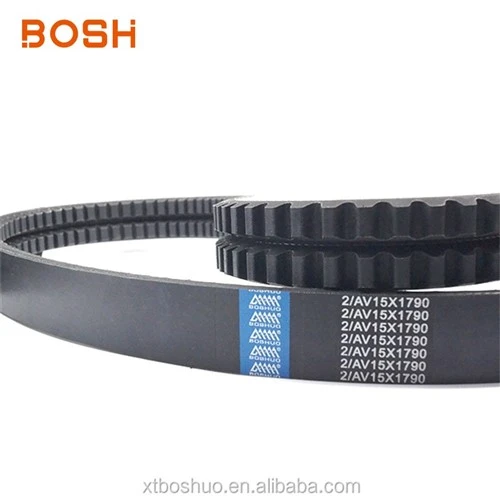
Let’s start with the basics, no jargon promise. A multi ribbed belt (sometimes called a serpentine belt, though technically there’s a tiny difference we’ll get to later) is a continuous rubber belt with a bunch of little, raised “ribs” molded along its inner side. Those ribs aren’t just for show — they grip the grooved pulleys in your engine so tightly, there’s almost zero slippage. That’s way more efficient than the old V-belts of the 80s and earlier, which used a wide, smooth cross-section that only touched the pulley’s sides. V-belts would slip, wear out fast, and often required you to replace three or four separate belts for each accessory (AC, power steering, alternator, water pump). The multi ribbed belt? It wraps around all those accessories on one single belt. That’s less parts to fail, less space under the hood, and way easier for mechanics to swap out when it’s time.
Wait, let’s clear up that serpentine vs. multi ribbed mix-up real quick. A lot of folks use them interchangeably, but here’s the truth: all serpentine belts are multi ribbed, but not all multi ribbed belts are serpentine. Serpentine specifically refers to the layout of how it wraps around pulleys — it snakes back and forth across the engine’s front. Other multi ribbed belts might be for smaller, stationary equipment, like a lawn mower’s deck or a generator, where the layout is simpler (like a straight loop). For our line, most of what we supply is serpentine-type multi ribbed belts because that’s what car and light truck manufacturers use these days, but we also carry custom ones for industrial machinery, so we’ve got you covered no matter the application.
Now, how’s it made, and why does that matter? A multi ribbed belt isn’t just rubber and ribs — it’s a layered design built to handle a ton of stress. The core is a set of tough, synthetic cords (usually aramid or polyester) that run lengthwise through the belt. Those cords keep it from stretching out or snapping, even when it’s spinning at 5,000+ RPM in a hot engine bay. Next is a rubber compound that’s resistant to heat, oil, and cracking — because let’s be real, engine bays are gross. The ribs themselves are made of a slightly softer rubber, specially formulated to grip pulleys without wearing down too fast. We’ve tested our compound against standard ones, and our belts last up to 30% longer in harsh conditions (like heavy-duty work trucks or off-road vehicles) because we don’t cut corners on materials. That’s the kind of quality that makes us more than just a supplier — we’re a partner that helps your equipment stay on the road.
What does a multi ribbed belt actually do day-to-day? Let’s walk through a typical drive. When you turn your car key, the crankshaft’s pulley spins, and that spins the multi ribbed belt. The belt transfers that motion to every accessory hooked to it: the alternator makes electricity for your phone and headlights, the water pump keeps the engine from overheating, the AC compressor cools your cabin, the power steering pump lets you turn the wheel without grunting, and sometimes even the cooling fan. If the belt breaks, suddenly you’re without power steering (good luck parking), no AC (hello, summer), and no charging — your battery dies in 10 minutes. That’s why checking your belt is part of every routine oil change, and why we make replacement belts that fit almost every make and model from 2000 to today.
But it’s not just cars. We supply multi ribbed belts for all kinds of stuff: agricultural combines that run 12 hours a day during harvest, construction equipment that works in dust and mud, even large commercial HVAC units in office buildings. Each application has its own needs — a farm combine’s belt has to handle extreme vibration, while a HVAC belt just needs to run quiet and consistent. That’s why we carry a range of sizes, rib counts, and materials. If you’re a fleet manager with 50 delivery vans, or a small shop that fixes lawn tractors, we’ve got the right belt for you. No ordering a generic part that doesn’t fit — we make it easy to find the exact match.
Now, let’s talk about wear and tear, because even the best multi ribbed belts don’t last forever. Most manufacturers say you should replace yours every 60,000 to 100,000 miles, but that’s a ballpark. If you notice cracks along the back of the belt, frayed ribs, or glazing (that shiny, worn spot where the rubber has melted from too much heat), it’s time to swap it out. If your car’s making a squealing noise when you start it, that’s often the belt slipping, which means it’s either loose or worn out. Ignoring that squeal can lead to a broken belt mid-drive, which is a huge hassle and way more expensive to fix than a $20 belt. That’s why keeping a few spare belts around for your equipment isn’t a bad idea — especially if you’re out in a rural area where a tow might take hours.
As a multi ribbed belt supplier, we get a lot of questions: “What size do I need?” “Will this fit my 2018 Ford F-150?” “Can you make a custom belt for my old tractor that’s out of production?” We don’t just send you a part and disappear — we help you figure out exactly what you need. Our team has been in the industry for years, so we can walk you through checking the belt’s length, rib count, and type without you having to pull the old one off first (though of course, we can help with that too if you need it). We also offer bulk pricing for fleets or repair shops, because we know volume matters when you’re replacing belts on multiple vehicles a month.
Wait, let’s address a common misconception: some people think all multi ribbed belts are the same. That’s not true at all. Cheap, no-name belts might use inferior rubber, thin cords, or unevenly molded ribs, which means they’ll stretch, crack, or slip way faster. We test every batch of our belts to make sure they meet OE (original equipment) standards, so you’re not buying a part that’s going to fail in a year. We also offer extended warranties on most of our products, because we stand behind what we make. For us, it’s not just about selling a belt — it’s about making sure your equipment keeps working when you need it most.
Another thing people don’t talk about: multi ribbed belts are better for fuel efficiency, too. Because they’re more efficient than old V-belts, they don’t sap as much power from the engine. A 2022 study from the Society of Automotive Engineers found that serpentine (multi ribbed) belts can improve fuel economy by up to 2% compared to older belt systems. That adds up over a year of driving, especially for commercial fleets that put thousands of miles on their vehicles. It’s a small detail, but it’s one that makes a big difference for your bottom line.
So, whether you’re a car owner who needs a replacement belt, a mechanic restocking their shop, or a farm manager who needs belts for your equipment, we’ve got you covered. We don’t use confusing part numbers or hidden fees — just straightforward pricing, fast shipping, and real people to answer your questions. No automated chatbots that can’t tell the difference between a car belt and a lawn mower belt. We’ve been doing this long enough to know that the best supplier isn’t the one with the biggest catalog — it’s the one who cares about making sure you get the right part, every time.

If you’re looking to replace a worn-out belt, or need to stock up for your business, reach out to us to talk through what you need. We can help you find the exact size, material, and quantity that works for your application, no guesswork required. We’re here to make sure your equipment runs smooth, whether you’re commuting to work, hauling supplies, or working on a job site. Don’t wait for a breakdown — having a reliable multi ribbed belt on hand can save you time, money, and a whole lot of stress.
Timing Belt References
- Society of Automotive Engineers (SAE). (2022). Efficiency Comparisons of Serpentine Belt Systems vs. Conventional V-Belt Systems in Light-Duty Vehicles.
- Automotive Aftermarket Suppliers Association (AASA). (2023). Belt Replacement Guide: Multi Ribbed and Serpentine Belt Wear Patterns and Replacement Intervals.
- Rubber Manufacturers Association (RMA). (2021). Design and Material Standards for Engine Accessory Drive Belts.
- Agricultural Equipment Manufacturers Association (AEMA). (2022). Multi Ribbed Belt Specifications for Heavy-Duty Agricultural Machinery.
Xingtai Boshuo Auto Technology Co., Ltd.
Xingtai Boshuo Auto Technology Co., Ltd. is one of the most professional multi ribbed belt manufacturers and suppliers in China, featured by quality products and low price. Please rest assured to wholesale bulk customized multi ribbed belt made in China here from our factory. Welcome to contact us for pricelist and free sample.
Address: No. 58 Quannan East Street, Xiangdu District, Xingtai City, Hebei Province
E-mail: sherry1@bs-belt.com
WebSite: https://www.bsbelts.com/
