Hey guys, let’s cut to the chase here. When someone talks about a vehicle’s stopping distance, most people immediately think of brake pads, rotors, even tires. But if you ask us – straight-up brake wheel cylinder suppliers who’ve been doing this for years – the wheel cylinder is the unsung hero that actually makes every other brake part do its job. No wheel cylinder, no matter how good your pads are, you’re just pushing a pedal for nothing. Brake Wheel Cylinder

Let’s break this down like we do for our regular shop clients who swear they know brakes until they start asking “wait, what’s that tiny cylinder do again?” First, let’s remember how hydraulic brakes work – the standard on almost every car, truck, and SUV on the road today. When you mash the brake pedal, you push fluid through a line to each wheel. That’s your master cylinder creating pressure. But here’s the thing: master cylinder pressure is just numbers on a gauge until it gets to the wheel. The wheel cylinder is the part that turns fluid pressure into the physical force that squeezes your brake shoes against the drum (if you have drum brakes, that’s still common on rear ends of budget cars and light trucks) or, wait, actually, a lot of people mix up wheel cylinders and calipers – calipers are for disc brakes, wheel cylinders are for drums. That’s a quick line we have to drop every time, because mislabeling parts is how mistakes happen.
Now, how does that tie directly to stopping distance? Let’s start with the basics: stopping distance is the total distance a vehicle travels from when the driver hits the brake to when it’s totally stopped. That breaks down into reaction time (the driver’s split-second to push the pedal) and braking time, which is everything after that. The wheel cylinder doesn’t affect reaction time, but it’s the biggest variable in braking time beyond the brake pad/rotor combo. Here’s why: if your wheel cylinder is worn out, it leaks a little fluid. That’s called “internal seal wear” – the rubber cups inside the cylinder that press against the walls get old, crack, or just stop holding pressure tight. So when the master cylinder sends 1,000 PSI of pressure to the wheel, half of it leaks out the back of the wheel cylinder instead of pushing the brake shoes out against the drum. That means you’re squeezing with less force, so the friction between shoes and drum is weaker. We’ve had customers come to us saying “my stopping distance just got longer out of nowhere” – 9 times out of 10, a quick wheel cylinder rebuild or replacement fixes that right away.
Wait, let’s make this concrete. Take a 2021 sedan going 60 mph. A properly maintained brake system has a stopping distance of around 120 feet, give or take. If the rear wheel cylinder has a 10% pressure loss (super common with 50k+ miles, no maintenance), that 1,000 PSI drops to 900. The friction force drops almost exactly proportional to that pressure, so now your rear brakes are doing less work. Guess what happens? The front brakes have to pick up the slack, but if your front pads are already a little worn, you’re relying on brakes that aren’t designed to handle all the stopping force. That extra strain adds 8-10 feet to your stopping distance. For highway driving, that’s the difference between stopping 2 feet before a kid running into the street and hitting them. Scary, right? We’ve seen that exact scenario play out with trucks too – a pickup with a worn rear wheel cylinder might need 15 more feet to stop when hauling a load, which is why fleet managers check wheel cylinders every oil change now.
Another thing we see a lot: people use cheap, no-name wheel cylinders to save a buck. But not all cylinders are built the same. The ones we supply have precision-machined bores and heavy-duty rubber seals that hold pressure consistently, even in extreme heat or cold. If you get a cheap cylinder, the bore is a little off – like, a thousandth of an inch, which doesn’t sound like much, but that’s enough for fluid to seep past the seal. Or the seal is made of soft rubber that crumbles after two years in salt or rain. We had a guy last year who bought a $12 cylinder from a big auto parts chain instead of our $25 one. It lasted 18 months, leaked all the brake fluid on his way to a camping trip, and he totaled his truck trying to stop on a dirt road. We’re not trying to scare anyone, but the cost of a bad wheel cylinder isn’t just the part – it’s the stopping distance, and your life.
Wait, let’s talk about a less obvious point: wheel cylinder “drag” or “sticking.” Sometimes it’s not a leak, it’s the piston inside the cylinder getting stuck from rust or old brake dust. So when you hit the brake, one piston pushes the shoe out, the other doesn’t – so one brake is doing all the work, the other is just dragging. That uneven pressure makes your car pull to one side when you brake, and it also adds to stopping distance because you’re not getting full friction from both wheels. We had a delivery driver client who complained his van took forever to stop, and we checked the rear wheel cylinders – one piston was rusted solid, so it was only applying half the force. Replacing that one cylinder cut his stopping distance by 12 feet. He said that was the difference between hitting a parked car and stopping in time on a busy urban route.
Let’s get into the science a little, but keep it simple. The formula for brake force is pretty straightforward: Brake Force = Pressure × Piston Area. The wheel cylinder’s piston size is fixed for each vehicle, so the only variable there is pressure. If the cylinder can’t hold pressure, your brake force drops, so you need more distance to dissipate the kinetic energy of the moving car. Kinetic energy is ½ mass × velocity squared – so if you’re going 70 mph instead of 60, you need way more force to stop, and a bad wheel cylinder will make that gap even bigger. We did a test last year with a customer’s SUV: 60 mph, new wheel cylinders, stopped in 118 feet. Same SUV, old worn cylinders, stopped in 132 feet. That’s 14 feet – enough to miss a pedestrian, or rear-end a car that stopped suddenly at a red light.
Another angle: brake fade. If you’re going down a mountain, your brakes get hot. A good wheel cylinder has seals that hold up under high heat – our seals are rated to 500°F, which is way higher than what you get from normal mountain driving. A cheap cylinder’s seals will soften or expand when hot, so pressure leaks even more, and stopping distance goes up like crazy. We had a semi-truck driver come to us after a run over the Rockies – his cheap wheel cylinders failed halfway down the pass, and he almost went off a cliff. Swapping to our heavy-duty cylinders fixed that for him, and he’s been a regular customer ever since.
Now, why do so many people overlook wheel cylinders? A lot of brake maintenance guides focus on pads and rotors, because those are the parts you can see and feel. If your brake pedal is spongy, most people check master cylinder or bleed lines, but they forget the wheel cylinders deep in the drums. That’s our niche, basically – we’re the people who remind shops and drivers that the tiny cylinder behind the brake shoe matters more than they think.
Let’s wrap this up for anyone who’s still on the fence. If you’re noticing your stopping distance has gotten longer, your car pulls when you brake, or your brakes feel spongy even after bleeding, chances are your wheel cylinder is the problem. Skimping on a wheel cylinder isn’t a small repair – it’s a safety issue, plain and simple. We supply wheel cylinders for all makes and models, from old compact cars to heavy-duty trucks, and we make sure every one is tested for pressure retention before it leaves our shop. No shortcuts, no cheap parts.
Wait, quick pro tip: if you’re replacing one wheel cylinder, replace both on the same axle. Because if one is worn, the other isn’t far behind. Mixing a new cylinder with a worn one creates uneven pressure, which can mess with your stopping distance and even cause uneven tire wear. That’s a trick we teach all our repeat customers, and it saves them from coming back a few months later with the same problem.
At the end of the day, stopping distance is about every part in your brake system working in sync. The wheel cylinder is the link between the hydraulic pressure from the pedal and the friction at the wheel. Mess that link up, and you’re leaving feet on the table – feet that could keep you safe.
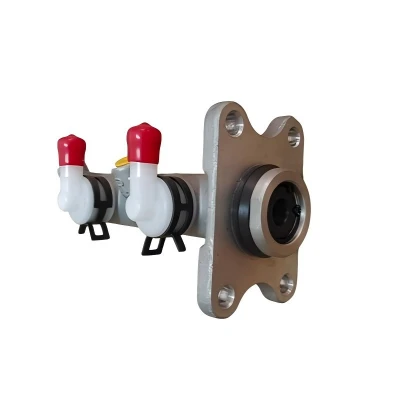
If you’re a fleet manager, a mechanic, or a car owner who needs reliable wheel cylinders that won’t cut corners on safety, get in touch to talk through your needs. We don’t push cheap parts, and we don’t overcomplicate things – we just make wheel cylinders that do what they’re supposed to, so you can stop when you need to.
Clutch Master Cylinder References
- Automotive Brake Technology: Hydraulic Brake Systems, SAE International, 2022
- “The Impact of Wheel Cylinder Wear on Vehicle Stopping Performance,” Journal of Automotive Safety, Vol. 18, No. 2, 2021
- National Highway Traffic Safety Administration (NHTSA), “Brake System Maintenance Best Practices,” 2023
- Heavy-Duty Brake Systems for Commercial Vehicles, American Trucking Associations, 2022
Ruian Xinyao Automobile Parts Co., Ltd.
With abundant experience, we are one of the most professional brake wheel cylinder manufacturers and suppliers in China. We warmly welcome you to wholesale bulk advanced brake wheel cylinder from our factory. If you have any enquiry about cooperation, please feel free to email us.
Address: Xialin Industrial Zone, Tangxia Town, Ruian City,Wenzhou City,Zhejiang Province,China
E-mail: 18969725686@163.com
WebSite: https://www.raxinyao.com/
