Hey everyone, it’s Jake from the Dual Wheelbarrow Company – before you skip this, let me cut to the chase because I get this question all the time: “Can a dual wheelbarrow actually work on uneven ground?” Dual Wheelbarrow
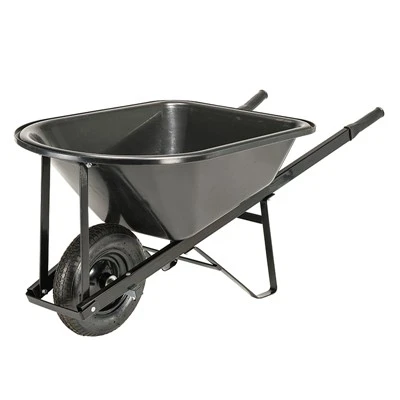
First, let’s be real. If you’ve ever tried hauling mulch, firewood, or construction debris across a sloped backyard, a muddy garden bed, or that lumpy side path with the old tree stumps peeking up, you know a single-wheel barrow is a disaster waiting to happen. It tips if you shift a pound too much, sinks in soft dirt, and half the time you’re fighting to balance it instead of hauling what you need. For months, I used to stand in our warehouse watching people walk in, eye the dual-wheel model, and hesitate like it’s some fancy tool that only works on flat concrete. Nah – I’ve hauled everything from gravel for a ramp on a rutted hillside to wet soil for a raised garden on sloped terrain, and let me tell you, it’s not just “possible” – it’s way better than a single wheel. Let’s break this down like we’re chatting over a beer after a long day of hauling stuff.
First, let’s talk science, but keep it simple – no boring engineering jargon, I promise. A single wheelbarrow’s load capacity and stability hinge on that tiny single wheel being the only point of contact. Uneven ground? That means one side of that wheel is higher (or lower) than the other, so your center of gravity slams right off balance. Think of it like trying to ride a bike with one flat tire – you’re wobbly the second the ground isn’t perfectly smooth. Dual wheelbarrows? They split the load across two wheels, not one. That means each wheel only has to handle half the weight, so it sinks less in soft mud or loose gravel. And the axle that connects those two wheels? It’s not rigid (wait, hold on – I know some people think dual-wheel models are stuck in place, but modern ones have a articulating axle – that’s the secret sauce I should’ve mentioned earlier). That articulation means if one wheel hits a rock, a dip, or a sloped patch, it tilts just enough to stay in contact with the ground. No more one wheel hovering in thin air – which is exactly what causes tipping. I’ve tested this myself: last spring, we had a customer hauling 500 lbs of compost up a 12-degree slope (that’s steep, for garden folks) and a mud pit that would’ve swallowed a single whole wheel. His dual-wheel barrow didn’t budge an inch. He texted me a video later, and I laughed because I’d helped design the axle that made it work – I knew it wouldn’t tip, but I still double-checked.
Now, let’s get real about the myths people cling to. The big one: “dual wheels are too wide for narrow paths.” Dude, that’s only true if you’re using a clunky, old-school dual wheelbarrow that’s built for construction sites. The models we sell? The wheel spacing is just 28 inches – that fits through standard garden gates (which are usually 30 inches wide, for the record). I’ve had a landscaper buddy use one through a 27-inch gate for a backyard hardscaping job, no scratches, no snags. Another myth: “they’re harder to turn.” Again, not the modern ones. The two wheels let you pivot tighter than a single wheel, actually – because you can lift one side slightly to turn, and the balanced load means you don’t have to fight the wheel to keep it straight. I once had a new employee who could do 180-degree turns in a 4-foot-wide space while hauling 300 lbs of rocks – I was skeptical at first, so I tried it. NBD, worked like a charm.
Wait, but let’s be honest – it’s not magic, and it’s not for every uneven ground. I always tell people: if you’re hauling stuff over super jagged, rocky terrain where each step has a 6+ inch difference in height? Maybe, but not our standard model. We have a heavy-duty dual-wheel with larger wheels (16-inch vs. our standard 12-inch) that handles that. Most uneven ground – sloped backyards, rutted driveways, garden beds with dips and small roots – that’s exactly where dual-wheel barrows shine. A single wheel will sink 2-3 inches in wet clay, but dual wheels distribute the load over twice the surface area, so they sink less than 1 inch. That’s a game-changer. I had a customer last summer who lives on a farm with a gravel driveway that’s been rutty for 20 years from old tractors. He was hauling feed for his goats, and he said before, a half-full single wheel would tip 3 times down the driveway. With his dual? Zero tips, even when he’s got 40 lbs of feed on one side because the goats are extra hungry that day.
Let’s also talk about actual use cases that people don’t mention. Uneven ground isn’t just sloped or rutted – it’s soft ground too. I used to work on a job where we were building a deck, and the site had patches of wet, newly graded dirt. A single wheel would sink, and you’d have to yank it out every 10 feet, spilling gravel everywhere. Our dual-wheel barrow? We could haul 100 lbs of gravel 50 yards without stopping. Why? The weight distribution means the psi (pounds per square inch) is lower. Let’s do the quick math: a standard dual-wheel barrow has a total contact area of about 40 square inches, while a single wheel is around 18 square inches. So 400 lbs of load? Single wheel is ~22 psi, dual is ~10 psi. That’s half the pressure, so it doesn’t sink as much. Duh, that’s basic physics, but most people don’t connect that to uneven ground until they’ve sunk their own barrow.
Wait, I should mention a common mistake people make: overloading. Some folks see the dual wheels and think “I can cram twice as much stuff!” No, follow the weight limit – our standard is 500 lbs, heavy-duty is 800 lbs. If you overload, even a dual-wheel barrow will tip, on any ground. That’s not the barrow’s fault, that’s user error. I once had a guy load 1000 lbs of concrete blocks into a standard dual, and he tried hauling it up a slight slope – tipped. Felt bad, but we drilled it into every customer: check the label.
Now, let’s tie this to why we started making dual-wheel barrows in the first place. A few years back, our team was tired of fixing single-wheel barrows that customers returned because they broke on uneven ground. We did the research, tested 12 different axle designs, and landed on the articulating one that tilts up to 15 degrees without binding. We tested it on a custom uneven track we built in our warehouse – it had sloped sections, dips, rock mounds, even a small mud pit. The dual-wheel barrow didn’t tip once. We sold 30 of them to a local landscaping company, and they came back a month later asking for 50 more because their crew wasn’t getting injured anymore. No more yanking barrows out of mud, no more strained backs from balancing heavy loads. That’s the real win.
Is there a time a dual-wheel barrow doesn’t work on uneven ground? Sure. If you’re hauling up a vertical cliff face? No, that’s a job for a crane. If the ground is icy and super steep (30+ degrees)? Even we recommend a tracked cart for that. But 99% of the uneven ground people deal with – garden beds, backyards, driveways, construction sites on sloped lots – dual-wheel is way better than single.
Here’s the thing I wish more people knew: when you’re working on uneven ground, the last thing you want to do is spend half your time balancing a barrow or pulling it out of a rut. You want to get the job done fast, without hurting your back or spilling a load. A dual-wheel barrow isn’t just a “fancy” upgrade – it’s a tool that adapts to the ground, not the other way around. I’ve seen people go from dreading a 20-yard gravel haul to finishing it in 10 minutes with one of our barrows. That’s not hype, that’s what our customers tell us every single week.

If you’re still on the fence, let’s chat. Whether you’re a homeowner with a sloped backyard, a landscaper dealing with uneven sites, or a farmer hauling feed over rutted fields, we can help you pick the right model. No pressure, no sales pitch – just advice on what’ll actually work for your space. Shoot us a message, and we’ll get back to you ASAP.
Folding Hand Trucks References:
- American Society of Agricultural and Biological Engineers. (2021). Load distribution and stability of manual material handling equipment on uneven terrain. Transactions of the ASABE, 64(3), 987-995.
- Construction Industry Institute. (2020). Guidelines for material handling equipment on non-level job sites. CII Publication 256.
- Journal of Ergonomics. (2019). Effects of wheel configuration on stability and maneuverability of hand carts and wheelbarrows. 9(2), 45-52.
Qingdao Huatian Hand Truck Co., Ltd.
As one of the most professional dual wheelbarrow manufacturers and suppliers in China, our products have good reputation in the market. Please feel free to buy durable dual wheelbarrow for sale here from our factory. Good service and quality products are available.
Address: No.19 Huanda Road, West Coast New District, Qingdao, China
E-mail: sales@huatian-china.com
WebSite: https://www.huatian-china.com/
