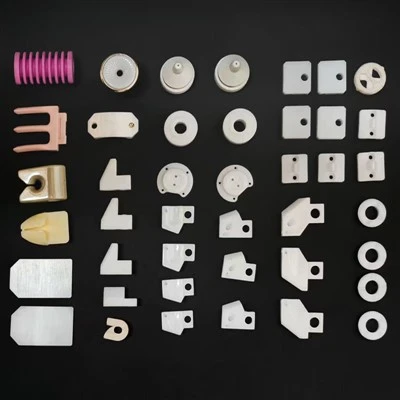
When it comes to ceramic parts, one question that often arises is, "Are ceramic parts brittle?" As a supplier of ceramic parts, I’ve encountered this query numerous times from potential customers, engineers, and even hobbyists. In this blog post, I’ll delve into the nature of ceramic parts, exploring their brittleness, the factors that influence it, and the implications for various industries. Ceramic Parts
Understanding Ceramics and Brittleness
Ceramics are a diverse group of materials that include traditional ceramics like pottery and porcelain, as well as advanced ceramics used in high – tech applications. At a basic level, brittleness refers to a material’s tendency to break or crack under stress without significant deformation. Unlike metals, which can bend and stretch before breaking due to their ductile nature, ceramics generally have a low tolerance for deformation.
The atomic structure of ceramics plays a crucial role in their brittleness. Ceramics are composed of ions and covalent bonds. These strong bonds hold the atoms in a rigid lattice structure. When a stress is applied, the bonds are difficult to rearrange. Instead of deforming plastically, the stress causes the bonds to break suddenly, leading to fracture. For example, in alumina ceramics, which are widely used in our product line, the strong ionic – covalent bonds between aluminum and oxygen atoms result in a material that is visually hard and, in some cases, brittle.
Factors Affecting the Brittleness of Ceramic Parts
However, it’s important to note that not all ceramic parts are equally brittle. Several factors can influence the degree of brittleness.
One of the key factors is the type of ceramic material. There are different classes of ceramics, such as oxide ceramics (e.g., alumina, zirconia), non – oxide ceramics (e.g., silicon carbide, silicon nitride), and glass – ceramics. Among them, zirconia ceramics have relatively better toughness compared to some other ceramics. Zirconia undergoes a phase transformation when subjected to stress, which absorbs energy and helps to prevent crack propagation, reducing its apparent brittleness.
The manufacturing process also has a significant impact. The way ceramic parts are formed, sintered, and finished can affect their internal structure and mechanical properties. For instance, if the sintering process is not properly controlled, the ceramic may have porosity or uneven grain growth. Porous ceramics are generally more brittle because the pores act as stress concentrators, where cracks can initiate and propagate more easily. On the other hand, a well – controlled sintering process that results in a uniform grain size and high density can improve the strength and toughness of the ceramic part.
Furthermore, the shape and design of the ceramic part can influence its brittleness. Sharp corners and edges in a ceramic component create stress concentrations. When a load is applied, these areas are more likely to experience high stress levels and are therefore more prone to cracking. By designing parts with rounded edges and smooth transitions, the stress can be distributed more evenly, reducing the risk of fracture.
Brittleness in Different Applications
The brittleness of ceramic parts has different implications depending on the application. In some high – performance applications, the brittleness of ceramics can be a double – edged sword.
In the electronics industry, ceramic substrates are widely used due to their excellent electrical insulation, high thermal conductivity, and chemical stability. Although they are brittle, they can withstand the environmental and electrical stresses typical in electronic devices. For example, in integrated circuit packaging, ceramic substrates provide a stable platform for the semiconductor chips. The brittleness is not a major concern as long as the parts are handled carefully during the manufacturing process and protected from excessive mechanical stress during use.
In the automotive industry, ceramic materials are used in various components such as catalytic converters and engine parts. Catalytic converter substrates are often made of cordierite ceramic, which has good thermal shock resistance despite being somewhat brittle. Engine parts, like ceramic pistons and valve components, can offer advantages such as reduced weight and improved thermal efficiency. However, the brittleness needs to be carefully managed. Engineers design the parts to withstand the mechanical and thermal stresses encountered during engine operation, often using advanced composites or coatings to enhance their durability.
In the medical field, ceramic materials are used for dental implants and joint replacements. Zirconia ceramics, with their relatively high toughness, are a popular choice for dental crowns and bridges. The aesthetics, biocompatibility, and mechanical properties of ceramics make them suitable for these applications. However, the brittleness still requires careful consideration during the design and manufacturing of dental and orthopedic components to ensure long – term reliability.
Strategies to Mitigate Brittleness
As a ceramic parts supplier, we are well – aware of the challenges posed by ceramic brittleness, and we have developed several strategies to mitigate it.
One approach is to use composite materials. By combining ceramics with other materials such as polymers or metals, we can create composites that have improved toughness while retaining some of the desirable properties of ceramics. For example, ceramic – matrix composites (CMCs) use ceramic fibers embedded in a ceramic matrix. These fibers can bridge cracks and absorb energy, increasing the overall toughness of the material.
Another strategy is to optimize the manufacturing process. We use advanced sintering techniques such as hot isostatic pressing (HIP) to produce ceramics with high density and uniform microstructure. This reduces the presence of defects and porosity, improving the strength and toughness of the parts. Additionally, precision machining and surface finishing can remove surface flaws that could act as crack initiators.
We also offer design consulting services to our customers. By working closely with them from the early stages of product development, we can design ceramic parts that minimize stress concentrations and are better able to withstand the expected loads. This may involve using finite element analysis (FEA) to simulate the stress distribution in the part and make appropriate design modifications.
Conclusion
In conclusion, while it’s true that ceramic parts generally have a reputation for being brittle, the reality is more complex. The brittleness of ceramic parts depends on a variety of factors, including the type of ceramic material, the manufacturing process, and the part design. In many applications, the unique properties of ceramics, such as high hardness, wear resistance, and chemical stability, outweigh the challenges posed by their brittleness.
As a supplier of ceramic parts, we are committed to providing high – quality products that meet the specific needs of our customers. We understand the importance of managing brittleness and have implemented various strategies to ensure the reliability and performance of our ceramic components.
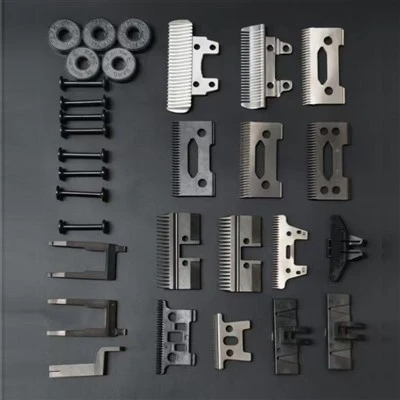
Ceramic Blades If you’re in need of ceramic parts for your application, whether it’s in electronics, automotive, medical, or any other industry, we’d love to discuss your requirements. Our team of experts can provide you with customized solutions, taking into account the brittleness factor and other considerations. Contact us to start a procurement discussion and discover how our ceramic parts can enhance your products.
References
- Kingery, W. D., Bowen, H. K., & Uhlmann, D. R. (1976). Introduction to Ceramics. John Wiley & Sons.
- Reed, J. S. (1995). Principles of Ceramic Processing. John Wiley & Sons.
- Ashby, M. F., & Jones, D. R. H. (2005). Engineering Materials 1: An Introduction to Properties, Applications and Design. Butterworth – Heinemann.
Haining Yifeng Ceramic Technology Co., Ltd.
We are one of the most experienced ceramic parts manufacturers and suppliers in China, also support customized service. Welcome to buy high quality ceramic parts made in China here and get pricelist from our factory. For price consultation, contact us.
Address: No. 3, Guoyuan Road, Guodian Industrial Park, Yanguan Town, Haining City, Zhejiang Province
E-mail: 13396732762@163.com
WebSite: https://www.yifengcer.com/
