Hey there! I’m a supplier of eco-friendly to-go containers, and I’m stoked to chat about the recycling process for these awesome products. You know, with the growing awareness of environmental issues, more and more folks are looking for sustainable alternatives, and that’s where our eco-friendly to-go containers come in. Eco Friendly To Go Containers
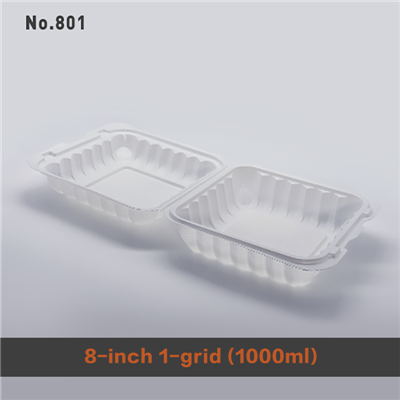
First off, let’s talk about what makes these containers eco-friendly. Most of our products are made from materials like bioplastics, bamboo, or recycled paper. Bioplastics are pretty cool because they’re derived from renewable resources like corn starch or sugarcane. They break down way faster than traditional plastics, which is a huge plus for the environment. Bamboo is another great option—it’s a fast-growing grass that can be harvested sustainably. And recycled paper? Well, it’s a no-brainer. Using recycled materials means we’re using less virgin wood pulp and helping to conserve forests.
So, how does the recycling process work for these containers? It’s actually a bit different depending on the material. Let’s start with bioplastics.
When your customers are done using their bioplastic to-go containers, the first step is collection. This usually happens the same way as regular recycling. They can toss the container into a recycling bin, and it’ll get picked up by the local waste management company. But here’s the catch: bioplastics need to go to a special industrial composting facility. Regular landfills aren’t the best place for them because they need specific conditions to break down properly.
At the industrial composting facility, the bioplastics are mixed with other organic materials like food waste and yard trimmings. The facility maintains the right temperature, moisture, and oxygen levels to speed up the decomposition process. Over a period of weeks to months, the bioplastics break down into natural substances like water, carbon dioxide, and biomass. This biomass can then be used as a nutrient-rich soil amendment, which is pretty amazing if you think about it.
Now, let’s move on to bamboo containers. Bamboo is a natural and biodegradable material, so it’s relatively easy to recycle. Similar to bioplastics, the first step is collection. Your customers can put their used bamboo containers in the recycling bin. Once at the recycling facility, the bamboo is typically shredded into smaller pieces. These pieces can then be used to make new bamboo products like furniture, flooring, or even more to-go containers. Some recycling facilities might also turn the bamboo into pulp, which can be used to make paper or other cellulose-based products.
Recycled paper to-go containers are also a popular choice, and their recycling process is probably the most well-known. When customers finish using their paper containers, they should make sure to remove any food residue or stickers. Then, they can toss them in the paper recycling bin. At the recycling plant, the paper is sorted, cleaned, and pulped. The pulp is then screened and refined to remove any remaining impurities. After that, it’s mixed with new fibers (usually a small percentage to maintain quality) and formed into new paper products, including more to-go containers.
One of the challenges we face as a supplier is making sure that people know how to recycle these eco-friendly containers properly. A lot of consumers are still confused about the difference between bioplastics and regular plastics, and they might not realize that bioplastics need to go to an industrial composting facility. That’s why we make it a point to include clear recycling instructions on our packaging. We want to make it as easy as possible for our customers to do the right thing for the environment.
Another thing we’re doing is working with local governments and waste management companies to increase the availability of industrial composting facilities. The more of these facilities there are, the easier it will be to recycle bioplastics and other compostable materials. We’re also partnering with recycling plants to improve the processes for recycling bamboo and paper containers. By collaborating with these organizations, we can help create a more sustainable recycling system.
As a supplier, we’re always looking for ways to improve our products and the recycling process. We’re constantly researching new materials and manufacturing techniques to make our containers even more eco-friendly. For example, we’re exploring the use of new types of bioplastics that are even more biodegradable and have a lower carbon footprint. We’re also looking into ways to make our bamboo containers more durable and easier to recycle.
If you’re a restaurant owner, food vendor, or anyone in the food service industry, I highly encourage you to consider using our eco-friendly to-go containers. Not only are they better for the environment, but they also look great and are a great way to show your customers that you care about sustainability. And hey, if you’re interested in learning more about our products or want to discuss a potential purchase, just reach out to us. We’d love to have a chat with you and see how we can help you make your business more eco-friendly.

Let’s all do our part to protect the planet and make a positive impact on the environment. By choosing our eco-friendly to-go containers and recycling them properly, we can all contribute to a more sustainable future.
Reusable Plastic Divided Plates References:
- "Bioplastics: An Overview." Journal of Sustainable Plastics and Composites.
- "Recycling of Bamboo Products." International Bamboo and Rattan Organization.
- "Paper Recycling Process." Environmental Protection Agency.
Hangzhou Zhaozhan Packaging Co., Ltd.
We are one of the most professional eco friendly to go containers manufacturers and suppliers in China, also support customized service with low price. We warmly welcome you to buy bulk eco friendly to go containers made in China here from our factory. If you have any enquiry about quotation, please feel free to email us.
Address: No. 718, Fengting Road, Linglong Sub-district, Lin’an District, Hangzhou City, Zhejiang Province, China
E-mail: zhaozhanbaozhuang@163.com
WebSite: https://www.ecozindustry.com/
