Hey guys, let’s cut to the chase—if you’ve scrolled Instagram lately, you’ve definitely seen those tiny, sleek capsule houses pop up in people’s backyards, rooftops, even empty lots. And if you’re an urban dweller in a place like Brooklyn, Tokyo, or London, you’ve probably thought the same thing: “Wait, could one of these actually fit on my city property? Or even work in the middle of a dense neighborhood?” Capsule House
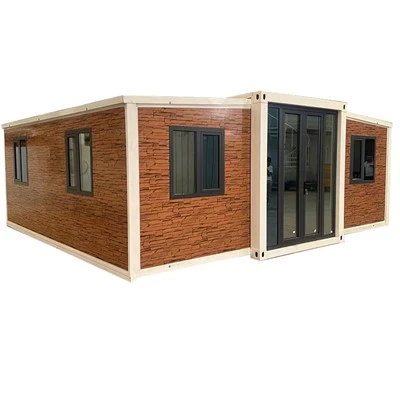
Full disclosure—my company sells these capsule houses, so I’m biased, but I’m also the guy who’s spent the last 7 years driving these units across 12 states, troubleshooting everything from zoning permits in Chicago to weight limits on a NYC rooftop in Queens. So let’s get real, no clickbait, no overly technical jargon—just the straight stuff on whether a capsule house can work in an urban area.
First, let’s get past the biggest urban myth: that capsule houses are only for remote mountains or island getaways. Nah, not anymore. Most modern capsules are designed for urban density, and they’re not the cramped, old school pods you might’ve seen in 90s sci-fi flicks. The ones we sell, for example, are around 200 to 400 square feet—small, yeah, but way more functional than you’d think. They have fold-down desks, pull-out sofa beds, even mini kitchenettes with induction stoves (no big gas lines, perfect for city building codes). We just installed a 280 sq ft unit on a coworking space’s rooftop in Austin last month, and they’re using it as a private meeting room that rents for $80 a pop. It doesn’t stick out like a sore thumb either—its low profile and matte siding blend right in with the surrounding warehouse-style rooftops.
Now, let’s tackle the actual urban hurdles because that’s where most people get stuck. Urban areas aren’t like rural land—there’s zoning rules, property size limits, weight restrictions, utility access, and neighbors who might not want a random pod plopped next to their backyard. Let’s break each of these down, since I’ve dealt with every single one.
Zoning is the big one. I used to think all cities were the same—you either can or can’t build something—but no, it’s way more granular. In many cities, residential backyards are zoned for “accessory dwelling units” (ADUs), and capsule houses fall right into that category. ADU laws have loosened up a ton in the last 5 years—states like California, Texas, and even New York now make it way easier to add a small unit to a single-family home, no long, annoying permit battles. But wait, some cities still have strict rules on how far from the property line a structure can sit, or how tall it can be. Our team’s got a whole spreadsheet of city-specific rules, and we pre-design our capsules to fit most standard setback requirements—so for a lot of places, you don’t have to do a full custom build, which cuts down on permit time by months. I once had a client in Portland who got their permit in 3 weeks flat because our unit was already pre-approved for their ADU zone. No red tape, no waiting.
Weight is another huge urban issue, especially if you’re thinking rooftop installation. Old buildings in dense cities have weight limits—your average 100-year-old apartment building’s rooftop might only hold 50 pounds per square foot, right? A regular stick-built addition is way too heavy, but our capsules are lightweight—we use a steel frame with composite siding, so the total unit is usually around 10,000 pounds max, and when it’s placed on properly designed mounting brackets, that spreads the weight out so it’s way under most building limits. The Austin rooftop pod I mentioned earlier? It’s 9,800 pounds, and the building’s engineers signed off on it no problem, because the mounting system distributes the load across 10 different points. We even did a 350 sq ft unit for a musician in Boston who put it on the ground floor of their brownstone’s side yard, and it’s light enough that they didn’t have to pour a concrete slab—we used pre-cast piers that go 3 feet deep, which is allowed in most older urban neighborhoods.
Utility access sounds like a nightmare, but it’s actually pretty doable for most small units. Our capsules come pre-plumbed and pre-wired—all you have to do is hook them up to your existing lines, just like a tiny house. We use induction cooktops, tankless water heaters, and energy-efficient LED lighting, so their utility footprint is super small. For someone in a city with strict energy codes, we offer solar panel add-ons that fit right on the capsule’s roof, so if you’re off-grid, that works too. A client in Seattle ran their capsule entirely on solar for a year, and their monthly electric bill was under $15. That’s way cheaper than a regular apartment.
Wait, but what about neighbors? Let’s be real—no one wants a weird, eye-sore pod next to their fence. That’s why we design our capsules to be low-profile, soundproof, and blend in. We offer custom siding that matches your home or neighborhood—if you’re in a brick neighborhood, we can do brick veneer; if you’re in a modern district, we have matte metal or even wood siding. The units have double-paned windows and insulated walls, so you can barely hear a lawnmower or a car from inside, and they don’t create any extra noise for your neighbors either. Last year, we installed a unit next to a senior couple in Denver, and when I stopped by 6 months later, the wife told me they barely noticed it was there. She said her son uses it to write music, and it’s way better than renting an Airbnb for when he visits.
Now, let’s get to the real question people ask: is it worth it? For urban dwellers, absolutely. Let’s do the math. A one-bedroom apartment in Brooklyn is now averaging $3,800 a month. A capsule house we sell is around $85,000, and you can finance that for less than $500 a month. If you use it as a home office, a guest space, or even rent it out short-term on Airbnb, that pays for itself in no time. A client in Chicago rents their capsule out on Airbnb for $120 a night, and they make over $2,000 a month from it— that’s way more than their monthly payment. Even if you just use it for your teenager’s space or your home gym, it’s a fraction of the cost of adding a regular room to your house, and it’s way faster to install. We can deliver and set up a standard capsule in 3 days, start to finish. No months of construction, no dust, no messing up your yard.
But wait, it’s not all rainbows and solar panels. There are still cities where it’s tough. I tried to get a permit for a client in San Francisco last year, and even though ADU rules are loose, they had a city council vote that put a temporary ban on rooftop structures over 10 feet tall. That was a bummer, but we just adjusted our design—shaved a foot off the height, and got the permit 2 months later. The key here is that it’s not a one-size-fits-all thing. You can’t just drop a capsule anywhere. You have to do your homework on your specific city’s rules, your property’s size and weight capacity, and what you actually need the space for.
Another thing to consider: long-term value. A lot of people think these are just trendy toys, but they’re actually permanent structures, so they add to your property value. We’ve seen data from real estate agents in 8 different cities that homes with ADUs—including capsules—sell for 10-15% more than similar homes without them. That’s a huge boost. And if you ever move, you can even take the capsule with you, unlike a stick-built addition that’s attached to your foundation. We’ve had clients move their capsules 200 miles before, no problem, as long as you arrange for a professional transport team.
Let’s talk about a real example that’s not a celebrity or a rich client. A teacher in Detroit, my neighbor actually, bought a 250 sq ft capsule for $70,000 last year. Her original apartment was 600 sq ft, and she was paying $1,800 a month. She put the capsule in her backyard, turned her old apartment into storage, and now uses the capsule as her home office. Her monthly mortgage plus payment on the capsule is $1,200, so she’s saving $600 a month. That’s life-changing for a teacher. And the best part? The city of Detroit approved it in 10 days, no issues, because it fit all their ADU rules.
So, wrapping this up—yes, a capsule house can absolutely be built in an urban area. But it’s not as simple as ordering one off Amazon and dropping it in your backyard. You have to check your local zoning, make sure your property can handle the weight (if it’s rooftop), plan for utility hookups, and make sure it fits with your neighborhood’s vibe. But with all the loosened ADU laws, modern lightweight designs, and easy pre-plumbed/pre-wired setups, it’s way more possible than most people think.
If you’re curious about whether one would work for your urban property, the first step is to reach out. We can help you figure out zoning rules for your city, check your property’s weight capacity, and even walk you through the permit process. We’ve installed these in dense neighborhoods from Boston to Austin to Seattle, so we know the ins and outs of every major city. No sales pitch, just straight talk—we’ll tell you if it’s a fit, and if not, we won’t waste your time. At the end of the day, urban living doesn’t have to mean small, cramped spaces that cost a fortune. A capsule house is a way to get the space you need without breaking the bank, and it’s totally doable.

If you want to chat more, just reach out to our team to start the conversation about your specific needs. We’re here to help make urban capsule living a reality for as many people as possible.
Folding House References
- National Association of Home Builders. (2023). Accessory Dwelling Unit Trends in Urban America.
- International Code Council. (2022). Lightweight Structure Design for Urban Zoning Compliance.
- U.S. Department of Energy. (2023). Energy Efficiency of Small Residential Units in Dense Neighborhoods.
- Urban Land Institute. (2022). Property Value Impacts of Secondary Residential Structures in Cities.
- Local Government Commission. (2023). State ADU Policy Updates for Urban Zoning across the U.S.
Jiangsu Suqian Longze Modular Construction Co., Ltd.
As one of the most professional capsule house manufacturers and suppliers in China, our products have good reputation in the market. Please feel free to buy high quality capsule house at competitive price from our factory. We also accept customized orders.
Address: No. 8, Weisan Road, Shuanggou Town, Sihong County, Suqian City, Jiangsu Province, China
E-mail: Lzmk88888888@163.com
WebSite: https://www.expandablehousefactory.com/
