When you’re sourcing fasteners for mission-critical applications—whether it’s aerospace turbine assemblies, subsea oil and gas infrastructure, medical implant devices, or heavy construction equipment—generic off-the-shelf fasteners almost never cut it. As a supplier who’s spent 18 years in special fasteners, I’ve seen firsthand how cutting corners on specifications leads to catastrophic failures: a satellite panel coming loose mid-orbit, a pipeline flange leaking at 10,000 feet underwater, a surgical implant failing during a patient’s procedure. Special fasteners aren’t just “custom bolts”—they’re precision-engineered components with tightly defined, application-specific specifications that dictate performance, reliability, and compliance. If you’re new to sourcing these parts, or looking to clarify what sets a true special fastener apart from a standard off-the-shelf item, let’s break down the core specifications that matter, and why getting them right is non-negotiable. Special Fasteners
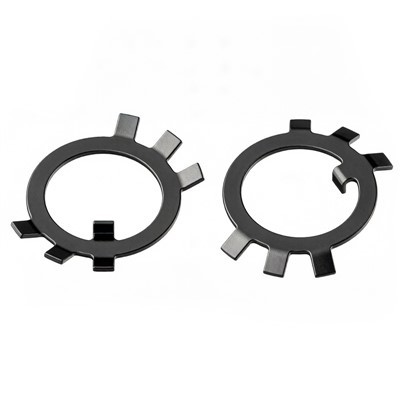
First, before diving into technical specs, it’s important to define what a “special fastener” actually is. Unlike standard fasteners (like hex bolts or sheet metal screws that follow ISO, ANSI, or DIN standards), special fasteners are designed for unique, non-standard use cases where generic parts don’t meet requirements. That could mean a bolt with a custom length to fit a tight aerospace bracket, a titanium nut with a corrosion resistance rating for subsea use, or a specialty screw with a unique drive profile to prevent tampering in medical devices. Every special fastener starts with a clear set of requirements, and translating those requirements into precise, verifiable specifications is where the value of a reliable special fastener supplier comes in.
Let’s start with the most foundational specification: material composition. This isn’t just “stainless steel”—it’s the specific grade, chemistry, and material properties that make the fastener suitable for its operating environment. For example, a standard 18-8 stainless steel (304) works for dry, indoor applications but will corrode rapidly in saltwater. For subsea fasteners, we often use 316L stainless steel, which has higher molybdenum content to resist chloride stress corrosion cracking, or even superalloys like Inconel 718 for extreme high-temperature, high-pressure environments (like turbine engine components). For medical implants, we use ASTM F138-grade 316L or ASTM F136-grade titanium, which are biocompatible and meet strict regulatory limits for trace elements. Even the material’s form (forged, extruded, or machined) matters: forged fasteners have higher tensile strength than machined ones because the grain structure is aligned along the part’s length, making them ideal for high-load applications. We always provide material test reports (MTRs) with every shipment, which confirm chemistry, yield strength, tensile strength, and elongation—specs that are non-negotiable for regulated industries.
Next, dimensional specifications, and this is where special fasteners differ the most from standard parts. Standard fasteners follow tight dimensional tolerances, but special fasteners often have custom dimensions tailored to a specific assembly. Let’s take a common example: an aerospace bolt that needs to fit a niche hole pattern on a satellite’s structural bracket. The diameter might be a non-standard 0.3125 inches (instead of the standard 0.3125 is actually a standard, so let’s say 0.325 inches), the length might be 1.875 inches with an 0.125-inch thread pitch that’s not in the standard aerospace thread chart. But dimensions aren’t just about size—they’re about tolerances. For a fastener that mates with a precision flange, the hole diameter on the fastener might have a tolerance of ±0.0005 inches, compared to a standard fastener’s ±0.001 inches. If a fastener is too large, it can’t seat properly; too small, and it will wobble under load. We use coordinate measuring machines (CMMs) to verify every critical dimension, and provide dimensional inspection reports to confirm compliance with the specified tolerances. Thread specifications are another key part of dimensional specs: for special fasteners, that might mean custom thread forms (like buttress threads for high-tension connections, or whorl threads for tamper resistance) instead of standard UNC or UNF threads. We also specify thread class (2A for external threads, 2B for internal) to ensure proper fit—for example, a class 3A thread has a tighter tolerance for vibration-prone applications, preventing loosening over time.
Load performance specifications are where special fasteners prove their value for high-stakes applications. A standard bolt rated for 10,000 psi might not hold up to a dynamic load like a wind turbine blade’s root, which experiences millions of pounds of force per year. Load specifications include proof load, tensile strength, yield strength, and fatigue resistance. Proof load is the maximum load a fastener can withstand without permanent deformation—critical because if a bolt stretches even a tiny amount, it won’t clamp the assembly together properly. For a special fastener used in a bridge, we might specify a proof load of 150,000 psi, compared to a standard Grade 5 bolt’s 85,000 psi. Fatigue resistance is another big one: for parts that are cyclically loaded (like automotive engine components or wind turbine fasteners), we specify fatigue limits, which is the maximum cyclic load the fastener can withstand without failing after a certain number of cycles. We test every batch of special fasteners for load performance, using tensile testing machines to pull parts apart and measure their strength, and fatigue testing machines to simulate years of use in hours.
Corrosion resistance is a make-or-break specification for fasteners operating in harsh environments. Standard fasteners might have a zinc plating that lasts a few years, but a special fastener for a coastal oil rig needs to resist saltwater corrosion for 20+ years. Corrosion specifications can include the type of coating (or no coating, in some cases), the thickness of the coating, and salt spray test results. For example, a zinc-nickel plating with a thickness of 10 microns will pass 1,000 hours of salt spray testing without red rust, compared to a standard zinc plating that passes 500 hours. For extreme environments, we use coatings like PTFE (Teflon) for low friction and corrosion, or even hard chrome plating for high-wear applications. For subsea applications that require no organic coatings (to avoid contamination), we specify bare 316L stainless steel or Inconel, and test their corrosion rate in simulated saltwater environments to ensure they meet the required lifespan.
Regulatory and compliance specifications are non-negotiable for special fasteners used in regulated industries like aerospace, medical, or nuclear. Different sectors have their own standards that fasteners must meet, and cutting corners here can lead to major compliance issues. For example, aerospace fasteners must meet AS9100 quality management standards, and many require specific material certifications like AMS 5643 for titanium aerospace parts. Medical fasteners must meet FDA requirements for biocompatibility, including specific limits for lead, cadmium, and other toxic elements. Nuclear-grade fasteners must meet NQA-1 quality standards, which require rigorous documentation and traceability from raw material to finished part. As a supplier, we work closely with clients to understand their regulatory requirements, and we provide all necessary documentation—including MTRs, dimensional inspection reports, and compliance certificates—with every shipment. We also keep detailed traceability records, so if a part ever needs to be recalled or audited, we can track it back to the exact batch of raw materials it was made from.
Unique feature specifications are the final piece of the puzzle, and these are what make a special fastener truly unique to a client’s needs. That could be a custom drive profile, like a hexalobular (Torx) drive to prevent stripping, or a 12-point drive for high-torque applications. It could be a locking feature, like a nylon insert lock nut or a deformed thread to prevent loosening in vibration-heavy environments, which is critical for heavy machinery or automotive applications. For security applications, we might specify a one-way screw that can only be installed and removed with a special tool, to prevent tampering. Even things like head style (countersunk, round, hex, or custom low-profile head for tight spaces) fall into this category. We work with clients to design these features, ensuring they’re not just unique, but also practical for their assembly process—for example, a low-profile head that fits in a tight bracket without sacrificing clamping force.
Now, you might be wondering: why go through all this trouble? Why not just modify a standard fastener instead of creating a special one? The answer is simple: standard fasteners are designed for general use, and tweaking them often leads to compromises in performance. A standard Grade 8 bolt can’t match the high-temperature resistance of an Inconel bolt, and a standard zinc-plated hex nut can’t match the corrosion resistance of a titanium nut for subsea use. For applications where failure isn’t an option, special fasteners’ tightly defined specifications are the only way to ensure reliability.
If you’re in the market for special fasteners, the key is to work with a supplier who takes the time to understand your application, not just sell you a custom part. At our company, we start every project with a consultation to learn about your operating environment, load requirements, regulatory needs, and any unique constraints. We then work with our engineering team to translate those needs into precise specifications, whether that’s material grade, dimensional tolerances, load performance, or compliance requirements. We test every batch of fasteners to ensure they meet those specs, and provide full documentation to give you peace of mind.
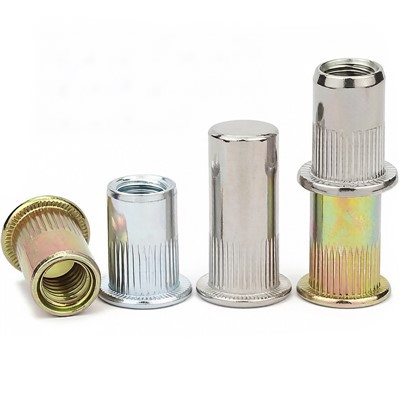
If you’re currently sourcing special fasteners and unsure if your current supplier is meeting all your specifications, or if you need custom parts for a new project, we’re here to help. Our team has decades of experience working with clients across aerospace, medical, energy, construction, and automotive industries, and we can help you design, manufacture, and deliver special fasteners that meet your exact requirements. Don’t risk costly failures due to ill-defined specifications—reach out to our team to discuss your needs and get a customized solution for your next project.
Bolts and Screws References
- AS9100: Aerospace Quality Management Systems Requirements, Aerospace Industries Association
- ASTM F138/F138M: Standard Specification for Wrought 18Chromium-14Nickel-2.5Molybdenum Stainless Steel Bar and Wire for Surgical Implants
- AMS 5643: Titanium Alloy, Bar, Forgings, and Ring 6Aluminum 4Vanadium, Annealed
- ISO 898: Mechanical Properties of Fasteners Made of Carbon Steel and Alloy Steel
- NQA-1: Nuclear Quality Requirements for Organizations Activities Affecting the Safety of Nuclear Power Plants
Shanghai Megood Metal Products Co., Ltd.
As one of the most experienced special fasteners manufacturers and suppliers in China, we have world-leading production equipment and strong manufacturing capabilities. Please rest assured to wholesale bulk special fasteners made in China here and get quotation from our factory. Customized orders are welcome.
Address: Building 8, No. 1500 Huiren Road, Waigang Town, Jiading District, Shanghai
E-mail: liujingshco@163.com
WebSite: https://www.mgx-hardware.com/
