Hey everyone, it’s Jake here from that PVC patches supplier you’ve probably seen popping up on your social media feeds (you know, the one that actually responds when you DM with questions). Today I wanna get real nerdy about the stuff that makes those little patches you slap on hats, bags, jackets, and even work gear. You’ve probably held a PVC patch before—maybe you thought it was just plain old plastic, right? Wrong. There’s a whole mix of materials that go into these little bad boys, and I swear half the time I’m explaining it to new clients they go “wait, that’s not just vinyl?!” Let’s break it down like we’re chatting over a coffee (minus the spilled latte on my laptop, thankfully today). PVC Patches
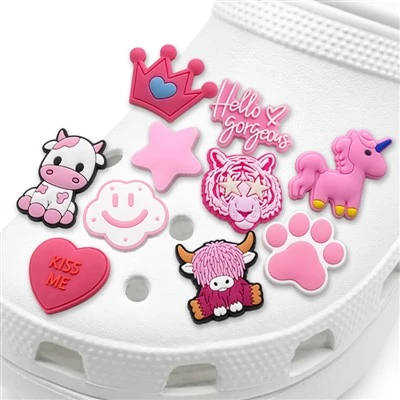
First things first, let’s start with the main event: Polyvinyl Chloride, aka PVC. Duh, it’s in the name. But not just any PVC—this isn’t the rigid plastic pipe under your sink, trust me. The PVC we use is thermoplastic, which means it gets soft when heated and hardens again when cooled. That’s the whole reason we can mold it into those 3D shapes, like a little dinosaur or a custom logo with raised lettering. I’ve had clients come in asking for “super durable patches for hiking gear” and this is where PVC shines. It’s flexible enough to not crack if you stuff it in a backpack, but sturdy enough to hold up against rain, sweat, and the occasional brush against a tree branch. Fun fact: we don’t use the hard PVC for construction—those two types are totally different blends, and I’d never send the wrong stuff to a new customer who’s testing a small order.
But wait, pure PVC is pretty brittle on its own, right? So we add plasticizers to make it soft and bendable. Not the sketchy kind of plasticizers you might have heard of (we only use FDA-approved ones for patches that go on kids’ stuff or medical gear, fyi). The plasticizers we use are usually phthalate-free these days, because way too many brands are getting called out for cutting corners on safety. I had a client last year who runs a custom hat line for a major outdoor brand and they insisted on 100% phthalate-free plasticizers—turns out their entire customer base cares about that stuff. So yeah, we don’t mess around with that. How much plasticizer do we add? Usually around 20-40% of the total blend, depending on how soft we want the final patch. For keychains that get twisted a lot, we go a little higher; for name tags that need to stay stiff on a lanyard, we dial it back. That’s the kind of tiny detail most suppliers skip, but we’ve been doing this long enough to know it makes a huge difference.
Next up, we have pigments. Because let’s be real, a clear PVC patch is useless (unless you’re into that whole minimalist vibe, and even then most people want color). We use liquid or powdered pigments, not the cheap ones that fade after three washes. Powdered pigments are our go-to for most custom jobs because they mix really evenly—if you’ve ever seen a patch with a weird splotchy red or blue, that’s a supplier cutting corners on mixing the pigment. Liquid is great for neon colors because it’s more vibrant, but we have to be careful not to add too much or it weakens the PVC. I once messed up a batch of neon green patches for a bike brand by dumping way too much pigment in—they ended up cracked way too easily, and I had to remake the entire order for free. Never again. Now I measure that stuff with a scale down to the gram, no more guessing. Also, if a client wants a custom color that’s not in our library? We can match it exactly using a Pantone code. No more “is this red a little too orange?!” emails.
Now, what about those little raised details that make a patch pop? That’s the part we call “inlay” or “relief” material, and it’s actually the same base PVC as the main part, just tinted a different color. Wait, how does it not mix together when we mold it? Oh that’s the magic of our production process—we make a stencil of the patch design first, then we pour the first color (say, black) into the mold, let it set a little, then add the second color (say, white) into the recessed parts. It’s like making a layered cookie, minus the flour and sugar. For 3D patches, we actually add extra layers of PVC to the raised areas so they’re thicker, which makes them feel more premium. I had a customer ask me once why our patches feel so much better than the ones they bought from another supplier on Etsy—turns out their cheap patches use thin vinyl that feels flimsy, while we use layers of actual PVC that hold their shape.
Wait, we can’t forget about the backing, right? Most people don’t think about this, but the backing material is super important depending on what the patch is going on. The two main types we use are iron-on backing and adhesive-backed, plus sew-on (which is basically just the PVC without extra backing, so you stitch it directly to fabric). Iron-on is a hot-melt adhesive that activates at like 300 degrees Fahrenheit, so it sticks to jackets, jeans, canvas, even backpack fabric. But we use a high-quality iron-on adhesive that doesn’t leave a sticky residue when you peel it off, unlike the cheap stuff that ruins brand new hoodies. Adhesive-backed patches use a pressure-sensitive acrylic adhesive, so you just peel the paper and stick it to anything—phone cases, water bottles, laptops. Great for quick projects, but we always tell clients it’s not as durable as iron-on or sew-on, especially if it’s going on something you wash a lot. Last month a college kid ordered 20 adhesive patches for his laptop, and he said six fell off after a week—we replaced them for free because we gave him the wrong tip about how to apply them (you gotta rub the paper really hard to get the adhesive to stick, duh).
Also, we use a little bit of release agent in the molds, right? Wait, not the kind that’s toxic—we use a food-grade silicone-based release agent so the PVC doesn’t stick to the mold when it’s done. That’s how we get those crisp edges, no smudges or uneven lines. I’ve seen suppliers use old release agents that leave a weird film on the patch, and that’s a quick way to get bad reviews. We change out our mold release every few batches, just to keep things consistent.
Wait, should I talk about the stuff we don’t use? Yeah, that’s important too. A lot of cheap PVC patch suppliers will use recycled PVC, but wait—recycled PVC can have impurities that make it smell weird, or fade way faster. We only use virgin PVC resin, because it’s pure and consistent. No hidden chemicals, no weird odors, no unexpected fading. I know it’s a little more expensive, but our clients don’t have to worry about their patches falling apart after three months. Also, we don’t use vinyl that’s mixed with too much filler—some suppliers cut costs by adding chalk or limestone to stretch the PVC, but that makes it brittle and prone to cracking. We never do that.
Let me throw in a quick real example, since this is way more fun than just listing materials. Last month we did a custom order for a local coffee shop—they wanted patches with their logo, which has a coffee cup with steam coming out. The main color was a warm brown (we matched it exactly to their brand Pantone code), the steam was white, and they wanted an iron-on backing so they could put them on aprons and tote bags. For the brown, we added 30% plasticizer so it’s soft enough to not dig into the apron fabric. The steam was made with a thin layer of white PVC so it’s crisp, not bulky. We tested a small sample first, and the owner loved it so much she reordered 50 more in the first week. That’s the kind of attention to detail we bring to every order, no matter how big or small.
Wait, what about water resistance? PVC is inherently waterproof, right? So all our patches are water-resistant, which is why they’re so popular for outdoor gear. I’ve had customers use our patches on wetsuits, bike helmets, even dog collars, and they hold up way better than embroidery or fabric patches that get ruined by water. The only downside is if you leave them in a hot car for a long time, the iron-on backing might soften a little, but that’s not a PVC issue—that’s a backing thing. We always warn clients about that, because we don’t want them complaining when their patch falls off in August in Arizona.
Let me wrap this up, because I know I could talk about PVC patches all day, but I know you’re here to actually get the info you need. The core materials for every PVC patch are: virgin thermoplastic PVC resin, phthalate-free plasticizers to keep it flexible, custom pigments for color, a mold release agent for crisp edges, and a backing (iron-on, adhesive, or sew-on) depending on use. That’s it. It’s not rocket science, but it’s definitely not just “plastic.” There’s a reason our patches last longer and look better than the cheap ones you buy from big box stores or random online sellers.
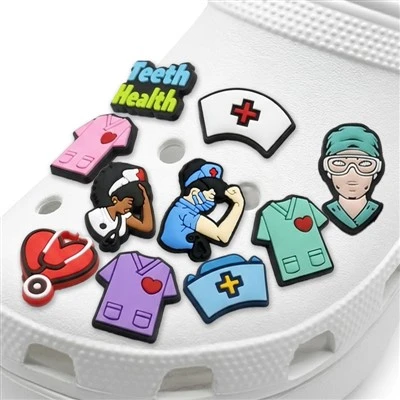
If you’re thinking about ordering custom PVC patches for your brand, team, event, or even just for personal use, hit us up. We do small test orders (as low as 50 pieces) so you don’t have to drop a ton of cash to try us out, and we’ll work with you on every step—from designing the artwork to picking the right materials for exactly what you need. No hidden fees, no weird fine print, just honest pricing and good quality patches.
Attribute Shoe Charms References:
- Association of Plastic Manufacturers. "PVC Resin Properties and Applications." 2023.
- Occupational Safety and Health Administration. "Phthalates in Plastic Products: Safety Standards for Consumer Goods." 2022.
- International Organization for Standardization. "ISO 105-X12: Textiles – Tests for Colour Fastness – Part X12: Colour Fastness to Rubbing." 2021.
- Vinyl Institute. "Sustainable Practices in PVC Manufacturing for Consumer Products." 2023.
Fujian Heyubokuaji Import and Export Co., Ltd.
Fujian Heyubokuaji Import and Export Co., Ltd. is one of the most experienced PVC patches manufacturers and suppliers in China, also supports customized service. We warmly welcome you to wholesale the newest PVC patches in stock here and get quotation from our factory. Quality products and reasonable price are available.
Address: Fourth Floor, No. 20, Shiquan Road, Chixi Community, Meiling Sub-District, Jinjiang City, Quanzhou, Fujian Province
E-mail: admin@hybkuaji.com
WebSite: https://www.hybcustom.com/
