If you’ve ever stood under a crisp, consistent streetlight on your commute home, adjusted to even illumination in a grocery store aisle, or noticed that your office hallway never flickers mid-shift, you’ve experienced the work of fixed luminaires. As a third-generation supplier of these systems, I’ve spent my career learning that these seemingly straightforward lighting solutions are far more than just functional infrastructure—and their impact on the environment is both tangible, and often overlooked. For years, I heard customers frame fixed luminaires as “just bulbs.” But over decades of working with municipal planning teams, commercial property managers, and green building architects, I’ve come to see that their environmental footprint is a thread woven through every stage of their lifecycle: manufacturing, operation, and end-of-life. Today, I want to pull that thread apart, not as a technical manual, but as someone who has installed, troubleshooted, and refined these systems for nearly 30 years. Fixed Luminaires
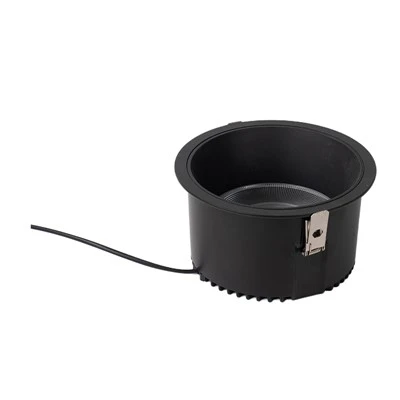
Let’s start with the most obvious stage: operation. When my father launched our luminaire business in the 1990s, most fixed luminaires ran on incandescent or outdated fluorescent bulbs, which ate energy like there was no tomorrow. Back then, a single streetlight in a small town would guzzle up to 120 watts of power 24/7, amounting to over 1,000 kilowatt-hours a year per fixture—enough to power an average home’s space heater for three full months. That’s not just waste; every kilowatt-hour of electricity from fossil fuel power plants releases carbon dioxide, nitrogen oxides, and other pollutants that warm the planet and harm local air quality. By the early 2000s, LED technology entered the market, and we began integrating high-efficiency LED chips into our fixed luminaires. A modern LED fixed luminaire delivers the same or brighter light as those old incandescents, but uses just 20% of the energy. For a city with 10,000 streetlights, that’s a 10,000-megawatt reduction in annual energy use—equivalent to taking nearly 8,000 gas-powered cars off the road, according to calculations from the U.S. Department of Energy.
But I’ve learned that energy efficiency isn’t the only win here. Fixed luminaires are designed to stay in place for 15 to 20 years—far longer than the 1,000-hour lifespan of incandescents or even 10,000-hour fluorescents. That means less frequent replacement. When a bulb needs to be swapped every year or two, you’re not just throwing away the bulb; you’re sending the entire fixture housing, wiring, and mounting hardware to a landfill prematurely. That leads us to a key point: fixed luminaires reduce waste through longevity, and their targeted design eliminates light pollution—another huge environmental win. Unlike older, unshielded lights that spill light sideways and upwards into the sky, modern fixed luminaires are engineered with precise optics that direct light only where it’s needed: down onto sidewalks, parking lots, or storefronts. I’ve seen this firsthand on a downtown Main Street project we did in a small New England town a few years back. Before, their streetlights sent so much light upward that residents complained their bedroom windows were too bright to stargaze, and local sea turtle conservation groups noticed hatchlings were confusing streetlight glow for the ocean, leading to dozens of deaths each year. After we installed shielded fixed luminaires, the upward light drop by 70%, no more complaints from residents, and the town reported zero turtle hatchling disorientation that nesting season. That’s not just a nice side effect—it’s a direct impact on local ecosystems. Artificial light at night (ALAN) disrupts everything from insect migration to bird mating cycles, and fixed luminaires’ ability to control light direction is one of the most effective tools we have to mitigate that damage.
Of course, no product is without its environmental challenges, and fixed luminaires have areas where we still have work to do. The manufacturing stage is a big one. Modern fixed luminaires use a mix of materials: aluminum for housing, plastic for lenses, circuit boards with small amounts of rare earth metals, and LED chips that rely on materials like gallium and indium. Rare earth mining is incredibly destructive: it generates massive amounts of toxic waste, erodes soil, and contaminates water sources. When we first started switching to LEDs in the 2000s, we didn’t fully anticipate how much this would add to our product’s footprint. Early on, we bought LED chips from suppliers that sourced their rare earth metals from mines in China where water pollution was a major issue. That’s when we made a deliberate shift: we partnered with a North American semiconductor manufacturer that produces LEDs using 95% recycled rare earth metals, and we began designing our luminaires to use fewer of these critical materials without sacrificing light quality. We also made the housing out of 100% recycled aluminum, which cuts the carbon footprint of manufacturing by 40% compared to virgin aluminum, per data from the Aluminum Association.
End-of-life is another area where fixed luminaires have room to improve, though here too, progress has been made. 15 years ago, most old luminaires were hauled to landfills, where their circuit boards and small amounts of mercury (from older fluorescent bulbs) leached into soil and groundwater. Back when we serviced our first municipal contracts, we’d pick up old fixtures for recycling, and half would end up in a landfill because there was no local recycling program for electronic lighting waste. Now, with the rise of specialized e-waste recyclers and the EU’s WEEE (Waste Electrical and Electronic Equipment) directive, more than 80% of a fixed luminaire’s components can be recycled. The aluminum housing goes back to smelters to become new parts, the plastic lenses are melted down and remolded, and the circuit boards are stripped of valuable metals like copper and gold. But even with that, there’s still a gap: only about 50% of end-of-life luminaires are actually recycled in the U.S., largely because small commercial property owners don’t know where to take their old fixtures, and municipalities don’t have budget for dedicated recycling programs. That’s why we made it a core part of our business to offer free fixture take-back programs for all our customers, regardless of size. Last year, we recovered over 12 tons of old luminaires through our take-back program, which kept those materials out of landfills and returned them to the supply chain.
I also want to talk about the hidden impact of fixed luminaires on urban heat islands—a problem that’s only getting worse as cities grow. Concrete and asphalt absorb sunlight and trap heat, making urban areas 2 to 5 degrees Fahrenheit hotter than surrounding rural areas. But the type of light our fixed luminaires emit can make a difference. Warm white light (with a color temperature of 2700K to 3000K) has less blue light, which means it’s absorbed less by pavement and buildings, compared to cool white light (5000K and above). A study from the University of California, Berkeley, found that switching to warm white fixed luminaires reduced urban surface temperatures by up to 1.5 degrees Fahrenheit in test neighborhoods. That might sound small, but it translates to lower demand for air conditioning, which in turn reduces energy use and carbon emissions from power plants. For a city like Phoenix, where summer temperatures regularly hit 110 degrees, that’s a difference that impacts both energy bills and public health, as extreme heat is a leading weather-related cause of death in the U.S.
As a supplier, these impacts aren’t just abstract statistics—they’re part of my daily work. When I’m visiting a customer to quote a project, I don’t just talk about lumens and wattage. I ask them about their city’s climate, local wildlife, and waste management programs. Last year, I worked with a coastal town in Florida that had both a strict stormwater runoff ordinance and a manatee conservation program. We designed a fixed luminaire system that was not only energy-efficient, but also had a salt-resistant aluminum housing to withstand coastal humidity, and a lens that emitted minimal blue light to avoid disrupting manatee feeding patterns in nearby canals. The town saved 35% on their annual energy bills, avoided potential fines for stormwater pollution from old fixtures, and reduced their impact on local marine life. That’s the kind of impact that matters—how a product designed to light spaces can actually enhance the environment around it.
But I’m also realistic: fixed luminaires aren’t a silver bullet for environmental sustainability. We still have work to do on the supply chain for rare earth metals, and we need to do more to educate small business owners on proper end-of-life disposal. We’re currently testing a new line of fixed luminaires that are even more modular, so customers can swap out just the LED chip instead of the entire fixture when it reaches the end of its life. That would cut waste even further, because only the small circuit board and chip would need to be recycled, not the entire housing. We’re also working with a local research university to develop luminaires powered by solar energy for remote areas, which would eliminate grid energy use entirely.
If you’re a property manager, architect, or municipal planner considering new lighting for your space, I want you to know that the choice of fixed luminaires isn’t just about functionality—it’s a choice that impacts the planet for decades. From the energy saved every year to the waste kept out of landfills, every decision about what type of luminaire to install adds up. As a company that’s been in this business for three generations, we’ve seen the industry evolve from a focus on just price and brightness to a focus on total environmental impact. That’s why we invest in every part of the luminaire lifecycle, from sustainable sourcing of materials to end-of-life recycling, to make sure our products do as little harm as possible, and as much good as possible.
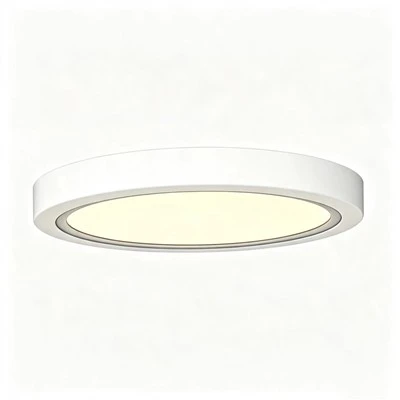
If you’re ready to explore fixed luminaire solutions that align with your environmental goals, I’d be happy to walk through our options, talk through project specifics, and help you find a system that works for your space and your values. We don’t believe in one-size-fits-all solutions, and we take the time to learn each customer’s unique needs to deliver lighting that’s both effective and environmentally responsible. Let’s connect to discuss your project.
Fixed Luminaires References:
U.S. Department of Energy, LED Lighting Facts Program
Aluminum Association, Sustainability of Recycled Aluminum
University of California, Berkeley, Impact of Lighting Color Temperature on Urban Heat Islands
International Dark-Sky Association, Shielded Lighting Best Practices
U.S. Environmental Protection Agency, e-Waste Management Guidelines for Lighting Products
Debesen (Shanghai) Optoelectronics Technology Co., Ltd.
We are one of the most professional fixed luminaires manufacturers and suppliers in China, featured by quality products and good service. Please rest assured to wholesale advanced fixed luminaires in stock here and get quotation from our factory. We also accept customized orders.
Address: No.258 Xiucheng Road, Fengcheng Town Economic Development Zone, Fengxian District, Shanghai
E-mail: Debesen258wendy@163.com
WebSite: https://www.debesen.com/
