Ever stared at your car’s steering wheel, turning it lock to lock without a second thought, and wondered what makes that twisty little cable behind all the buttons work for years (or not so long)? As a spiral cable supplier who’s spent the last decade fixing, testing, and shipping these parts, I get questions like this every single week—from DIY mechanics to fleet managers who just had another go fail on them. Let’s break it down straight, no fancy jargon, just the real tea on how long these things actually last, what kills ‘em early, and what you can do to make yours stick around longer. Spiral Cable

First off, let’s get what a spiral cable even is out of the way, ‘cause a lot of folks mix it up with airbag clocks (they’re the same thing—yes, the “clock spring” is just the nickname we use in the shop). It’s that flat, flexible copper-wire ribbon coiled tight like a slinky hidden under your steering column. It connects your steering wheel buttons: horn, cruise control, volume, lane keep assist, even airbag sensors that can’t just drape loose when you turn the wheel 360 degrees or more. Without it? Either those buttons stop working, or worse, your airbag could fail to deploy in a crash. Not the kind of part you wanna ignore.
Now for the lifespan question. Most of the time, a properly installed, high-quality spiral cable will last the life of your car—150k to 200k miles, or 10 to 15 years, whichever comes first. But hold up— that’s the best case. I’ve seen them die at 30k miles, and I’ve had a customer tell me his lasted 22 years in a 1998 Honda Civic he still drives to work. The difference between those two extremes? Design, build quality, how you drive, and how you mess with the steering column.
Let’s dive into the factors that eat away at that lifespan, ‘cause that’s where most problems start. First, build quality. I’ve seen cheap off-brand cables from overseas that use thin copper wire, flimsy plastic housing, and no proper lubrication to help that ribbon twist smoothly. Those break way faster. We test every spiral cable in our shop by cycling it through 10,000 full steering turns (that’s basically 100k miles of use) before it leaves our warehouse. Cheaper brands? They stop at 2,000 cycles, tops. That’s why you see so many $20 spiral cables failing in 2 years—they’re not built for the long haul.
Then there’s how you drive. Wait, really? Yeah. Flicking the wheel back and forth tight in parking lots, or cranking it all the way left or right and holding it there for more than a second (like when you’re stuck in a tight spot and the guy behind you is honking)? That puts way too much tension on the spiral cable. The ribbon can’t twist or untwist fully, so it starts to fray, or the plastic core that holds it in place snaps. I had a customer last month who blew two spiral cables in 6 months just ‘cause he’d crank the wheel all the way to the curb every time he parked his truck. He said he didn’t even think about it—just a bad habit that cost him $300 in repairs.
Next, steering column work. If you ever take your car to a mechanic to replace a power steering pump, remove the steering wheel, or fix a ignition switch, they have to disconnect the spiral cable. If they don’t line it up right when they put it back? That’s a death sentence. Most good mechanics know to mark the steering wheel straight, pull the old cable loose, fit the new one at the center point (so it has equal twist left and right), and test it before tightening everything. But cut-rate mechanics? They’ll yank it out, jam the new one in, and boom—next time you turn the wheel, the ribbon snaps. I see this way too often, and it’s preventable.
Environmental factors too. Wait, how does weather affect it? Spiral cables have plastic housings, right? Extreme cold makes plastic brittle—so if you park your car outside in -20°F (-28°C) winter, that plastic can crack when you turn the wheel. Extreme heat? Sitting in a parking lot in 100°F (38°C) sun all summer makes the rubber insulation on the copper wire degrade, leading to short circuits. Salt, too—if you drive on icy roads that get sanded or salted, salt can seep into the housing and corrode the copper contacts inside. All of that adds up to shorter life.
Now, the red flags that your spiral cable is about to die, so you can catch it before it leaves you stranded. First, the most obvious: your horn stops working, or goes off randomly on its own. That’s usually the first sign. Next, cruise control buttons stop responding, or volume control on your steering wheel doesn’t work. Then, if you get a dash light for the airbag that won’t turn off—especially after you did steering work recently—that’s a dead giveaway. If you’re driving and any of these pop up, don’t ignore ‘em. A dead airbag isn’t something to mess with.
Wait, can you extend the lifespan? Absolutely, small stuff. First, stop cranking the steering wheel all the way to the stop and holding it. Let go as soon as you feel resistance—most modern cars have a limit, so holding it there just strains the cable. Second, when you get steering work done, make sure the mechanic checks the spiral cable’s alignment. Don’t be shy to ask, “Did you center the clock spring when you installed it?” That’s not being rude, that’s saving you money. Third, if you live in a super hot or super cold place, maybe look for a spiral cable with a reinforced plastic housing and insulated wire—those are made for harsh climates, and they last longer. At our company, we offer climate-specific options for that exact reason.
Let me throw in a real example to make this concrete. Last year, we shipped a spiral cable to a guy in Minnesota who drives a 2017 Ford F-150. He told us he replaced his third one in 5 years, and all the mechanics said it was normal. Turned out, his mechanic the second time didn’t center the cable properly, and the first one he bought was a cheap no-name brand. We sent him our heavy-duty version for cold climates, and 18 months later he reached out to say it was still working perfectly. He said he even adjusted his parking habit to stop holding the wheel all the way, and that helped too.
Another example: a fleet company that runs 10 delivery vans, each with 150k miles a year. They used to go through a spiral cable every 12 months until they switched to our commercial-grade ones. Now those vans have gone 3 years without a replacement, saving them thousands in downtime and parts costs. That’s the kind of win we’re proud of, ‘cause we know these parts aren’t just for cars—they keep people working.
Wait, let’s clear up a common myth: you can’t “over twist” a properly aligned spiral cable. The whole point of it being coiled is that it can extend 360 degrees left and right, no problem. The problem is when it’s misaligned, so it only twists half as much, leading to fraying. I see so many folks think turning the wheel more than a few times will break it, but no—modern ones are built for full rotation, as long as it’s lined up right.
What about aftermarket vs. original equipment manufacturer (OEM) spiral cables? This is a big one. OEM parts are made by the car brand, tested to their exact specs, so they’re built to last. But not all aftermarkets are bad—if you get a high-quality aftermarket from a reputable supplier, like ours, it’s often just as good as OEM, and cheaper. The cheap $20 ones off Amazon? They’re usually knockoffs, built to a cost, so they’ll fail fast. I’ve had customers come to us with a $20 Amazon cable that died in 8 months, and replacing it with ours made it last 4 years. That’s the value of a good part.
So to wrap this up, the average lifespan of a spiral cable? Realistically, 10 to 15 years, 100k to 200k miles, if you have a good part and treat it right. But if you cut corners on the part, have bad habits, or get shoddy work done, it can die in 2 or 3 years. It’s not a “set it and forget it” part, but it’s also not something you should stress over if you do your homework.
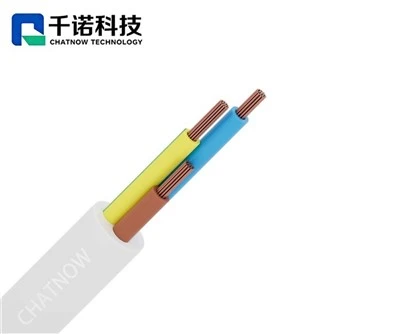
If you’re in the market for a spiral cable, whether you’re a DIY mechanic, a repair shop, or a fleet manager, we’ve got options for every make, model, and use case. We test every part in-house, offer climate-specific designs, and our team can help you pick the right one for your needs. Don’t waste money on cheap parts that die fast—invest in something that’ll keep working for years. If you’ve got questions, or need to place an order, reach out to our team directly to get the right spiral cable for your vehicle.
Microphone Cable References:
- Society of Automotive Engineers (SAE) International. (2020). Performance Standards for Automotive Clock Springs. SAE International Publication J2774.
- Automotive Aftermarket Industry Association (AAIA). (2021). Common Failure Causes of Steering Column Electrical Components. AAIA Technical Bulletin TB-21-04.
- National Highway Traffic Safety Administration (NHTSA). (2019). Vehicle Electrical System Reliability Report: Steering Wheel Control Components. NHTSA DOT HS 812 765.
- Spiral Cable Manufacturers Association (SCMA). (2022). Design Guidelines for Extended-Lifespan Spiral Cable Assemblies. SCMA Technical Report TR-001.
Zhejiang Chatnow New Material Technology Co., Ltd.
Zhejiang Chatnow New Material Technology Co., Ltd. is well-known as one of the leading spiral cable manufacturers and suppliers in China, specialized in providing high quality customized service. Please feel free to wholesale high-grade spiral cable at competitive price from our factory.
Address: Building 12, No.9 Huajin Road, ZhouWangMiao Town Innovation Center, Haining, Zhejiang 314400
E-mail: info@chatnow-cable.com
WebSite: https://www.chatnow-cable.com/
