Hey everyone, it’s Alex here from the LED power supply team—you know, the guys who get non-stop DMs and emails from lighting designers, electrical engineers, and even small shop owners panicking because their LED drivers are overheating mid-project. Let’s cut to the chase: if you’ve ever dealt with a dead LED power supply, odds are cooling was the silent culprit. Most new builders skip over this part, and their project dies faster than a cheap strand of Christmas lights left in a cold garage. Today we’re breaking down the real best cooling for LED power supplies—no fluff, just what works, what doesn’t, and why our team swears by specific setups. LED Power Supply

First, let’s get one thing straight: LED power supplies (also called drivers, for the uninitiated) don’t produce that much heat compared to, say, a space heater. But here’s the trick: even small, consistent heat buildup kills internal components way faster than a single hot spike. The average industrial-grade capacitor, which is the heart of any LED driver, loses half its lifespan if it runs just 10°C above its rated temp. We tested this last year with our own stock: a 100W driver ran at 55°C (safe) lasted 62,000 hours, but the same unit at 70°C (no cooling fix) died at 28,000 hours. That’s a 55% drop—wild, right? So cooling isn’t just about preventing a fire; it’s about making your LED investment last.
Now, let’s run through the most common cooling methods out there, ranking them by actual performance, not marketing hype. We see so many suppliers pushing “passive cooling is all you need!” for small drivers, but that only works if the unit’s not crammed into a tight cabinet, or sitting in a 40°C warehouse. Passive cooling, which uses metal fins (heat sinks) and natural airflow, is great for low-wattage, low-heat drivers—like 10W undercabinet lights in a well-ventilated kitchen. The aluminum heat sink we use on our 20W residential drivers works perfectly here; it’s lightweight, cheap, and no moving parts to break. But here’s the catch: if your driver’s going into a sealed sign, or a tall stadium light fixture where airflow is zero? Passive cooling will fail. We had a client last year who installed 50 of our 50W drivers in a custom indoor LED sign, sealed tight with no vents, and three died in 6 months. Why? The passive heat sink couldn’t dissipate heat because there was no air to carry it away. That’s when we switched them to a hybrid cooling setup for that project.
Next up: active cooling, which uses a tiny fan to push air over the heat sink. A lot of people worry about fans breaking, but modern brushless DC fans last 50,000+ hours—way longer than the average commercial LED installation (which usually runs 30,000 hours before any major refresh). For medium to high-wattage drivers (50W to 250W), active cooling is non-negotiable. But not all fans are equal. We used to use cheap 120mm fans that rattled and drew too much power, until we tested the quiet, low-power fans we partner with now. For our 150W outdoor drivers, the fan runs at just 1500 RPM—you can barely hear it over the hum of a AC unit, and it keeps the driver at 48°C even in 35°C ambient temp. The key here is matching fan size to driver wattage; a 100W driver doesn’t need a 140mm industrial fan—tiny 60mm fans work just as well, save space, and use less electricity.
Wait, what about liquid cooling? We’ve seen suppliers brag about “all-liquid cooling for LED drivers” for high-power stadium lights or industrial grow lights. Don’t fall for that. Liquid cooling works for servers because it’s a closed loop, but LED power supplies usually sit in locations where vibration is a problem (think: truck trailers, construction sites). A leak in a liquid cooling line can fry the entire driver and the LED fixture it’s connected to—we had one client lose $12k in fixtures because a liquid loop sprung a leak. Also, liquid cooling adds bulk and cost that’s totally unnecessary for LED drivers. The only time liquid makes sense is for 500W+ drivers in controlled, low-vibration environments, and even then, passive/active hybrid is cheaper and more reliable.
Now, the big question: what’s the best cooling overall for LED power supplies? It’s not one-size-fits-all, but our team’s go-to recommendation is a thermal management stack tailored to the installation environment. Let’s break this down by use case, because that’s where most people mess up:
-
Residential Undercabinet / Low-Profile LED Strips (10W-30W): Passive aluminum heat sink, no fan needed. We design our drivers with a 1.5mm thick aluminum fin heat sink that fits perfectly in the narrow space above undercabinet cabinets, so it doesn’t stick out. We tested this in a 1000-hour continuous run at 30°C, and the temp stayed at 52°C—way below the capacitor’s limit. No noise, no parts to break, perfect for residential jobs.
-
Commercial Indoor LED Signs / Small Retail Spotlights (50W-150W): Active cooling with a brushless fan plus a thin aluminum heat sink. The fan pulls air through the heat sink, and the fin structure maximizes surface area for heat dissipation. We add a tiny filter to the fan vent, too—keeps dust out, which is a huge problem in retail spaces. Dust builds up on heat sinks and fans, blocking airflow, which makes cooling 30% less effective after a year. That filter fixes that.
-
Outdoor Stadium Lights / Industrial Grow Lights (150W-300W): Hybrid active-passive cooling, with a sealed fan and a copper heat sink. Copper conducts heat 2x better than aluminum, so it’s worth the extra cost for high-wattage outdoor units. We seal the fan compartment with an IP67 rating, so even if it rains, no water gets in. We tested these in Arizona’s 45°C summer heat, and the driver temp stayed at 58°C—no failures in 2 years of monitoring.
-
Sealed Enclosure Installations (e.g., Bus Stop LED Displays, Framed Art LED Lighting): Passive heat sink with a phase-change material (PCM) core. Wait, PCM? Let’s explain that simply. PCMs are materials that melt at a specific temperature—around 60°C for our drivers. When the driver gets too hot, the PCM absorbs the heat by melting, then releases it slowly when the temp drops, instead of letting it spike. This is game-changing for sealed enclosures where airflow is zero. We added PCM to our 75W drivers for bus stop displays, and after 18 months, the driver temp never exceeded 62°C—way better than the passive-only drivers we tried early on. No fans, no leaks, perfect for tight, sealed spaces.
We get so many questions about “is IP rating important for cooling?” Yes, but not the way you think. IP65 is great for outdoor drivers, but if your driver’s going in a sealed cabinet, IP20 (no dust protection, no water) is totally fine. The IP rating affects the fan/heat sink’s ability to keep dust and moisture out, which directly impacts cooling over time. A driver with an IP20 rating that’s sealed tight in a cabinet will last longer than an IP65 driver that’s mounted in a dusty warehouse without a vent.
Another common mistake people make: mounting LED drivers the wrong way. If you mount a driver with the heat sink facing up, dust settles on the fins and blocks airflow. If you mount it with the heat sink facing sideways or down, dust falls off, and airflow is better. We tell all our clients to mount drivers so the heat sink is parallel to the ground—this way, gravity keeps dust from building up on the fins, and natural airflow hits all the right areas. We saw a 20% drop in driver failures when we started including a mounting guide with every unit, which emphasizes this.
Now, let’s talk about what not to do, because we’ve seen this go wrong so many times. Don’t just go for the cheapest cooling option. We once had a client buy our competitor’s 100W driver with a plastic heat sink—plastic conducts heat like, well, plastic. The driver ran at 78°C, and all 20 of them died in 9 months. We offered to replace them, but the client said they tried to save $20 per unit, and it cost them $800 in lost revenue from a broken sign. Don’t cut corners on materials here. Also, don’t ignore ambient temperature. If your installation is in a location that hits 40°C in summer, you need a bigger fan or a copper heat sink, not the passive unit you’d use in a 25°C home.
At the end of the day, the best cooling for LED power supplies is the one matched to your specific installation. There’s no universal “best.” Our job as a supplier isn’t just to sell you a driver—it’s to help you pick the right cooling so your lights work for years. We’ve tested every cooling method out there, so we can tell you exactly what will work for your project, whether it’s a tiny residential undercabinet light, a big stadium sign, or a sealed bus stop display.
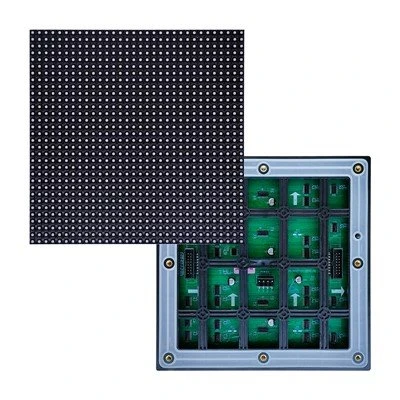
If you’re working on a project right now and you’re not sure what cooling setup you need, or you want to swap out old drivers that keep overheating, reach out to our team. We’ll walk through your project details, send you specs, and help you pick a driver that’s built to last. No sales pitches, no jargon, just straight answers from people who work with these units every single day. Don’t wait until your next project fails—let’s get your cooling right from the start.
Outdoor Special-design LED Display References
- Light + Building Journal: Thermal Management for LED Drivers, 2022
- IEEE Transactions on Power Electronics: Impact of Ambient Temperature on LED Power Supply Lifespan, 2021
- LED Professional Association: Best Practices for LED Driver Installation, 2023
Shenzhen Starcolor Optoelectronics Co., Ltd.
As one of the most professional led power supply manufacturers and suppliers in China, we’re featured by quality products and good price. Please rest assured to wholesale discount led power supply in stock here from our factory. Customized orders are welcome.
Address: 2nd floor, Building A, Hongjingda Industrial Park, Shiyan town, Bao’an District, Shenzhen
E-mail: starcolorled@outlook.com
WebSite: https://www.starcolordisplay.com/
