If you’re a lighting designer, a café owner upgrading your ambiance, or someone sprucing up their home, LED color bulbs are one of the most versatile tools you can use. But here’s a question we get from buyers every single day: “How do I pick the right base size for my LED color bulb?” Skip the generic “check your old bulb” tip—we’re LED color bulb suppliers, so we know base sizing isn’t just about matching a thread; it’s about fit, functionality, and avoiding headaches down the line. LED Color Bulb
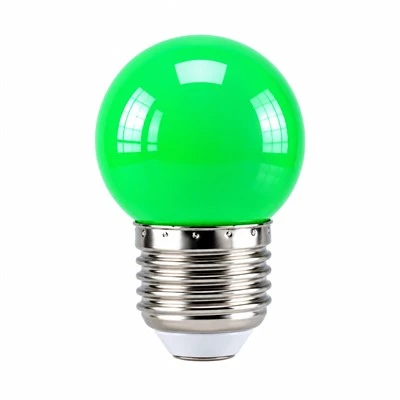
Let’s start with why this matters so much. A bulb that looks like it should fit could be too loose, too tight, or the wrong shape entirely—and that’s not just an inconvenience. If your LED color bulb doesn’t seat properly, you might get flickering light, short circuit the bulb’s internal drivers, or even damage your fixture over time. We’ve had customers come back to us saying they bought a “standard” bulb and it wouldn’t screw into their pendant light, or it wobbled so bad the color projection was uneven. That’s avoidable with a little intentional sizing, not just guesswork.
First, let’s break down the most common base sizes you’ll encounter, because not all bases are created equal. The International Electrotechnical Commission (IEC) and North America’s ANSI set the standards for these, so we’ll stick to the ones our customers ask about most. We’ll use the two-digit code you’ll see printed on your old bulb or fixture—no confusing jargon, promise.
E26 and E27 are what most people call “medium bases” or standard bases. You’ll see the “E” stand for Edison screw, and the number is the diameter in millimeters. That makes sense, right? E26 is 26mm, E27 is 27mm. Here’s the key difference: E26 is used almost exclusively in North America (US, Canada, Mexico) for residential fixtures, table lamps, and most overhead pendant lights. E27 is the standard in Europe, Australia, Asia, and most of the rest of the world. If you’re reading this from, say, the UK, a E26 bulb will have a smaller thread than your fixture’s socket, so it’ll never screw all the way in. We recently had a customer from Singapore send a photo of their old bulb: it was marked E27, and they’d ordered E26, thinking they were the same size. They ended up with a bulb that was loose enough to fall out when they jostled their lamp. That’s the first big rule: check your geographic region first for E26 vs E27.
Next, E12 and E17—these are “candelabra” bases, smaller than medium. E12 is 12mm, the tiny base you’ll see in chandeliers, wall sconces, nightlights, and some decorative string lights. E17 is 17mm, often called an “intermediate” base, which is slightly wider than candelabra but smaller than medium. You’ll find E17 in under-cabinet lighting, some range hoods, and certain appliance lights, like the inside of a refrigerator or oven. We caution customers here not to mix E12 and E17 up for decorative fixtures, because a candelabra base bulb in an E17 socket won’t seat securely—again, leading to flickering or broken bulbs. A customer a few months back tried to put a E12 RGB bulb in their E17 under-cabinet light, and it kept turning off mid-program because the connection was so bad. That’s a quick fix once you get the size right.
Then there are the specialty bases, which people run into less often but still ask about: GU10 and GU24. These are “bi-pin” bases, meaning they’re two prongs instead of a screw thread—super common for track lighting, recessed downlights, and spotlights, especially in commercial spaces. The number here refers to the distance between the two prongs, in millimeters: GU10 is 10mm between prongs, GU24 is 24mm. The “GU” stands for “Grounded Unifilar,” basically meaning two parallel prongs. A lot of people mix these up with screw bases, so let’s be clear: if your fixture has holes for two prongs, it’s a bi-pin base, not an Edison screw. We’ve had a restaurant client order 50 GU10 color bulbs for their track lighting, and their handyman tried to screw them into the sockets because he didn’t notice the prongs. That was a waste of 50 bulbs, and we got to walk him through how to test a bi-pin base (just check if there’s no screw thread, only two small holes on the sides) to avoid that mistake.
Okay, so you know the base sizes—but that’s only half the story. You also have to check the bulb’s shape and overall dimensions, because even if the base fits, the bulb itself might be too big for your fixture. A common example is recessed downlights: a GU10 bulb might have a standard A-shape or a PAR shape (the round, spotlight-style bulb), but some recessed cans have shallow openings. If your bulb’s total height is longer than the fixture’s socket depth, it’ll stick out too far, or you won’t be able to screw/seat it all the way. We always tell customers to measure their old bulb’s length and width if they’re replacing a color bulb in a fixture that’s tight. For example, if your old A19 bulb (the standard pear-shaped one) is 4.3 inches long, don’t buy a color bulb that’s 5 inches long—it’ll hit the inside of your pendant light’s shade.
Another thing to consider is the bulb’s intended use. If you’re buying an LED color bulb for mood lighting in your living room, you can go with a standard E26/E27 A-shape, but if you’re using it for a spotlight in a retail display, you’ll need a PAR or BR shape with a GU10 base. Those shapes are built for directional light, so the base has to be designed to hold the heat and the directional beam without overheating. We test every one of our color bulbs to make sure their base is matched to the bulb’s power and thermal output—so you don’t have to worry about the base being too small and causing the bulb to overheat, which can shorten its life or even be a fire risk.
Wait, what about older fixtures? If you’re working with a vintage light, like a 1950s chandelier, you might have a custom base size. That’s rare, but it happens. We once had a customer with a vintage vanity light that used a B22 base— that’s a bayonet base, where you push the bulb in and twist it, instead of screwing it. B22 is super common in the UK and parts of Asia, so if you’re in that region, don’t forget to check for bayonet bases, not just Edison screw or bi-pin. Bayonet bases have two small pins on the side, so they’re easy to spot once you know what to look for. For custom bases, we always recommend bringing your old bulb to a hardware store or a lighting supplier—we also make custom base adapters if needed, though that’s a last resort because adapters can add resistance and cause overheating if they’re not high-quality.
Now, let’s walk through a step-by-step process you can use right now to pick the right base size, no guesswork required. First step: turn off your light, unplug the fixture if it’s movable, and remove your old bulb. Inspect the base: is it a screw (Edison), bi-pin, or bayonet? Note the number next to the letter (E, GU, B) on the bulb. If you can’t read the text, measure the base diameter with a ruler: if it’s ~12mm, it’s E12; ~17mm, E17; ~26mm, E26; ~27mm, E27. For bi-pin bases, measure the distance between the two prongs: 10mm is GU10, 24mm is GU24. Step two: check your region to confirm if E26 or E27 is standard (North America = E26, rest of world = E27) to avoid the size mix-up we talked about. Step three: measure your old bulb’s total length and width, and check the fixture’s opening depth if it’s a tight space, to make sure the new color bulb won’t stick or get stuck. Step four: if you’re using the bulb for a specific purpose (spotlight, mood light, under-cabinet), make sure the base is matched to the bulb’s shape—you don’t want a standard A-shape in a GU10 track light, because it won’t focus light the same way.
We’ve learned a lot working as LED color bulb suppliers over the years, and the number one mistake people make is assuming all bases with the same letter are interchangeable. E26 and E27 look almost identical, but they have different thread pitches—so an E26 bulb will never screw all the way into an E27 socket, and vice versa. That’s not a defect in your fixture or the bulb, it’s just a standard difference between regions. We also see people skipping the shape check: a customer tried to put a 6-inch long color bulb in a 4-inch deep recessed can, and it wouldn’t seat, so they sent it back. Now, on every product page for our LED color bulbs, we list both the base size and the bulb’s dimensions, so you don’t have to guess.
Another factor to mention: dimmability, if that’s important to you. A lot of LED color bulbs are dimmable, but some dimmable models are designed for specific bases. For example, dimmable E27 color bulbs have slightly thicker bases to hold the dimming driver, so make sure if you’re buying a dimmable bulb, the base is the same size as your original, not just a smaller one. We always label our dimmable bulbs clearly, so you know what size to look for.
What about commercial use? If you’re a business owner buying in bulk, base size matters for maintenance too. Your electrician will thank you if all your track lighting uses GU10 bases, or all your overhead fixtures use E27, because it’s easier to stock replacement bulbs. We work with dozens of cafes, retail stores, and offices, and we always advise them to standardize base sizes across their locations to cut down on maintenance costs. No more running to the store for three different bulb sizes when one burns out—stock the right base, and you’re done.
Let’s wrap this up with a quick cheat sheet, so you don’t have to scroll back through all the details:
- Edison Screw (E): Threaded, measured in mm diameter. E26 = North America standard; E27 = global standard. E12 (12mm) = candelabra; E17 (17mm) = intermediate.
- Bi-Pin (GU): Two prongs, measured in mm between prongs. GU10 = track/spotlights; GU24 = recessed/energy-efficient fixtures.
- Bayonet (B): Push-twist, common in UK/parts of Asia; B22 is the most common size.
- Always match region, base size, and bulb dimensions to your fixture.
If you’re still unsure, or you’re a business owner looking to bulk order LED color bulbs for a project, we’re here to help. We can send you sample bulbs to test fit, answer questions about base compatibility, or customize orders for specific projects. Don’t guess at your base size—get it right the first time to avoid wasted bulbs, broken fixtures, and uneven lighting.

To discuss your specific LED color bulb needs, please get in touch to connect with our sales team and coordinate a tailored solution for your space.
LED A-Shape Bulb References
ANSI C81.61: Electric Lamp Bases and Sockets – General Requirements
IEC 60061: Lamp Bases and Caps; Lamp Holders and Lampholders for General Lighting Purposes
Hangzhou Lin’an Mingfeng Electric Parts Co., Ltd.
We are one of the most experienced LED color bulb manufacturers and suppliers in China since 1996. We warmly welcome you to wholesale customized LED color bulb made in China here from our factory. If you have any enquiry about pricelist and quotation, please feel free to email us.
Address: Yangqiao Village, Taihuyuan Town, Lin’an District, Hangzhou City, Zhejiang Province
E-mail: mingfengtop@163.com
WebSite: https://www.mingfengtop.com/
