Hey there! I’m a supplier of MJP 3D printers, and today I wanna chat about something that’s on a lot of people’s minds: the power consumption of the MJP 3D printer. MJP 3D Printer
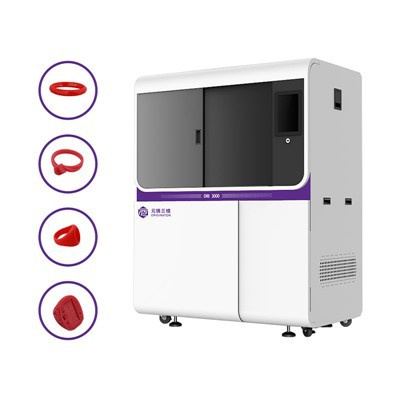
Let’s first understand why power consumption matters. For businesses, every bit of energy used adds up to the operational costs. And in an era where we’re all trying to be more eco – friendly, knowing how much power a machine guzzles is super important. It gives us an idea of not only the financial impact but also the environmental footprint of running the printer.
So, what’s the deal with the MJP 3D printer’s power consumption? Well, it’s not a one – size – fits – all answer. The power usage of an MJP 3D printer can vary depending on a few key factors.
Factors Affecting Power Consumption
Printing Mode
The MJP 3D printer typically has different printing modes. For instance, there’s the high – resolution mode, which is great when you need those super – detailed prints. This mode requires the printer to work really hard, using more precision to lay down each layer of material. As a result, it consumes more power. On the other hand, the standard or draft mode is a bit more laid – back. It sacrifices a bit of detail for speed, and in the process, uses less energy. When running in draft mode, the printer doesn’t have to move the print head as precisely, so the overall power draw drops.
Print Size
It should come as no surprise that the size of the print also impacts power consumption. A larger print means more material needs to be deposited, and the printer has to work for a longer time. The print head has to cover a greater area, and the heating elements (if any) need to stay on for extended periods. For example, if you’re printing a small figurine, it might take an hour or two, and the power consumption will be relatively low. But if you’re printing a big mechanical part that takes a full day, the cumulative power use will be significantly higher.
Material Type
Different materials used in the MJP 3D printer require different amounts of energy to process. Some materials may need to be heated to a higher temperature to reach the right consistency for printing. For example, certain plastics have a higher melting point, so the printer’s heating system has to work harder. On the other hand, there are some more flexible or low – melting – point materials that don’t require as much energy to heat up and extrude.
Typical Power Consumption Figures
Now, I can’t give you an exact number for every situation, but I can share some ballpark figures. On average, when the MJP 3D printer is in standby mode, it might consume around 50 – 100 watts. This is just enough to keep the printer’s electronics in a ready state, so it can quickly start up when you’re ready to print.
When it’s actively printing, the power consumption can jump up. For a small – to – medium – sized print in standard mode, it could be around 200 – 300 watts. But if you’re doing a large, high – resolution print, the power draw could reach 400 – 500 watts or even more.
Let’s break it down a bit. Say you have a small business and you’re running the MJP 3D printer for about 8 hours a day. If it’s mostly doing standard – sized prints in standard mode, and we assume an average power consumption of 250 watts during printing and 75 watts in standby (let’s say it’s in standby for 2 hours a day), we can do a quick calculation.
The energy consumed during printing is 250 watts * 6 hours = 1500 watt – hours or 1.5 kilowatt – hours (kWh). The energy consumed in standby is 75 watts * 2 hours = 150 watt – hours or 0.15 kWh. So, in total, the printer uses 1.5 + 0.15 = 1.65 kWh per day.
If your electricity cost is, say, $0.15 per kWh, then the daily cost of running the printer is 1.65 kWh * $0.15/kWh = $0.2475. Over a month (assuming 22 working days), that’s about $5.45.
How Does It Compare?
Compared to other large – scale industrial machinery, the MJP 3D printer’s power consumption is actually quite reasonable. Many traditional manufacturing processes, like injection molding or CNC machining, require a huge amount of power to operate large motors and heating systems. The MJP 3D printer, on the other hand, uses energy more efficiently by only depositing material where it’s needed.
But when you compare it to smaller, desktop 3D printers, the MJP tends to use more power simply because it’s a larger machine with more capabilities. Desktop printers usually have a lower power draw, often in the range of 50 – 150 watts during printing. However, they also can’t produce prints of the same size and quality as the MJP 3D printer.
Managing Power Consumption
If you’re concerned about power consumption, there are a few things you can do. First, try to batch your prints. Instead of running the printer for a small print here and there throughout the day, group them together. This way, you reduce the amount of time the printer spends starting up and shutting down, which can be energy – intensive processes.
Another thing is to choose the appropriate print mode. If detail isn’t super – critical, go for the draft or standard mode. It’ll save you a good amount of energy over time.
You can also monitor your printer’s usage patterns. If you notice that it’s often in standby for long periods, consider putting it into a deeper sleep mode or even turning it off completely when not in use.
Conclusion
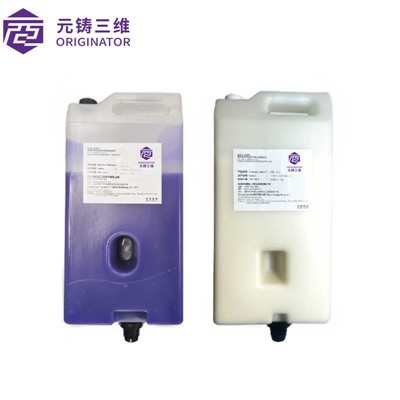
So, to sum it all up, the power consumption of the MJP 3D printer depends on several factors like printing mode, print size, and material type. While it does use more power than some smaller desktop printers, it’s actually quite efficient compared to many traditional manufacturing techniques. And with a few smart strategies, you can manage its power consumption to keep costs down and be more eco – friendly.
Jewelry 3D Printer If you’re looking to invest in an MJP 3D printer for your business or personal projects, I’d love to have a chat with you. Understanding power consumption is just one piece of the puzzle, and I can provide you with all the details you need to make an informed decision. Whether it’s about print quality, material options, or overall performance, I’m here to help. Drop me a message for a friendly chat and we can start exploring how the MJP 3D printer can fit into your needs.
References
- 3D Printing Technology Handbook: Covers general information about power consumption in 3D printers.
- Industry reports on energy usage in manufacturing equipment.
Hangzhou Originator 3D Technology Co., Ltd.
Hangzhou Originator 3D Technology Co., Ltd. is one of the most experienced mjp 3d printer manufacturers and suppliers in China. With abundant experience, we warmly welcome you to wholesale high quality mjp 3d printer made in China here from our factory. Contact us for more details.
Address: Room 403, Building 2, Block B, Heda Incubation Park,No. 452, 6th Avenue, Xiasha, Qiantang District,Hangzhou, Zhejiang, China
E-mail: Sales@originator3d.com
WebSite: https://www.originator3d.com/
