In the modern industrial landscape, the pursuit of sustainability has become a driving force for innovation and business strategy. As a supplier of generator shafts, I often find myself engaged in discussions about the feasibility of producing these critical components from recycled materials. This blog aims to explore the technical, economic, and environmental aspects of making generator shafts from recycled materials, drawing on industry knowledge and personal experience. Generator Shaft

Technical Feasibility
Generator shafts are subjected to high mechanical stresses, including torsion, bending, and vibration. Therefore, the material used for their manufacture must possess excellent mechanical properties, such as high strength, toughness, and fatigue resistance. When considering recycled materials, the key question is whether they can meet these stringent requirements.
Material Composition and Quality
Recycled materials, such as scrap metal, can vary significantly in composition and quality. The presence of impurities, alloying elements, and microstructural variations can affect the mechanical properties of the final product. However, with advanced recycling technologies, it is possible to purify and refine recycled metals to achieve the desired chemical composition and microstructure.
For example, electric arc furnaces (EAF) can be used to melt and refine scrap steel, removing impurities and adjusting the alloy content. This process allows for the production of high – quality steel with consistent mechanical properties, suitable for generator shaft applications. Additionally, non – destructive testing (NDT) methods, such as ultrasonic testing and magnetic particle inspection, can be employed to ensure the quality and integrity of the recycled material.
Manufacturing Processes
The manufacturing process of generator shafts also plays a crucial role in determining the feasibility of using recycled materials. Traditional manufacturing methods, such as forging and machining, can be adapted to work with recycled metals. Forging helps to improve the mechanical properties of the material by aligning the grain structure, while machining ensures the precise dimensions and surface finish of the shaft.
However, some challenges may arise during the manufacturing process. For instance, recycled materials may have a higher porosity or inhomogeneity compared to virgin materials, which can affect the machinability and the final quality of the shaft. To overcome these challenges, manufacturers need to optimize the manufacturing parameters, such as forging temperature, machining speed, and tool selection.
Economic Considerations
In addition to technical feasibility, economic factors also influence the decision to use recycled materials for generator shaft production.
Cost of Recycled Materials
One of the main advantages of using recycled materials is the potential cost savings. The cost of scrap metal is generally lower than that of virgin materials, especially in a market where the supply of scrap is abundant. By using recycled materials, manufacturers can reduce their raw material costs, which can lead to a more competitive pricing strategy.
However, the cost of recycling and refining the scrap metal must also be taken into account. The energy consumption and the cost of equipment for recycling processes can offset some of the savings from using cheaper raw materials. Therefore, it is essential to conduct a detailed cost – benefit analysis to determine the overall economic viability of using recycled materials.
Market Demand and Pricing
The market demand for generator shafts made from recycled materials is also a critical factor. Some customers may be willing to pay a premium for sustainable products, while others may be more price – sensitive. As a supplier, it is important to understand the market trends and customer preferences to develop a pricing strategy that balances the cost of production and the market demand.
Environmental Benefits
The use of recycled materials in generator shaft production offers significant environmental benefits.
Reduction of Energy Consumption
The production of virgin materials, such as steel, requires a large amount of energy. In contrast, recycling scrap metal consumes significantly less energy. According to industry statistics, recycling steel can save up to 74% of the energy required to produce steel from iron ore. By using recycled materials for generator shafts, we can contribute to the reduction of global energy consumption and greenhouse gas emissions.
Conservation of Natural Resources
The extraction of natural resources, such as iron ore and coal, has a significant environmental impact. These resources are finite, and their continued extraction can lead to ecological degradation and depletion. By recycling scrap metal, we can reduce the demand for virgin materials and conserve natural resources for future generations.
Challenges and Limitations
Despite the potential benefits, there are also some challenges and limitations associated with using recycled materials for generator shafts.
Supply Chain Management
Ensuring a stable supply of high – quality recycled materials can be a challenge. The availability of scrap metal can be affected by factors such as market demand, collection rates, and international trade policies. As a supplier, it is necessary to establish a reliable supply chain and work closely with recycling partners to ensure a consistent supply of suitable recycled materials.
Quality Control
Maintaining strict quality control is essential when using recycled materials. The variability in the composition and quality of scrap metal can make it more difficult to ensure the consistency and reliability of the final product. Advanced quality control measures, such as in – process testing and post – production inspection, are required to meet the high standards of the generator shaft industry.
Conclusion
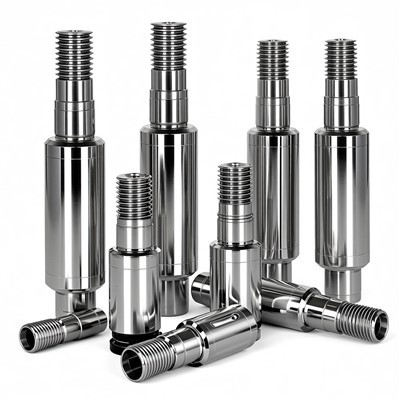
In conclusion, it is technically and economically feasible to make generator shafts from recycled materials. With the development of advanced recycling technologies and quality control measures, recycled materials can meet the high mechanical requirements of generator shafts. Moreover, the use of recycled materials offers significant environmental benefits, including energy savings and resource conservation.
Generator Shaft As a generator shaft supplier, I am committed to promoting sustainable practices in the industry. I believe that by using recycled materials, we can not only reduce our environmental impact but also offer our customers high – quality products at competitive prices. If you are interested in learning more about our generator shafts made from recycled materials or wish to discuss potential purchasing opportunities, please contact us to start a business negotiation.
References
- "Metallurgy of Steel and Recycling Processes", Metallurgical Society of the American Institute of Mining, Metallurgical, and Petroleum Engineers
- "Sustainable Manufacturing and Supply Chain Management: Best Practices and Case Studies", Journal of Industrial and Production Engineering
- "Energy Efficiency in Metal Recycling", International Energy Agency
Ningbo Uni-drive Technology Co., Ltd.
Ningbo Uni-drive Technology Co., Ltd. is one of the most professional generator shaft manufacturers and suppliers in China. Please feel free to buy cheap generator shaft made in China here and get pricelist from our factory. All customized products are with high quality and competitive price.
Address: Industrial Site No. 6, Jingtou Village, Sanqi Town, Yuyao City, Zhejiang Province
E-mail: admin@uni-drive.com.cn
WebSite: https://www.motordriveshaft.com/
