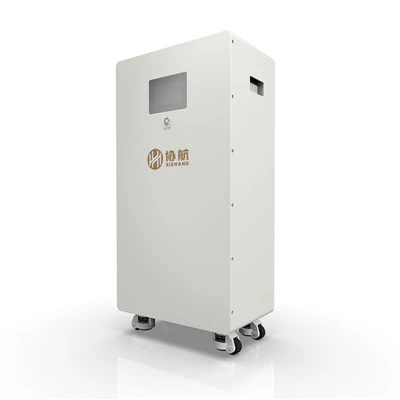
Hey there, let’s cut to the chase – if you’re an industrial owner, you’ve probably stared at three huge headaches lately: sky-high energy bills that make your monthly P&L bleed, EV charger installation nightmares that turn your parking lot into a construction zone, and that unused roof or open yard space you’ve been wasting on nothing but dust and old pallets. As someone who’s been selling PV-storage & EV charging all-in-one systems for the last 7 years, I get it – you’re skeptical, and honestly, I don’t blame you. I’ve had more plant managers tell me “that’s too good to be true” than I can count. But today, I’m gonna break down exactly why these systems don’t work just for homeowners or small cafes – they kill in industrial settings, no fluff, no corporate jargon. PV-Storage & EV Charging All-in-One System

First, let’s do the quick science check (no lab coats required, promise). What even is an all-in-one PV-storage-EV charging system, anyway? It’s not three separate boxes you have to wire and fight with – it’s a single, integrated unit that works like a well-oiled team. The PV panels on your roof (or your empty lot) suck up sunlight during the day, turn it into electricity, and instead of feeding every spare watt back to the grid for 3 cents (rip, that’s nothing), it stores the excess in a battery bank right on-site. Then, when your forklifts, delivery vans, or employee EVs need charging? It pulls from that stored solar power first, not the grid. Oh, and if your factory has peak energy demand times (like when all your assembly lines kick on at 8 AM), it can dip into the battery to avoid those brutal demand charges – that’s the stuff that makes your energy bill jump 20% out of nowhere, by the way.
Now, let’s talk industrial-specific use cases, because that’s where this system actually shines. I once worked with a food processing plant outside Detroit – they had a huge roof that was just sitting there, and their delivery fleet was made up of 12 box trucks that were still running on gas. They were paying $18k a month for energy (grid + gas for trucks) plus another $5k a month in demand charges. We installed a 200 kW all-in-one system on their roof in 2021, and now they cover 75% of their fleet charging and 60% of their factory energy with solar-storage, cutting their total energy bill by $14k a month. That’s $168k a year back in their pocket – enough to hire two extra line workers, or fix that broken loading dock they’ve been putting off for 2 years.
Another big one: industrial sites with backup power needs. Let’s say you’re a manufacturing plant that can’t afford downtime – one power outage and you’re looking at thousands in spoiled product, missed orders, angry clients. Most industrial sites use diesel generators, but those are expensive to run, smelly, and require constant maintenance. Our all-in-one system has built-in backup functionality – if the grid goes down, the battery kicks on in less than 100 milliseconds, keeping your servers, refrigeration units, or critical assembly lines running. And instead of burning diesel, it’s running on stored solar power. I had a metal stamping plant in Ohio test this during a summer blackout last year – their backup generator would’ve cost them $800 in diesel to run 8 hours, but the system ran their whole operation for free from stored solar. That’s not a gimmick, that’s real savings.
Wait, but let’s address the elephant in the room: why would a “one-size-fits-all” system work for industrial, when industrial needs are all over the place? The thing is, modern all-in-one systems aren’t one-size-fits-all anymore. We size them to your exact needs – if you’re a warehouse with 20 dock spots and a 500 kW energy load, we scale the PV panels and battery bank to match. If you have a logistics yard with 50 delivery vans, we add enough charging ports to juice ‘em all at night without stressing the grid. And unlike separate systems, there’s less wiring, less maintenance, and less risk of something breaking because all the parts are made to work together. I’ve seen guys who installed separate solar, separate storage, separate EV chargers – they spent twice as much on installation, and had a problem where the solar and charger were fighting over power because they weren’t integrated. Our system avoids that entirely.
Now, let’s talk about the things I don’t lie about – the tradeoffs, because no system is perfect. First, upfront cost. Yeah, it’s more expensive than a single charger or a basic solar setup – but here’s the secret: industrial sites have way longer payback periods than homeowners. A residential system might take 5-7 years to pay for itself, but an industrial one? Usually 3-4 years. Because you’re running the system 12 hours a day, every day, not just on weekends. The Detroit food plant I mentioned earlier paid off their entire system in 38 months, not 5 – that’s because they’re using the charging and storage non-stop. Second, space – if your roof is covered with old HVAC units or inventory, you might need a little ground space for the battery bank, but most industrial sites have empty yards or unused parking lots that are perfect for it. And third, permitting – I won’t sugarcoat it, working with cities on industrial projects can be a pain, but we handle all the permits, the inspections, and the utility coordination for our clients. That’s part of the package, so you don’t have to deal with filling out 100 forms.
Another big win for industrial: EV charging scalability. More and more industrial fleets are switching to electric – Amazon, Walmart, every big logistics company is going EV. If you wait to install chargers until you need 20, you’ll end up doing a messy electrical upgrade that costs way more. Our all-in-one systems are modular – you can start with 5 charging ports, and add more later as your fleet grows, without redoing the whole setup. The battery and PV panels can handle the extra load because they’re sized to expand with you. I had a construction company in Texas that started with 3 work vans, added 10 more over 2 years, and just added a second system to their site – no hassle, no rewiring, just plug in the new modules.
Let’s also talk about energy resilience, which is huge right now. Grid instability is getting worse – summer heatwaves make the grid overload, winter storms take out power lines, utility companies are raising rates like it’s their job. Industrial sites are the ones that get hit hardest by this. Our all-in-one system locks in your energy costs – you’re paying for the solar once, not fluctuating grid rates that can go up 15-20% a year. The battery acts like a buffer, so when grid rates are high (like peak hours, 4-9 PM), you don’t touch the grid – you use stored solar. For factories that operate during those peak times, that’s a massive saving. I work with a packaging plant in Pennsylvania that runs 24/7 – they used to pay $0.35 per kWh during peak hours, now they pay $0.02 per kWh for their stored solar. That’s not a typo – that’s 94% savings on their most expensive energy.
Wait, but what about people who say “my site doesn’t get enough sun?” Yeah, that’s a fair point. But even if you’re in a cloudy area, modern PV panels are way more efficient than they were 10 years ago. I installed a system for a distribution center in Seattle – it’s overcast half the year, but the system still covers 50% of their energy and charging needs. The battery stores what little sun there is, and uses it when it’s needed. And if you have very limited sunlight, we can even size the system to work with a small grid connection, but even then, it’s still cheaper than running on grid power alone.
Let’s get real about maintenance too. I know industrial sites don’t have time for broken equipment. Our all-in-one systems are built for tough conditions – dust, heat, cold, rain. They have weather-sealed panels and batteries that are rated for industrial use, not just home use. And we do quarterly check-ins for all our clients – we monitor the system remotely 24/7, so if something’s off, we catch it before it becomes a problem. No more calling an electrician at 2 AM because your charger died mid-charge for your delivery vans.
Now, let’s address the numbers that actually matter for industrial owners. Let’s say you’re a mid-sized warehouse with: 30 delivery vans, a 250 kW energy load, $25k a month in energy costs (grid + gas for trucks). Our all-in-one system would cost around $250k upfront. Over 5 years, you’d save $180k in energy and fuel costs, plus another $40k in avoided demand charges – that’s $220k total, so you’re only out of pocket $30k, and then every year after that, you save $40k+, plus you avoid future rate hikes. That’s a no-brainer. And if you qualify for tax incentives – the US has a 30% federal tax credit for commercial solar and storage, plus state incentives for EV charging – that cuts the upfront cost even more. The warehouse I worked with in Illinois got a $75k tax credit, so their out-of-pocket was $175k, and they paid it off in 32 months.
But here’s the thing – I don’t want to sell you something you don’t need. If you’re a tiny factory with 2 employees and 1 van, this might not make sense. But if you have a fleet, high energy bills, downtime risks, or unused space? This is perfect. I’ve had clients who were on the fence for 6 months, and after comparing their old energy bills to our projected savings, they signed on in a week. One of the biggest mistakes industrial owners make is waiting to switch to renewable energy – they think it’s too complicated or too expensive, but the alternative is letting energy bills eat into your profits, and grid instability disrupting your operations.
Now, let’s wrap this up – I don’t do sales pitches that end with “buy now!” without giving you a next step. If you’re an industrial owner tired of overpaying for energy, dealing with messy EV charger installations, or worrying about power outages ruining your day, let’s chat. I can come out to your site, do a free, no-obligation energy audit, and show you exactly how much you can save. No pressure, no fine print, just real numbers based on your specific operations.
At the end of the day, industrial settings are all about efficiency, savings, and reliability. Our all-in-one PV-storage-EV charging system checks all three boxes – it’s not just a trendy green tech, it’s a tool that puts cash back in your pocket and takes the headache out of energy management. I’ve seen it work for warehouses, factories, distribution centers, construction yards – and I can tell you, it works for yours too.
Don’t let another month of high energy bills and EV charger construction delays pass you by. Reach out, and let’s make your industrial site run smoother, cheaper, and more reliable.
C&I Energy Storage References:
- International Energy Agency. (2023). Global EV Outlook 2023: Charging Infrastructure.
- U.S. Energy Information Administration. (2022). Commercial Building Energy Consumption Survey: Industrial Facilities.
- Solar Energy Industries Association. (2023). Utility-Scale and Commercial Solar Market Report.
- Edison Electric Institute. (2022). Demand Charges and Industrial Energy Costs.
- National Renewable Energy Laboratory. (2023). Integrated PV-Storage-EV Charging Systems for Commercial Applications.
Zhejiang Xiehang New Energy Equipment Co., Ltd.
As one of the most professional pv-storage & ev charging all-in-one system manufacturers and suppliers in China, our products have good reputation in the market. Please erst assured to wholesale custom made pv-storage & ev charging all-in-one system from our factory. If you have any enquiry about cooperation, please feel free to email us.
Address: No.5 Hechen Road, Zhouwangmiao Town, Haining, Jiaxing City, Zhejiang Province, China
E-mail: dan.wu@xiehang.net
WebSite: https://www.shineonpower.com/
