Hey there, if you’re here, you’re probably in the market for a skid-mounted fuel station (or just curious about what keeps these portable fuel setups from going sideways) — and let’s be real, nobody wants a station that sparks when it’s supposed to pump, or glitches mid-delivery. As someone who’s been supplying skid stations for 12 years now, I’ve seen way too many projects derail because folks skipped even the basic EMC checks. Let’s break this down like we’re chatting over a coffee, not a 100-page regulatory manual. Skid-mounted Fuel Station
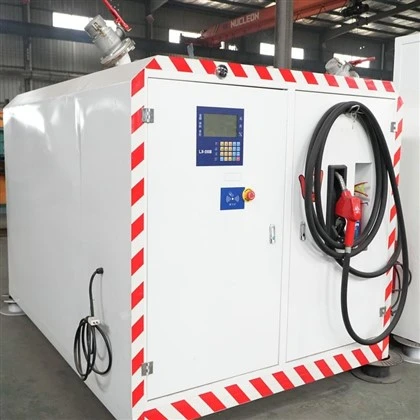
First, let’s get one thing straight: EMC for skid-mounted fuel stations isn’t just “electronics working together.” It’s two big jobs — Electromagnetic Compatibility means your station doesn’t accidentally broadcast noise (that’s emissions) that messes with nearby devices, and it also doesn’t throw a fit when it’s hit with outside interference (that’s immunity). For a skid station, that’s a tight, pre-assembled package of parts: fuel pumps, digital meters, tank level sensors, maybe a card reader for payments, and even wiring that snakes from the control panel to every component. Toss in that these stations often live in remote spots (construction sites, farms, small fleets) where they’re sitting next to radios, backup generators, or even other skids working nearby, and you’ve got a recipe for problems if you skip the EMC rules.
Let’s start with emissions, because that’s the part that can be a headache for neighboring gear, and also, a fire risk if you’re not careful. Wait, hold on — why does a fuel station’s electronics matter for fires? Oh right, if a component is emitting stray electromagnetic radiation in the right frequency, it could ignite fuel vapors, especially if the station’s located in a classified hazardous area. Classified areas are a big one here: NFPA 70 (that’s the US National Electrical Code) splits fuel storage into Zone 0 (inside the tank, explosive vapors 24/7), Zone 1 (near the fill points, vapors sometimes there), and Zone 2 (outside, rare vapors). Your skid’s electronics can’t throw sparks or emit enough noise in Zone 1 to light those vapors up.
Here’s the practical stuff we make sure every skid leaves our warehouse with: all electronics that go near the fuel tank or fill lines are “intrinsically safe” — that means their power and signal levels are so low, even if they short out, they can’t generate enough heat or voltage to ignite fuel. We don’t skimp on that. Also, we test every skid’s conductive emissions — basically, how much noise travels through the wiring to nearby devices. Last year, a customer tried to save a few bucks by using off-the-shelf wiring instead of our shielded, flame-resistant stuff, and their station’s pump was messing with a nearby generator’s control panel. We had to retrofit shielding on-site, which cost them way more than if they’d stuck with our EMC-compliant parts from the start.
Next up, immunity — the part where outside interference breaks your station. Let’s say you’ve got a skid at a construction site, where there are huge power tools, a CB radio for the crew, and maybe a portable TV for the guys taking a break. If your station’s control panel glitches every time someone turns on a jackhammer, that’s a failed EMC check. We’ve all seen that: the meter displays frozen, the pump won’t stop running, or the card reader won’t swipe. For a skid station, that’s not just annoying — it can lead to overfilling a tank (huge safety risk) or losing revenue because the payment system is down.
What do we do to nail immunity? First, all our signal cables (from tank sensors, card readers) are shielded, not just regular copper. Shielding blocks outside electromagnetic noise. We also test every skid against common interference levels — like what you’d get from a 1000W radio transmitter 10 feet away, or power line noise. For fleets that use RFID tags at fueling, we make sure the station’s RFID reader doesn’t interfere with other gear on site, and vice versa. Last quarter, a delivery company came to us after their old skid’s reader was interfering with their delivery truck’s telematics system — we fixed it by adjusting the reader’s frequency and adding a ground strap to the skid frame. Simple, but it saved them from switching to a whole other fuel supplier.
Wait, let’s talk about grounding — that’s the unsung hero of EMC for skid stations. A lot of new suppliers cut corners here, thinking “a ground rod is a ground rod,” but no — skids are metal, pre-assembled, so you need a proper single-point ground, not multiple grounds. Multiple grounds can create “ground loops” which are a huge source of emissions and interference. We install a 8-foot copper ground rod per skid, and run a single heavy-gauge ground wire to every component, so all the electronics share the same ground reference. That’s non-negotiable for us. I’ve seen skids where the pump was grounded to the skid frame, the control panel grounded to the wall, and the card reader grounded to a separate rod — that caused a 0.5V voltage difference between the components, making the meter register wrong. Total mess.
Now, who’s making sure these rules are followed? For most regions, it’s not just a suggestion — it’s code. In the US, NFPA 70 Article 513 covers hazardous locations, and also has EMC requirements for electrical equipment in those areas. In the EU, it’s the EMC Directive (2014/30/EU) which mandates that any equipment sold there meets immunity and emissions standards. In places like Canada, it’s CSA C22.2 No. 61010-1 for industrial control equipment, plus hazardous area standards. Here’s the thing: as a supplier, we don’t just “claim” our skids are compliant — we test each batch in a third-party lab, and provide a Certificate of Conformity so our customers don’t get fined when their inspector shows up. I can’t tell you how many times a customer has come back because their old skid supplier forgot the CoC, and they failed a site inspection. That’s avoidable.
Wait, let’s address a common misconception: smaller skid stations (like 5000-gallon ones for small fleets) don’t need as much EMC work. No, that’s wrong. Even a 2000-gallon skid with a card reader and a basic pump can have issues. Last year, a small landscaping company bought a cheap skid from a no-name supplier, and their card reader would only work if they stood 2 feet away. When they called us for a fix, we found the reader wasn’t shielded at all, so it was picking up noise from their trailer’s battery charger. We replaced the reader and added shielding, and it worked perfectly. For that customer, it was a $150 fix instead of a $3000 new skid.
Another thing: as technology changes, EMC requirements do too. These days, a lot of skid stations have telematics — apps that let you monitor fuel levels, track fueling events, even order fuel remotely. That adds wireless components (like cellular modems) which need EMC checks too. The modem can’t emit noise that interferes with nearby cellular signals, and it can’t get disrupted by the station’s own pump. We test our telematics units for both, because if the modem drops a signal mid-fueling, you can’t track if a driver siphoned fuel — that’s a big security risk too.
So, what’s the takeaway here? EMC for skid-mounted fuel stations isn’t a regulatory hoop to jump through. It’s about safety (no ignitions), reliability (the station actually works when you need it), and peace of mind (you don’t have to worry about fines or glitches). As someone who’s been doing this for over a decade, I’ve seen the difference between a supplier that cuts EMC corners and one that prioritizes it. Our skids go through every test: emissions, immunity, grounding, hazardous area compliance, telematics checks — before they leave our facility.
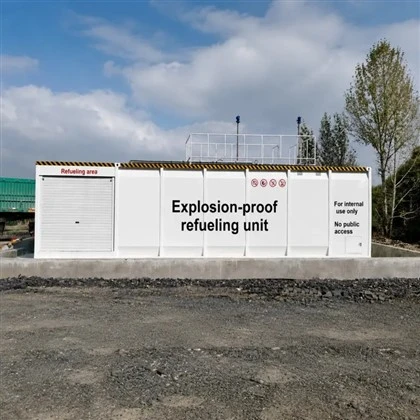
If you’re shopping for a skid-mounted fuel station, don’t just ask “how much” or “what size.” Ask about EMC compliance. Ask for test reports. Ask how they handle shielding and grounding. And if you’ve got questions about your current setup, or you’re ready to replace that finicky skid that’s been giving you headaches, reach out. We’d be happy to walk you through our EMC process, answer any questions, and help you pick a skid that fits your needs without the surprises.
Mobile Fuel Station References
NFPA 70®: National Electrical Code®, 2023 Edition, National Fire Protection Association
Electromagnetic Compatibility (EMC) Directive 2014/30/EU, European Parliament and Council
CSA C22.2 No. 61010-1-12, Safety Requirements for Electrical Equipment for Measurement, Control, and Laboratory Use, Canadian Standards Association
Shandong Jingcai Industry and Trade Co., Ltd.
As one of the most professional skid-mounted fuel station manufacturers and suppliers in China, we also support customized service. With abundant experience, we warmly welcome you to wholesale high quality skid-mounted fuel station in stock here from our factory. Contact us for free sample.
Address: Caojiazhuang Village Industrial Park, Lingcheng Town, Qufu City, Jining City, Shandong Province.
E-mail: shandongjingcai888@gmail.com
WebSite: https://www.sdjingcaicn.com/
