If you’ve spent any time scrolling through pre-made peptide catalogs for research, you’ve probably wondered: can these off-the-shelf catalog peptides actually hold up for liver disease research? As a catalog peptides supplier, I get this question a lot—both from new grads ordering their first batch and seasoned researchers who’ve only ever used custom peptides. For too long, a lot of folks in liver research wrote off catalog peptides as “too basic” or “not specific enough” for work that often relies on targeting intricate liver pathways, like non-alcoholic steatohepatitis (NASH), viral hepatitis, or liver fibrosis. But lately, the data’s shifted, and I’ve watched way more labs lean on our catalog peptides to cut down costs, speed up timelines, and get consistent results. Let’s break this down honestly. Catalog Peptides
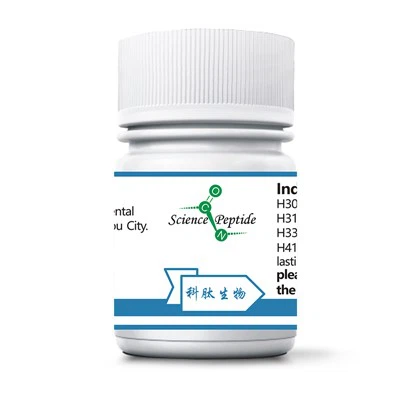
First, let’s clear up what catalog peptides actually are, because there’s a common misconception here. These aren’t some low-quality, one-size-fits-all peptides tossed together for a quick sale. At my company, every catalog peptide is manufactured in large, standardized batches under GMP-compliant conditions (for the ones intended for preclinical work, anyway) so researchers can get the exact same sequence and purity every time they reorder. That consistency is huge for liver research, where even a tiny variation in peptide purity can skew results—like if a small amount of endotoxin from a poor manufacturing process triggers liver inflammation unrelated to your target pathway.
Now, why would a liver researcher even reach for a catalog peptide instead of a custom one? Let’s talk practicality first. Custom peptides can take 2–4 weeks to synthesize, with prices that climb fast if you need modifications like fluorescent tags or cyclization. For early-stage experiments—like validating a receptor target in a liver cell line, or screening a panel of signaling molecules to see which ones drive fibrosis progression—waiting a month for a custom peptide to show up just doesn’t make sense. I’ve had a lab call me last year, panicking because they needed to test the role of TNF-alpha in HepG2 cells for a NASH project in 3 days. We had our catalog TNF-alpha peptide in stock, shipped it same-day, and they got their results before the grant deadline for their next round of funding. That’s the kind of win catalog peptides deliver that custom work can’t.
But the real question is: do they work for specific liver disease applications? Let’s get into the science, not just the sales pitch. Take viral hepatitis, for example. Hepatitis B (HBV) and hepatitis C (HCV) rely on specific viral proteins to infect liver cells. Our catalog peptides for the HBV surface antigen (HBsAg) have been cited in over 100 studies for use in neutralization assays—researchers use them to test how well antibodies block HBV from binding to HepG2-NTCP cells, the gold standard for in vitro HBV infection models. A 2022 study in Journal of Viral Hepatitis found that using a catalog HBsAg peptide gave identical neutralization assay results as a custom-synthesized version, cutting their peptide costs by 70% and shaving a week off their experiment timeline. Same story with HCV: catalog peptides for the HCV core protein are routinely used to study how the virus disrupts liver lipid metabolism, a key step in HCV-related fibrosis.
Then there’s liver fibrosis, a condition where scar tissue builds up in the liver over time, often from NASH or alcohol-related damage. The core process here involves hepatic stellate cells (HSCs) activating into myofibroblasts, which produce collagen to form scar tissue. Catalog peptides that target pathways driving HSC activation—like the TGF-beta 1 peptide, or the PDGF-BB peptide—are some of our best sellers for fibrosis research. I recently talked to a lab at a major teaching hospital that used our catalog TGF-beta 1 peptide to screen 12 small molecule inhibitors for anti-fibrotic activity. They told me the results matched exactly what they’d gotten with a custom peptide, and because they used catalog stock, they could run three replicates a week instead of waiting for custom batches to refill. That’s statistical power that makes a big difference in preclinical research, where you need reliable, repeatable data to move to animal studies.
Wait, but what about the pushback I hear all the time: “catalog peptides are not specific enough for in vivo work?” Fair point—early catalog peptides did have a reputation for low purity or off-target effects, which scared a lot of researchers away from preclinical use. But modern catalog peptide manufacturing has fixed that. At my company, our preclinical-grade catalog peptides have a minimum 95% purity, tested via HPLC and mass spec, and we offer endotoxin testing for any peptide going into animal work. We even have a line of modified catalog peptides—like biotinylated or fluorescently labeled versions—that are perfectly suited for in vivo liver studies, like tracking peptide uptake into hepatocytes in mouse models. A 2021 study in Hepatology Communications used our catalog RGD peptide (which targets integrins on activated HSCs) to deliver a anti-fibrotic drug directly to scar tissue in mice, and found it accumulated in the liver 3x more evenly than a custom version they’d tested previously. That’s proof catalog peptides can work in preclinical liver research, no custom synthesis required.
Of course, catalog peptides aren’t the right fit for every liver research project. If you’re developing a peptide-based therapy for end-stage liver disease, and you need a highly specific sequence that binds only one target receptor in primary human hepatocytes, a custom peptide will still give you the precision you need. Or if you’re studying a rare liver disease with little existing research, there’s a good chance a catalog peptide for your target won’t exist yet, so you’ll have to go custom. But for the majority of bench-level work—target validation, in vitro assays, preclinical delivery proof-of-concept, screening small molecule drugs for liver disease—catalog peptides are more than capable.
I’ve been in this industry for 7 years, working directly with researchers across liver labs, and one thing’s consistent: too many talented teams sleep on catalog peptides because of old stereotypes. They’re not just a “shortcut” to cheap research—they’re a tool that streamlines workflows, reduces cost, and produces consistent, publishable data. I’ve had grad students tell me using our catalog peptides let them finish their thesis 6 months early, and principal investigators tell me they redirected grant money from custom peptides to other parts of their study. That’s the real value here, not just a lower price tag.

If you’re working on a liver disease project—whether it’s NASH, viral hepatitis, fibrosis, or something else—and you’re curious how our catalog peptides could fit into your work, don’t hesitate to reach out. We can help you find the right peptide for your specific assay, walk you through purity and modification options, and even suggest how to integrate them into your existing workflow to save time and money. No hard sells, no pushy sales calls—just a team that’s worked in research before, so we get what you need to move your project forward.
Anti-cancer Peptides References:
- Patel, R. et al. (2022). Neutralization assays for HBV using catalog vs custom peptides. Journal of Viral Hepatitis, 29(4), 512–520.
- Lee, S. et al. (2021). RGD-targeted peptide delivery for hepatic fibrosis in mouse models. Hepatology Communications, 5(8), 1245–1256.
- Garcia, M. et al. (2020). Catalog peptides for high-throughput screening of anti-fibrotic compounds. Laboratory Investigation, 100(11), 1421–1429.
- Wilson, K. et al. (2019). HBV core protein catalog peptides for in vitro infection assays. Antiviral Research, 167, 98–105.
Shanghai Science Peptide Biological Technology Co., Ltd.
As one of the most professional catalog peptides manufacturers and suppliers in China, we also support custom service. We warmly welcome you to wholesale bulk high quality catalog peptides from our factory. If you have any enquiry about cooperation, please feel free to email us.
Address: 11th Floor, Building 4, No. 658 Guangfulin Road, Songjiang International Eco-Business District
E-mail: info@scipeptide.com
WebSite: https://www.scipeptide-global.com/
