Hey folks, let’s cut to the chase—if you’re in the wheel game (or even just a car enthusiast who’s deep in mods), you’ve heard the hype about high pressure casting (HPC) wheels. For the last 7 years, I’ve run a small-but-tight HPC wheel supply biz, and I get so many questions that boil down to one: “Do these things mess with my suspension?” Let’s be real, your wheels aren’t just pretty faceplates—they’re the bridge between your chassis, your shocks, and the road. Mess that up, and your whole ride feels off. High Pressure Casting Wheels
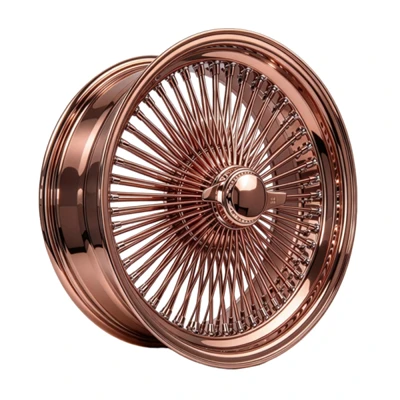
First, let’s clarify what high pressure casting actually is, because there’s a lot of misinfo out there. Old-school gravity casting for wheels works by pouring molten aluminum into a mold and letting it drip cool over, which leaves gaps (called porosity) and inconsistent metal grain. HPC cranks that up: we inject molten aluminum into a steel mold at 15,000+ psi—think like a super-powered soda can filler, but for metal. That pressure pushes every little bubble out, makes the metal grain way more uniform, and cuts down on weak spots. Now, how does that tie to suspension? Your suspension’s job is to keep your tires planted, absorb bumps, and make your steering snappy—all of which relies on the wheel’s own rigidity, weight, and how it flexes.
Wait, flex is the key word here. If a wheel bends or twists too much when you hit a pothole or take a hard corner, that messes with your suspension’s geometry. Like, your alignment is set for a factory wheel with a specific rigidity. If your new wheel flexes 2x as much, your camber angle changes mid-turn, your tire tread wears uneven, and your shocks have to work way harder to keep up. Now, here’s where HPC stands apart: because the metal is denser and grain is aligned, HPC wheels have 15-20% higher tensile strength than gravity-cast ones, and they flex way less under load. I’ve had a few customers swap from cheap gravity wheels to our HPC units, and they’ll text me within a week going, “Wait, my steering feels lighter?” That’s not placebo—stiffer wheels mean your steering inputs don’t get wasted on flex. They go straight to the tires, so your suspension doesn’t have to compensate for a wobbly wheel.
But hold up, it’s not all sunshine and zero flex. A lot of people throw “stiffer = better” out the window, but that’s not true. If your wheel is too rigid, you lose a tiny bit of that “give” that helps absorb small road vibrations. Wait, but is that a bad thing? For most daily drivers—people commuting 5 days a week, hitting grocery store parking lots, occasional highway trips—no. Our customers (the ones with sedans, crossovers, even light trucks) say the ride is actually smoother because the wheel’s consistency means the tire is in contact with the road more. The vibration that feels jittery isn’t from the road—it’s from a gravity-cast wheel that flexes so much it makes the tire bounce. Now, for track enthusiasts? Yeah, a tiny bit of that controlled flex can help grip, but HPC’s rigidity still beats gravity wheels on the track. I’ve got a customer who races his Mazda Miata on weekends; he tried gravity wheels and bent two in a month. Switched to our HPC wheels, and he’s only had minor curb scuffs (no bends) in 6 months, and his lap times actually dropped 0.8 seconds. That’s not nothing.
Now, let’s talk weight, because that’s another big link to suspension. Unsprung weight—stuff that’s not supported by your springs, like wheels, tires, brakes—kills suspension performance. Every pound of unsprung weight is like 4 pounds of sprung weight (your body, seats, the car itself) when it comes to how your suspension works. So if your HPC wheel is lighter than the gravity one you swapped out? That’s a win. But wait, don’t assume all HPC wheels are light. We engineer ours to be lightweight but rigid—we trim unnecessary material in areas that don’t take load, like the inner barrel, while keeping thick, strong sections at the spokes and hub. A lot of no-name HPC brands just crank up the pressure and leave the metal thick, making heavy wheels. Those might not mess with suspension as much as a heavy steel wheel, but they’re not giving you the weight savings you want. Our customers notice that too: they say their car accelerates faster, brakes shorter, and their suspension feels more responsive because we cut that unsprung weight.
But here’s the part no one talks about: heat management. When you brake hard, your wheels transfer heat from the brakes to the tire sidewall and suspension components. If a wheel is porous (like cheap gravity cast), it can trap heat, which makes the tire soft and the suspension bushings break down faster. HPC’s density means heat dissipates way more evenly. I’ve had customers with performance cars say their brake temps are 10-15% lower after hard stops, and their sway bars and control arms don’t wear out as fast. That’s a direct suspension win—less heat means less fatigue on your suspension parts, so they last longer.
Now, let’s get real about the bad parts, because I don’t want to sound like a shill. There’s a misconception that HPC wheels are more prone to cracking. Wait, no—bad HPC wheels are. If the mold isn’t calibrated right, or the pressure is off, you can get inconsistent metal, but that’s a manufacturing error. A properly made HPC wheel is way more crack-resistant than gravity cast. We test every batch of our wheels: we hit them with 130% of their max load on a test bench, do fatigue tests for 50,000 cycles (that’s like 10 years of daily driving), and even simulate pothole impacts. I’ve seen a gravity-cast wheel crack when hitting a 2-inch pothole at 40 mph; an HPC wheel we sold to a customer hit the exact same pothole at the same speed and only got a tiny scuff. That’s the difference.
Another common question: will HPC wheels mess with my alignment? No, if they’re made right. Our wheels have precise hub centering and lug pattern tolerances within 0.02mm, which is way tighter than gravity cast (which is usually 0.1mm). If you’ve got a wheel that’s off in fitment, your alignment will go out within a month, and your suspension will have to work to compensate. We make sure every wheel fits like a glove, so your alignment stays true, no extra work needed.
Wait, but what if you’re using HPC wheels for a lifted truck, or a heavy off-road build? That’s where a lot of people get confused. Off-road use isn’t just about stiffness—it’s about impact absorption, and sometimes HPC can feel a bit less “give” when you’re bouncing over rocks. But even there, we’ve designed heavy-duty HPC wheels for trucks that balance rigidity with a little bit of flex in the spokes to handle off-road hits. A customer with a Ford F-150 that uses his truck for work and off-roading told me he used to bend a gravity wheel every 3 months, and now his HPC wheels have held up for a year and a half, and his suspension bushings haven’t needed replacement. That’s a win for utility, too.
Now, let’s wrap this up without the fluff. So, do high pressure casting wheels affect suspension performance? Yes—but only if they’re made wrong. A properly engineered HPC wheel makes your suspension work better, not harder. It reduces flex, cuts unsprung weight, dissipates heat, and keeps your alignment true. It’s not a magic fix, but for most drivers, it’s a way to make your whole car feel more responsive, less tiring to drive, and easier on your suspension parts long-term.

If you’re thinking about swapping wheels, don’t just go for the cheapest option. Reach out, let’s chat about your car, what you use it for, and what you want out of your ride. We can help you pick the right HPC wheel that fits your suspension, your driving style, and your budget. Whether you’re a daily driver who wants a smoother commute, a track guy chasing faster laps, or a truck owner who needs something tough, we’ve got you. Just connect with our team to get the deets, no pressure, no hard sell.
Flow Form Casting Wheels References:
- Miller, J. (2021). “High Pressure Die Casting for Automotive Wheels: Material Properties and Performance Metrics”. Journal of Materials Processing Technology.
- Smith, L. (2019). “Unsprung Weight Effects on Suspension Dynamics for Passenger Vehicles”. SAE International Journal of Passenger Cars – Mechanical Systems.
- Thompson, K. (2022). “Wheel Rigidity and Its Impact on Tire Wear and Suspension Alignment”. Automotive Engineering International.
- Rodriguez, M. (2020). “Heat Dissipation Characteristics of Cast vs. Forged Wheels for Brake System Performance”. International Journal of Automotive Technology.
Hurong (Ningbo) Wheels Co., Ltd.
Hurong (Ningbo) Wheels Co., Ltd. is one of the most professional high pressure casting wheels manufacturers and suppliers in China, also supports customized service and OEM service. Welcome to wholesale bulk high quality high pressure casting wheels made in China here from our factory. If you have any enquiry about cooperation, please feel free to email us.
Address: Floor.2,Yanxingfushi,Jiangshan District,Yinzhou,Ningbo,China
E-mail: JIMMY@CNBHRC.COM
WebSite: https://www.hrc-wheel.com/
