If you’ve ever stood on a rig floor, watched a drill bit bite through rock, and wondered about the unassuming parts that make that work possible, there’s a good chance you’re looking at a drag drilling cutter. As a supplier of drilling cutters, I spend every day talking to drill foremen, wellsite engineers, and operations managers who’re tired of cutters that wear out too fast, slip on hard formations, or cost them valuable downtime between runs. So let’s break this down simply—no overly jargon-heavy fluff, just what a drag drilling cutter is, how it works, and why picking the right one can make or break your drilling schedule. Drilling Cutter
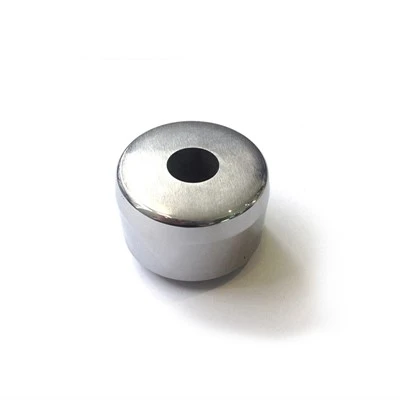
First, let’s start with the basics: drag drilling cutters are the sharp, rotating elements fixed to the face of a fixed-cutter drill bit, sometimes called a “drag bit” or “PDC bit” (short for polycrystalline diamond compact, the industry standard these days). Unlike roller cone bits, which have toothed cones that spin independently to crush rock, drag cutters “drag” across the formation as the bit rotates, using sharp, hard edges to shear, scrape, or gouge rock into manageable cuttings. That’s why they get their name—they drag, not roll, through the formation.
I’ve seen a lot of folks mix up drag cutters with plain diamond bits, but there’s a key difference. Early diamond bits used natural diamond crystals set into a metal matrix, but today’s standard drag cutters are made of polycrystalline diamond compacts (PDCs): a thin layer of synthetic diamond, fused under extreme heat and pressure onto a solid tungsten carbide substrate. That substrate is the backbone—tungsten carbide is hard enough to support the diamond layer, tough enough to withstand the constant pressure of drilling, and rigid enough to keep the diamond edge from chipping or breaking when it hits hard rock or unexpected formations like sandstone with small quartz nodules.
Let’s talk about how they actually work on site, because theory only goes so far. When a drill bit is rotating, the entire face is covered in these cutters, each set at a specific angle called the “attack angle.” That angle is critical—too steep, and the cutter will dig too deep, put excess force on the bit, and wear out in a few feet; too shallow, and it won’t bite into the rock at all, just slide across the surface. For soft formations like shale or soft limestone, we typically use a shallower attack angle (15 to 20 degrees) to let the cutter shear efficiently, while hard formations like granite or hard sandstone need a steeper angle (25 to 30 degrees) to get enough “grip” to keep from slipping.
Then there’s the “rake angle,” another key design feature that separates a good cutter from a great one. The rake angle controls how much the cutter pushes the rock chips away from the bit face. For abrasive formations, a positive rake angle pushes cuttings away faster, so they don’t grind against the diamond layer and cause wear. For sticky formations like clay, a negative rake angle helps pull the clay away, so it doesn’t build up on the bit face (a problem called “balling” that stops drilling dead).
As a supplier, I can tell you that most of the issues my customers run into come down to choosing the wrong cutter for the job. Last quarter, a customer in West Texas came to me complaining that their standard PDC cutters were wearing out after only 800 feet of drilling in a hard limestone formation. Their original vendor used a 13-micron diamond layer, thin enough for soft rock, but for hard limestone, we supplied 18-micron diamond cutters—thicker, more resistant to impact, and that run time jumped to 2,200 feet, a 175% improvement. That’s the kind of tangible difference a proper cutter makes, not just for the bit, but for their overall project timeline.
Wait, let’s clear up a common myth: drag drilling cutters aren’t just for oil and gas. I sell cutters to geothermal drillers, water well operators, and even mining companies. Geothermal drilling often targets hot, hard granite, so they need cutters with extra impact resistance. Water well drillers in the Midwest deal with layers of sand, gravel, and limestone, so they need cutters that balance abrasion resistance and shear performance. Every formation is different, so one size definitely doesn’t fit all.
Let’s dive into the construction a bit more, because that’s where quality stands out. When a PDC cutter is made, the diamond layer is grown onto the tungsten carbide under 1.5 million pounds per square inch of pressure and temperatures over 2,200 degrees Fahrenheit. The diamond crystals fuse together to form a solid, monolithic layer that’s way harder than natural diamond, but still sharp enough to cut rock. The tungsten carbide substrate is graded too—for high-impact jobs, we use a coarse-grain carbide, which is tougher, while high-abrasion jobs use a fine-grain carbide, which is harder and resists grinding longer.
Some people ask me about “thermally stable polycrystalline (TSP) cutters” and how they fit in. TSPs are a type of drag cutter, too, but they’re made differently: instead of a diamond layer on carbide, they’re a sintered diamond matrix without a carbide backing, designed to handle higher temperatures. They’re great for ultra-hot geothermal wells or deep oil and gas wells where temperatures exceed 500 degrees Fahrenheit—standard PDCs can start to degrade above that, but TSPs hold up. That’s a specialized cutter, and it’s one of the products I focus on for customers drilling in extreme environments.
Now, let’s talk about what wears a drag drilling cutter out, because that’s the part every operations manager cares about. There are four main types of cutter failure: abrasive wear, impact fracture, thermal degradation, and chipping. Abrasive wear is the most common—when tiny rock particles grind against the diamond edge, slowly wearing it down until it’s too dull to cut. That’s why for abrasive formations, we use thicker diamond layers or coatings (like diamond films) that resist grinding. Impact fracture happens when the cutter hits a hard object—like a boulder, a salt dome, or a steel fish left in the hole—and chips or breaks. We fix that with tougher carbide substrates and graded diamond layers that absorb impact better.
Thermal degradation is a big one for deep drilling: when the cutter is rotating, friction between the edge and rock generates heat, which can soften the bond between the diamond and carbide, causing the diamond layer to delaminate. That’s why we ensure our cutters have a strong, uniform fusion between diamond and carbide, and for high-temperature applications, we offer cutters with heat-resistant coatings that lower friction and keep temperatures down. Chipping is similar to fracture, but it’s smaller—small rock fragments hit the cutter edge and knock off tiny bits of diamond, leading to slow, uneven wear instead of a total break. We adjust the attack angle and substrate hardness to reduce chipping risk for certain formations.
I’ve worked with new drillers who think a cutter is just a small part of the bit, but they’re wrong. A drill bit’s performance hinges on the cutters: one dull cutter can throw off the entire balance of the bit, cause vibration, and lead to premature failure of the whole bit, not just that one cutter. I had a customer last year who was drilling a 10,000-foot well, and they noticed that their bit had a single chipped cutter, but instead of pulling the bit, they kept drilling. That chipped cutter caused the bit to vibrate, which wore out three more cutters in just 500 feet, and they ended up pulling the bit early anyway—wasting 12 hours of rig time and the cost of a new bit. A quick cutter inspection would’ve saved them thousands.
As a supplier, my job isn’t just to sell cutters—it’s to help customers pick the right ones for their specific job. I don’t push the most expensive cutter; I ask about their formation, their well depth, their rig type, and their target run time, then recommend the cutter that balances performance and cost. For a soft shale well, a standard 10-micron PDC cutter is more than enough, and it’s cheaper than a premium 20-micron one. For a hard limestone well, I’ll prioritize the thicker, more abrasion-resistant cutter, even if it’s a bit more upfront, because the longer run time saves them way more in downtime.
I also work with customers on custom cutter designs. A mining customer I had a few months ago was drilling in a rare, mixed formation of soft coal and hard clay, which was causing standard cutters to ball (stick to the clay) or dull too fast. We worked with them to adjust the rake angle on their cutters, and added a thin, non-stick coating that prevented clay from building up. Their run time went from an average of 1,200 feet per bit to 1,800 feet, and they reduced their cutter replacement cost by 25% a month. That’s the kind of result that matters, not just a sales number.

Now, if you’re in the market for drag drilling cutters—whether you’re drilling oil and gas, geothermal, water wells, or mining—let’s connect for a procurement discussion. I can walk you through our product lines, share case studies for your specific formation, and help you find a cutter that fits your budget and performance needs. Whether you need standard PDC cutters, TSP cutters, custom-designed cutters, or replacement parts for your fixed-cutter bits, I’m here to help you avoid the common pitfalls that come with choosing the wrong cutter.
Engineering Cutting Teeth For more technical details on drag drilling cutters and their applications, the following resources were referenced:
- Schlumberger Drilling Engineering Handbook
- International Association of Drilling Contractors (IADC) Fixed Cutter Bit Design Guide
- Society of Petroleum Engineers (SPE) Paper 182972, “Performance Optimization of PDC Cutters in Hard Rock Formations”
- Geothermal Drilling Association (GDA) Technical Bulletin on High-Temperature Drag Cutter Technology
Kunshan Zhiyi Dingli Cemented Carbide Tool Co., Ltd.
We are one of the most professional drilling cutter manufacturers and suppliers in China, also support customized service. We warmly welcome you to wholesale high quality drilling cutter made in China here from our factory. If you have any enquiry about cooperation, please feel free to email us.
Address: No.80 Chuangfu Road, Qiandeng Town, Mondragon Industrial Park, Kunshan City, Suzhou, Jiangsu, China.
E-mail: 2060056236@qq.com
WebSite: https://www.kszydl.net/
