Why Do Reciprocating Pumps Have Relief Valves?
If you’ve ever worked in fluid transfer—whether in oil and gas, chemical processing, water treatment, or even food and beverage manufacturing—chances are you’ve crossed paths with a reciprocating pump. As a reciprocating pump supplier, I’ve spent thousands of hours walking customers through why these pumps are such workhorses for high-pressure, precise-flow applications. But one question that still comes up again and again, especially from teams new to positive displacement (PD) pumps, is: “Why does my reciprocating pump need a relief valve? Why can’t it just run as-is?” Reciprocating Pump
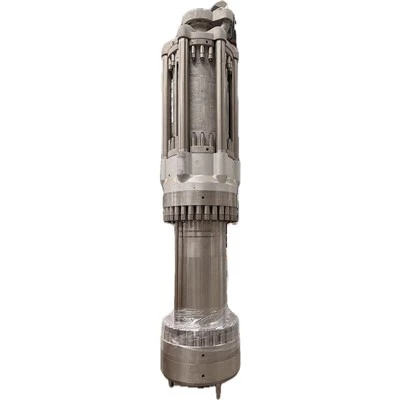
Let me start with a quick refresher on how reciprocating pumps work, because the answer ties directly to their design. Unlike centrifugal pumps, which move fluid by spinning an impeller to create velocity, reciprocating pumps are positive displacement. That means they move a fixed volume of fluid per stroke—think of a piston or plunger moving back and forth inside a cylinder, drawing fluid in on the suction stroke and forcing it out on the discharge stroke. The amount of fluid they move depends on the size of the cylinder and the length of the stroke, not the system’s demand pressure. That’s the core of their power, but also their biggest unique risk.
Here’s the problem in plain terms: If you run a reciprocating pump with the discharge line closed (or partially blocked, or a downstream valve left shut), the pump will keep repeating its strokes. Since there’s nowhere for the fluid to go, it has nowhere to expand, so pressure builds exponentially—fast. A typical reciprocating pump can generate pressures of 10,000 PSI or more with enough strokes, and that pressure doesn’t just disappear. It will damage the pump: it can crack the cylinder, bend the connecting rod, blow out seals or gaskets, or even rupture piping. Worse, unrelieved pressure is a major safety hazard—fluid can shoot out unexpectedly, or a component can fail catastrophically, leading to injury, lost product, or downtime.
But relief valves aren’t just for blocked lines. Let me break down the specific, science-backed reasons they’re non-negotiable for reciprocating pumps, not just a “nice-to-have” add-on.
First, they protect against system pressure surges from downstream changes. In many process applications, downstream demand isn’t constant. Maybe a filter clogs over time, or a control valve in the line partially closes to adjust flow, or a heat exchanger upstream has a temporary restriction. For a centrifugal pump, pressure might rise a little, but the impeller can slip or slow down to compensate. For a reciprocating pump, every stroke is fixed, so that small restriction translates to a spike in discharge pressure. A relief valve acts as a pressure safety valve (PSV) that opens automatically when pressure hits a pre-set threshold—usually 10-15% above the maximum operating pressure of the pump and piping—redirecting excess fluid back to the suction side (or a waste line, depending on the setup) before damage can occur. As someone who’s seen a customer’s $20k plunger pump crack because a filter clogged and they skipped a relief valve, I can tell you this isn’t a theoretical risk. It’s a preventable cost.
Second, they prevent overpressure from pump operational errors. Even with a perfectly designed system, human error happens. An operator might forget to open the discharge valve before starting the pump. Or they might set the pressure controller too high on a variable stroke adjustment. Or in a multi-pump setup, one pump’s discharge valve might be closed while the others are running, creating a bottleneck that pushes pressure above safe limits. Relief valves act as a fail-safe here—they don’t rely on a human to monitor pressure and shut off the pump; they react in milliseconds to stop the overpressure event before it causes harm. I always include in my pump installation guides that relief valves should be tested on initial startup, not just added and forgotten. A relief valve that’s stuck closed is as bad as no relief valve at all.
Third, they enable safe, controlled system startup and shutdown. When you start a reciprocating pump, the initial inrush of fluid can create a pressure spike as the pump ramps up to full stroke. If there’s no relief valve, that startup spike can be enough to trip pressure sensors or damage piping joints. Similarly, when shutting down a reciprocating pump, the sudden stop of the piston can create a vacuum on the discharge side, and pressure can build rapidly if the line is blocked. A relief valve (paired with a suction vacuum breaker, for good measure) smooths out these transient pressure events, making startup and shutdown safer and less stressful on equipment. I’ve had customers tell me they skipped relief valves to save money, only to have their pump trip on startup three times in a month—adding up to more downtime than the cost of the valve would have been.
Now, let’s talk about what makes relief valves for reciprocating pumps different from, say, relief valves for centrifugal pumps. Centrifugal pumps have a “low pressure, high flow” design when overloaded, so their relief valves are often sized for large volume, lower pressure. Reciprocating pumps, by contrast, are high-pressure, fixed-flow, so their relief valves need to be faster-acting, more robust, and sized to handle the exact flow rate of the pump’s discharge stroke. If you size a relief valve too small, it won’t redirect enough fluid to keep pressure from spiking. Too big, and it can cause instability—redirecting too much fluid can create pressure fluctuations in the suction line that disrupt the pump’s operation. That’s why, as a reciprocating pump supplier, I always work with customers to size relief valves based on the pump’s maximum flow rate, maximum operating pressure, and the system’s piping size. It’s not a one-size-fits-all part; it’s a critical component that needs to be matched to the application.
I also want to address a common misconception: some customers think they can just install a pressure switch that shuts off the pump when pressure is too high, and skip the relief valve. While pressure switches are a good secondary safety measure, they’re not a replacement for a relief valve. Pressure switches rely on electrical signals and controller logic—they can fail from a power outage, a faulty sensor, or a wiring issue. A relief valve is a mechanical, passive safety device that works even if the power is out. For critical applications (like chemical processing where downtime can lead to hazardous material releases), redundancy is key. A relief valve is the first line of defense, pressure switches and motor protection are the second.
Let’s also talk about maintenance, because relief valves aren’t set-it-and-forget-it. Reciprocating pumps handle abrasive fluids (like slurry in mining) or corrosive chemicals, so the relief valve can get debris stuck in it, or its spring can weaken over time, leading to it opening too early or not at all. That’s why I recommend quarterly testing for relief valves on reciprocating pumps—you can test them by slowly closing a discharge valve until the relief valve opens, confirming it’s at the pre-set pressure. If it’s not, you need to adjust or replace it. I once had a customer whose relief valve opened at 1,000 PSI instead of the 1,500 PSI it was set for, because a mineral buildup on the seat prevented it from closing properly. That caused a 30% loss in pump efficiency, and they didn’t notice until a month later when their production rates dropped. Regular relief valve checks are part of keeping a reciprocating pump running at peak performance.
Now, let’s get into when you need a relief valve—and when you might think you don’t, but you probably still do. For example, if you’re running a reciprocating pump into an open tank, you might think there’s no closed line to build pressure, right? Wrong. Even an open tank creates a backpressure—if the tank is full, the fluid level creates a pressure head that can restrict flow, leading to pressure spikes. Or if the tank’s vent is blocked, that creates a closed space, same as a blocked line. I’ve seen a customer’s pump fail because a tank vent was accidentally closed, even though the line was open to the tank. So regardless of the discharge end, a relief valve is a must.
What about suction-side relief valves? Sometimes customers ask if they need those, too. Yes, in some cases. If you’re pumping a fluid with high viscosity, or if the suction line is long, the pump’s suction stroke can create a vacuum that draws fluid in, but if the suction line is restricted, that vacuum can get too high, leading to cavitation. A suction relief valve (often called a suction stabilizer) helps maintain consistent suction pressure, preventing cavitation which damages the pump’s valves and cylinders. It’s another small component that makes a big difference in longevity.
As someone who’s been supplying reciprocating pumps for over a decade, I’ve seen firsthand how skipping relief valves leads to avoidable costs and safety issues. I’ve worked with mining operations that lost $50k in production when a pump cracked because a relief valve was omitted, and food processing plants that had to shut down for a day because a relief valve failed to trigger, leading to a leak in a sanitary line. The relief valve isn’t just a safety part—it’s an investment in the pump’s lifespan, in worker safety, and in uptime.
If you’re in the market for a reciprocating pump, or if you’re looking to upgrade your existing setup, don’t treat the relief valve as an afterthought. It’s not a cheap add-on, but it’s one of the most critical components for reliable, safe operation. I’ve helped dozens of customers select the right relief valve for their application, from high-pressure plunger pumps for oil and gas to low-pressure diaphragm pumps for water treatment. Each application is different, so getting the right size, pressure rating, and type of relief valve (spring-loaded, pilot-operated, etc.) is key.

If you’re ready to talk through your reciprocating pump needs, or you have questions about relief valve sizing and installation, I’m here to help. Let’s connect to discuss your specific application and make sure your pump setup is safe, reliable, and ready to perform.
High Pressure Pump References
- Pump Handbook, 4th Edition, McGraw-Hill Professional
- API Standard 674, Positive Displacement Pumps – Reciprocating
- “Reciprocating Pump Safety: Key Components for Overpressure Protection”, Pumps & Systems Magazine, 2022
- Hydraulic Institute Standards for Centrifugal, Rotary and Reciprocating Pumps, 2019
Hangzhou Turbo Energy Technology Co., Ltd.
As one of the most professional reciprocating pump manufacturers and suppliers in China, we’re featured by quality products and good price. Please rest assured to buy advanced reciprocating pump made in China here from our factory. We also accept customized orders.
Address: C712, Block C, Westlake International Science and Technology Building, Huaxing Branch Road, Xihu District, Hangzhou, Zhejiang, China.
E-mail: sales@turboenergytech.com
WebSite: https://www.hangzhouturboenergy.com/
