If you’ve ever shopped for a new spring mattress, chances are you’ve heard the phrase “break-in period” thrown around—usually paired with vague claims like “it takes a few weeks” or “you’ll get used to it.” As a spring mattress supplier, I’ve fielded this question from hundreds of customers over the years, and I’m here to tell you there’s no one-size-fits-all answer, but there is science and real-world experience to back up what works. Let’s cut through the marketing noise and get to the truth about how long it actually takes to break in a spring mattress, what affects the timeline, and why it matters for your sleep. Spring Mattress
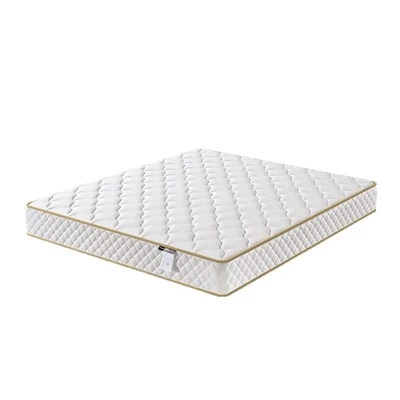
First, let’s define what a break-in period even means for a spring mattress. When you unbox a new spring mattress—whether it’s an innerspring with classic coil support, a pocketed coil model, or a hybrid that pairs springs with foam layers—the materials inside aren’t yet adapting to your body, your weight, and your sleep style. The steel coils, the quilted top layer, even the fabric cover all have a temporary “set” from being compressed in a box or rolled tight during manufacturing and shipping. That’s not a flaw; it’s just how these products are made. What feels “too firm” or “uncomfortable” in the first few nights is rarely a sign of a bad mattress—it’s the materials waking up.
Over the past 12 years in the spring mattress industry, I’ve noticed most customers start to adjust their expectations around the 21-day mark, but full break-in usually hits between 30 and 90 nights. Wait, that’s a wide range, right? Let’s break down the factors that make that timeline shift. The biggest one is weight. I once had a customer in the 250+ pound range message me at 2 weeks saying his mattress was way too hard—he thought he’d wasted his money. I asked him to give it 6 more weeks, and when he reached out again at 8 weeks, he told me it was the most comfortable sleep he’d had in years. His extra weight meant the coils took longer to compress just enough to cradle his hips and shoulders. For average-weight sleepers (150–200 pounds), the break-in is faster, usually 30–60 days. For sleepers under 150 pounds, it can take even less, sometimes 21–45 days, because their body weight is enough to loosen the coils and settle the materials without extra time.
Sleep style matters too. Back sleepers tend to need a bit more time because their weight is distributed more evenly across the mattress, so coils across a wider surface need to adjust. Stomach sleepers often feel a faster change, since their core weight compresses the middle coils more quickly, and side sleepers? They fall somewhere in between, though if they carry most of their weight on their hips and shoulders (common for side sleepers), that’s extra resistance the coils have to work through. I also see a difference between types of spring mattresses. Pocketed coils, which are individual coils wrapped in fabric and move independently, usually have a shorter break-in period than traditional continuous coils, because each coil is free to adapt to pressure rather than being linked to a whole row of coils. Hybrids, which add foam or latex layers on top of springs, can take a little longer than pure spring models, because the top layers need to soften and contour along with the coils below.
There’s also the myth that a “perfect” mattress should be comfortable on night one. I’m here to push back on that. The materials that make a spring mattress durable—thick coil gauge, high-density foam, robust fabric—are designed to last 7–10 years, not feel soft out of the box. If a mattress feels “broken in” in 24 hours, that’s often a sign the core materials are cheap and will break down in 2–3 years. That’s not a spring mattress; that’s a thin comfort layer on top of a flimsy base. As a supplier, we test every model in our line for thousands of compression cycles in our lab, and the data shows that the first 60 nights of use equal roughly 2 years of typical long-term wear. The 30–90 day window is when the temporary manufacturing set fades, and the mattress starts to take on the unique shape of your body, not just the shape of the factory shipping box.
Wait, but what about the “off-gassing” smell that new mattresses get? A lot of people mix that up with the break-in period. Off-gassing is the faint chemical scent from adhesives, foam, and fabric that’s most noticeable in the first 1–3 nights, and it fades within a week for most spring mattresses. The two aren’t the same—off-gassing is about volatile compounds evaporating, while break-in is about physical compression and adaptation of the mattress materials. So if you’re dealing with a scent, open a window, air the room, and the smell will be gone before you even hit the midpoint of the break-in period. If you’re dealing with a stiff, unyielding feel, that’s the actual break-in process, and it’s going to take a bit longer.
I’ve also found that how you use the mattress in the first week impacts the break-in timeline. A lot of people set up their mattress, sleep on it once, decide it’s too hard, and return it in 7 days. That’s a mistake. To help speed up the process, rotate the mattress every 3–7 nights for the first month, instead of flipping it (most spring mattresses are one-sided, so rotation is key). Rotating ensures the coils compress evenly across the whole surface, so you don’t end up with a lumpy spot only under your side of the bed. I always tell new customers to stick to their new mattress for at least 60 nights before making a final call on whether it’s right for them. If after that window, it still feels too firm, too soft, or doesn’t support your back the way you need, we work with you to adjust, but 90% of the time, the discomfort is just the break-in period doing its job.
Let’s also talk about why this period is so important for long-term mattress performance. I’ve had customers send back mattresses a few weeks after purchase, saying they regretted it, only to reach out 6 months later saying their sleep has never been better. Those customers that rush the break-in are missing out on the mattress reaching its full potential. A spring mattress that’s properly broken in will have spinal alignment that’s consistent all night, no more pressure points that wake you up, and it will maintain its support for years. A mattress that’s returned too early, when it’s still in the temporary manufacturing set, is often a great mattress that just needs time to adapt to its new owner.

As a spring mattress supplier, I know that buying a new mattress is a big investment—both financially and in your daily sleep quality. You shouldn’t have to guess whether you’re getting a good product or a dud, and you shouldn’t feel pressured to make a decision before you’ve had a chance to experience your mattress as it was meant to be. The break-in period isn’t a marketing ploy to lock you into a purchase; it’s a real, measurable part of how spring mattresses work.
Spring Mattress If you’re in the market for a new spring mattress and want to learn more about our break-in policies, or have questions about which model might work best for your weight and sleep style, our team is here to help. We’ve worked with thousands of customers to find the right balance of support and comfort, and we stand behind every product we sell. To discuss bulk purchasing, custom orders, or any questions about our spring mattress lines, reach out to our team to schedule a call. We’re happy to walk you through our testing process, break-in guidelines, and any other details you need to make an informed decision.
References
- National Sleep Foundation. (2023). Mattress Break-In Periods: What You Need to Know About New Mattress Comfort.
- International Sleep Products Association. (2022). Comprehensive Guide to Spring Mattress Performance and Durability.
- Journal of Sleep Research. (2021). Effects of Mattress Adaptation on Sleep Quality and Spinal Alignment Over Time.
- ASTM International. (2020). Standard Test Methods for Compression Resistance of Innerspring Mattresses.
- Sleep Judge. (2023). Break-In Period Data for 50+ Popular Mattress Models, Including Pocketed Coil and Traditional Innerspring Designs.
Jiujiang Jinlu Furniture Co., Ltd.
As one of the most professional spring mattress manufacturers and suppliers in China, we offer a wide range of products with superior quality. Please feel free to wholesale customized spring mattress at competitive price from our factory. For quotation, contact us now.
Address: No.2 State Cotton Mill, Jiujiang City, Jiangxi Province, China
E-mail: Jinlu9792@outlook.com
WebSite: https://www.jinlufurniture.com/
