If you’ve ever walked through a busy factory floor—whether it’s a chemical processing plant, a food and beverage production facility, or a woodworking shop—you’ve probably seen a lot of lighting: bright, overhead fixtures that stretch from one end of the space to the other, casting even light over machinery, workstations, and storage areas. But if you’ve also noticed that some of those fixtures look different, or if you’ve heard terms like “explosion-proof lighting” thrown around in team meetings or safety training, you might have wondered: what exactly is that, and why does it matter so much for factory work? As someone who’s spent the last 12 years as a factory lighting supplier, working directly with plant managers, safety engineers, and maintenance teams across all kinds of industrial spaces, I’ve had to answer that question hundreds of times—usually when a client calls me panicking because a standard fixture failed an inspection, or they got a last-minute reminder from OSHA that their current lighting doesn’t meet site safety requirements. Today, I want to break this down simply, no jargon required, because this isn’t just another piece of industrial gear—it’s a critical part of keeping factory teams safe, compliant, and operational. Factory Lighting
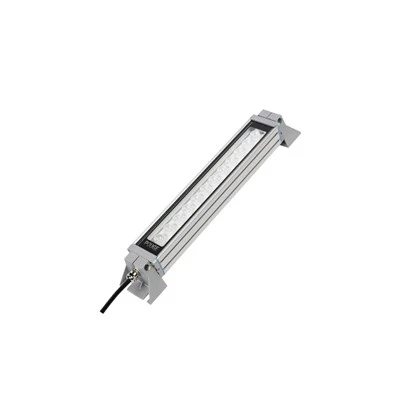
First, let’s start with the most basic definition: explosion-proof lighting is specialized lighting designed to work safely in environments where flammable gases, vapors, dust, or fibers are present. Unlike standard commercial or industrial light fixtures, which can have tiny gaps in their casing, loose electrical connections, or surfaces that get hot enough to ignite nearby materials, explosion-proof fixtures are sealed, reinforced, and engineered to prevent any spark, flame, or high surface temperature from escaping the fixture itself—even if there’s an explosion or fire inside. That’s not just a nice feature; it’s a non-negotiable requirement for factories where even a small ignition could lead to catastrophic consequences.
Let me give you a real example to make this concrete. A few years back, I worked with a chemical plant in the Midwest that makes industrial cleaning solvents. The plant stored and mixed volatile liquid solvents that give off flammable vapors; if those vapors reach a concentration between their lower explosive limit (LEL) and upper explosive limit (UEL), even a tiny spark from a standard light fixture could trigger an explosion. Before they switched to explosion-proof lighting, their old fixtures were the kind you’d find in a big-box store parking lot—they had exposed wiring, plastic covers that could crack if a forklift bumped them, and a metal casing that would get hot after hours of running. One of their maintenance supervisors told me later that he’d noticed a faint sizzle coming from a fixture near the solvent mixing station a month before we installed new explosion-proof models. That’s the kind of small, easily missed issue that can turn a routine workday into a disaster.
So how is explosion-proof lighting different from regular lighting, exactly? Let’s break down the key design features that make these fixtures unique, because that’s where the science comes in—and it’s not just overcomplicated for the sake of it. First, the casing: explosion-proof fixtures are made from thick, impact-resistant materials like cast aluminum, stainless steel, or heavy-duty polycarbonate. This isn’t a pretty shell for show—this casing has to withstand not just external impacts (like a stray forklift pallet or a dropped tool) but also internal explosions. That means if there is a small ignition inside the fixture (from a faulty bulb or wiring), the casing will contain that blast, preventing it from reaching the surrounding flammable materials. Even better, the seams and gaskets on these fixtures are precision-machined to create a tight seal that keeps out dust, gases, and moisture—so those flammable vapors can’t get inside to reach the electrical components in the first place.
Next, the electrical components inside are engineered to eliminate ignition risks. Standard light fixtures have electrical connections that are often exposed, or wires that are run in loose conduits that can vibrate and fray over time. Explosion-proof fixtures use sealed wiring terminals, pressure-tight connections, and low-heat bulbs—usually LED, which is a big shift from the incandescent or HID bulbs many factories used to rely on. LED bulbs run at much cooler temperatures, so even if there was a minor fault, the surface of the bulb won’t get hot enough to ignite nearby materials. I can’t tell you how many clients have come to me recently asking to switch from older HID fixtures to explosion-proof LEDs; not only do they last longer and use less energy, but their lower surface temperature is a huge safety win for high-hazard spaces.
Another key part of the science is the classification of factory hazard zones, which determines exactly what kind of explosion-proof lighting you need. This is where a lot of clients get confused, but it’s critical to getting the right product for your space. In the U.S., the National Electrical Code (NEC) divides hazardous locations into three classes, based on the type of flammable material present: Class I is for gases and vapors (like that chemical plant I worked with), Class II is for combustible dust (like wood dust in a cabinet shop or grain dust in a flour mill), and Class III is for flammable fibers or flyings (like cotton in a textile factory). Within each class, there are divisions based on how likely the hazardous material is to be present under normal operations: Division 1 means the material is present regularly, or during normal operations, while Division 2 means it’s only present during a fault or maintenance activity. So a factory with regular propane vapor leaks would need Class I, Division 1 lighting, while a factory that only stores grain dust and only opens that storage area during weekly cleaning might need Class II, Division 2. This isn’t something you can guess at—getting the wrong classification means your lighting isn’t actually compliant, which can lead to hefty fines from OSHA, or worse, an unsafe workspace.
I’ve seen this first-hand, actually. A couple years ago, I got a call from a woodworking factory in North Carolina that had just failed an OSHA inspection. Their old lighting was standard industrial fixtures, and the inspector noted that their wood dust collection system had a small leak that allowed fine sawdust to accumulate near ceiling fixtures—violating Class II, Division 2 requirements. The plant manager told me they had no idea there was a difference; they just bought lighting that was bright enough to see their workbenches, and assumed all factory lighting was the same. We worked with their safety team to map every area of the factory, identify the dust hazard zones, and install the correct Class II explosion-proof LED fixtures. That was a wake-up call for them, and now they even have a checklist for their maintenance team to inspect lighting during monthly safety walks.
Now, you might be wondering: when is explosion-proof lighting actually necessary? It’s not every factory, right? A small family-owned workshop that does basic metal fabrication with no flammable materials can definitely use standard lighting, no problem. But any factory that works with, stores, or processes flammable gases, vapors, dust, or fibers needs to use explosion-proof lighting. That includes chemical plants, oil and gas refineries, grain elevators, flour mills, woodworking shops, textile factories, pharmaceutical plants that handle flammable solvents, even some food and beverage facilities that use alcohol-based sanitizers or cooking oils that can create vapors. Even a factory that handles plastic pellets—some of those plastics can give off flammable fumes when heated—might need explosion-proof lighting near their processing equipment.
The benefits go way beyond just staying compliant with OSHA or local safety codes, too. Sure, avoiding fines is a big one—OSHA can issue penalties of up to $15,625 per serious violation, and $156,255 for willful or repeated violations, so that’s a major expense for any factory. But the bigger benefit is protecting your team. Factory work is already high-stress, and the last thing your operators, maintenance techs, and supervisors should have to worry about is a preventable explosion that could injure them or worse. I’ve had clients tell me that after switching to explosion-proof lighting, their team’s confidence in the workspace went up—they knew their employer was investing in their safety, not just keeping the lights on. There’s also the operational benefit: explosion-proof LEDs have a much longer lifespan than standard industrial bulbs, usually 50,000 hours or more, which means fewer maintenance calls, less downtime, and lower energy bills. That’s a triple win: safer, more reliable, more cost-effective lighting.
But here’s the thing about explosion-proof lighting that a lot of people don’t talk about: not all products that say “explosion-proof” are created equal. I see cheap, knockoff fixtures all the time—usually imported, with shoddy casings that don’t meet NEC standards, or mislabeled for hazard zones. That’s why it’s so important to work with a supplier who knows the ins and outs of factory safety, not just sells lighting. When I work with a client, the first thing I do is send a safety specialist to walk their floor, map all the hazard zones, and confirm exactly what classification they need. I don’t just pull a fixture off a shelf and send it their way—because I’ve seen what happens when the wrong product is installed. A few years back, I helped a plant that had installed a cheap, uncertified “explosion-proof” fixture in their solvent mixing area; it failed a pressure test and had a small crack in the casing, which would have allowed a vapor leak if there’d been an internal spark. We replaced all those fixtures with UL-certified models, and that plant hasn’t had a safety issue related to lighting since. That’s the difference between a reputable factory lighting supplier and someone just looking to make a quick sale.
Now, if you’re a factory manager or safety engineer reading this, you might be thinking: how do I know if my current lighting is explosion-proof, or if I need to upgrade? The first step is to pull your facility’s hazard map—your plant should have one, or your safety team can work with a local fire marshal to create one. Check the labels on your existing fixtures: they should have a UL or ETL certification mark, and a label that lists the class and division (for example, “Class I, Division 1, Groups B, C, D”) to show what hazard zones they’re approved for. If your fixtures don’t have that label, or if you can’t remember the last time you had a safety inspection for your electrical system, it’s time to take a closer look. Even if you don’t have plans to update your entire lighting system tomorrow, a quick walkthrough of your high-hazard areas to check fixture labels can save you a lot of stress (and money) down the line.
I’ve spent 12 years in this industry because I care about two things: keeping factory teams safe, and helping factories run smoothly. Explosion-proof lighting isn’t just a piece of equipment—it’s a promise that when your team is working around volatile materials, their workspace is as protected as it can be. Too many factory owners see lighting as an afterthought, something to buy on the cheap to cut costs. But I’ve seen firsthand how that choice can backfire, with injuries, fines, and unnecessary downtime.

If you’re not sure what kind of lighting your factory needs, or if you’re ready to upgrade your current system to meet safety standards, I’m here to help. Whether you’re a small woodworking shop just learning about hazard zones, or a large chemical plant needing to re-light multiple production floors, I can work with you to find the right explosion-proof lighting solutions, customize to your space, and make sure everything is up to code. Don’t wait for an inspection or a near-miss to take action—reach out to discuss your factory lighting needs today.
Machine Work Light References
National Fire Protection Association. (2023). National Electrical Code (NEC) 2023. Quincy, MA: National Fire Protection Association.
Occupational Safety and Health Administration. (2024). Hazardous Locations Standards. Washington, D.C.: U.S. Department of Labor.
Underwriters Laboratories Inc. (2022). Standard for Explosion- and Intrinsically Safe Apparatus for Use in Hazardous (Classified) Locations, UL 60079. Northbrook, IL: Underwriters Laboratories Inc.
Factory Mutual Global. (2023). Hazardous Location Lighting: Selection and Application. Schaffhausen, Switzerland: Factory Mutual Global.
Suzhou Pouge Lighting Electrical Appliance Co., Ltd.
As one of the most professional factory lighting manufacturers and suppliers in China, we also support customized service. Please feel free to wholesale advanced factory lighting made in China here and get quotation from our factory. For price consultation, contact us.
Address: Building 6-501, No.1330, Jinfeng South Road, Mudu Town, Wuzhong District, Suzhou City, China
E-mail: xduanlyy@126.com
WebSite: https://www.pouge-light.com/
