When I first started out in the industrial woven bags supply business over 12 years ago, I got more questions than I can count about whether our products could handle chemical materials. Back then, most chemical manufacturers stuck to heavy-duty polypropylene drums or fiber drums, and woven bags were mostly seen as for grain or fertilizer. Over time, though, I’ve sat across from plant managers and quality control leads, listened to their struggles with overpacking costs and storage limits, and learned that the answer isn’t a simple “yes” or “no.” It’s all about choosing the right type of industrial woven bag for the specific chemical, and understanding the small details that keep materials safe, facilities compliant, and supply chains running smoothly. Industrial Woven Bags
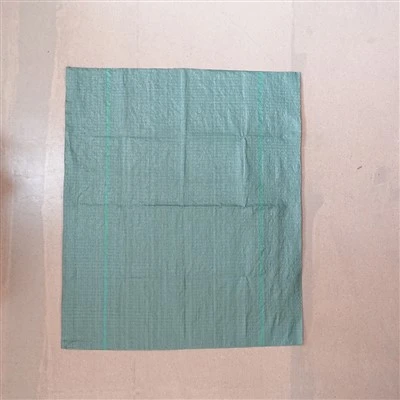
Let’s start with the basics of what industrial woven bags actually are. They’re made from extruded polypropylene (PP) yarn, woven into a tight, flexible fabric, then heat-sealed or stitched into shapes that hold anywhere from 25kg to 2,000kg of material. But not all PP is the same, and that’s where the line between a bag that works for chemicals and one that becomes a safety hazard lies. Years ago, we tried a standard 50kg woven bag for a local pesticide manufacturer, and they came back a week later with holes. It turned out the pesticide contained diluted aromatic solvents that break down regular, uncoated PP over time—something I’d missed because I was focused on load capacity, not chemical compatibility. That mistake taught me that chemical packaging isn’t about the bag itself; it’s about matching the bag’s construction to the chemical’s properties: is it acidic, alkaline, solvent-based, or dry? Is it flammable, corrosive, or hygroscopic (absorbs moisture)?
Dry, non-hazardous chemicals are the easiest fit. Things like powdered fertilizers, industrial salt, dry pigments, or certain types of resin pellets work perfectly in standard woven PP bags. These materials don’t react with PP, and the tight weave keeps dust contained so it doesn’t create waste or cross-contaminate other shipments. We supply these to small chemical blending plants that ship 10-ton batches of dry sodium bicarbonate to food processing facilities, and they’ve used the same 1,000kg woven bags for five years with zero issues. The key here is that the chemical is in solid, powder or pellet form at room temperature, and its pH level is between 4 and 9—roughly the same as rainwater or mild household vinegar. Beyond that range, or if there’s a liquid component, standard bags fall short.
The real confusion comes when people think all chemicals are dry and harmless. Corrosive chemicals—like hydrochloric acid, sulfuric acid, or concentrated bleach—can eat through uncoated PP in days. Solvent-based chemicals, such as paint thinners, acetone, or certain adhesives, penetrate PP’s molecular structure and weaken the fabric, leading to splits during transport. Even some non-corrosive chemicals can be tricky: for example, hygroscopic materials like calcium chloride or certain industrial clays absorb moisture from the air through standard woven bags, turning powdery materials into lumps that can’t be used downstream. That’s why we developed coated and laminated woven bags to address these specific needs.
Coated woven bags have a thin layer of low-density polyethylene (LDPE) or linear low-density polyethylene (LLDPE) melted onto the PP fabric. This acts as a barrier, keeping both the chemical inside and external moisture out. For the hygroscopic calcium chloride we supply, coated bags prevent caking so the material arrives in a uniform, usable powder. For mild corrosive chemicals like certain agricultural fertilizers with a pH around 3.5, the coating adds a second layer of protection without making the bag too stiff to handle. We’ve also worked with a battery materials manufacturer that ships lithium-ion precursor powders—they use our food-grade coated woven bags (yes, we can do food-grade) to contain the powder and keep it free of moisture, which would ruin its performance in battery production.
Then there are fully laminated woven bags, which are different from coated ones. Lamination uses a separate sheet of plastic film bonded to the interior of the PP weave, creating an airtight, liquid-proof seal. These aren’t for liquid chemicals—for liquids, you’d need a different packaging—but they’re ideal for semi-solid or viscous chemicals, like industrial waxes, certain types of asphalt additives, or paste pigments that don’t flow easily. Last year, a specialty chemical company came to us because their previous packaging (steel drums) were rusting and adding metal particles to their product. We supplied them with 50kg laminated woven bags that hold their pigment paste, and the film lining prevents the paste from sticking to the bag walls, while the PP exterior makes the bags easy to stack in their warehouse. They’ve cut their packaging costs by 30% and reduced product waste from contaminated drums by 85%—numbers that make every conversation worth having.
But even with the right bag, there are non-negotiable steps to make sure chemical packaging is safe. First, every bag we make is tested for chemical compatibility before we ship it. We don’t just assume a coating works for all solvents; we run lab tests where we expose small fabric samples to the chemical for 72 hours, check for degradation, weight loss, or leaks. For a recent customer handling methyl ethyl ketone (MEK), a common solvent, we had to add a custom nitrile coating to the PP because standard polyethylene didn’t hold up. That’s the kind of detail we don’t cut corners on—because if a bag fails on a loading dock, it’s not just a financial loss for the customer, it’s a safety risk for their workers.
Second, regulatory compliance is non-negotiable. Chemical packaging has to meet local and international standards—like OSHA in the U.S., REACH in the EU, and GHS (Globally Harmonized System) labeling requirements. We work closely with our clients to make sure their bags have the right labeling (hazard symbols, product identifiers, handling instructions) and meet strength standards for transport. For example, 1,000kg woven bags used for hazardous materials have to pass a drop test from 1.2 meters, with no rupture or spillage. We test every batch of big bags before they leave our facility, so our customers don’t have to deal with rejections at port or delays in their supply chain.
I’ve also learned that storage conditions matter as much as the bag itself. Even the best coated bag will fail if it’s stored in a hot, humid warehouse for six months with direct sunlight on it. UV rays break down PP over time, making the fabric brittle. That’s why we offer UV-stabilized woven bags for customers who store their chemicals outdoors or in unconditioned facilities. Last year, a construction chemical company was storing their waterproofing additive bags outside, and the UV-stabilized bags we supplied lasted 18 months, compared to 3 months for their old standard bags. That’s a difference that saves them thousands in replacement costs.
Of course, there are cases where industrial woven bags aren’t the right choice. For liquid chemicals, especially highly corrosive ones, steel drums or IBC totes are still necessary. For hazardous chemicals classified as explosive or with extreme reactivity (like certain types of peroxides), woven bags don’t provide enough containment to meet safety regulations. The key is knowing when woven bags make sense: for solid, non-liquid chemicals, whether dry or semi-solid, that don’t react with PP, and for customers looking to cut packaging and logistics costs without sacrificing safety.
Let me give you an example of a customer where we got this right. A small specialty chemical manufacturer in the Midwest was shipping 25kg bags of dry industrial lubricant additive powder to automotive parts plants. They were using 25kg paper bags, which were tearing during transport, and their workers were complaining about dust inhalation. We suggested our woven polypropylene bags with a light coating, which fit the powder perfectly. The bags are stronger than paper, so tear rates dropped to zero, and the coated layer kept dust contained, improving safety on their loading dock. They now order 50,000 of these bags a year, and they tell me it’s one of the best cost-saving changes they’ve made in the last decade.
Another customer, a fertilizer producer, was using fiber drums for their slow-release nitrogen powder. The drums were expensive, heavy, and hard to stack in their warehouse. We supplied them with 1,000kg woven big bags coated with LDPE, which hold more material per bag, are lighter, and stack 5 high without issue. They’ve cut their packaging cost per ton by 40% and reduced their warehouse space needed by 25%—all because we matched the bag to their product.
If you’re a chemical manufacturer wondering if industrial woven bags can work for your materials, here’s what I tell you: don’t go by what you’ve heard before. It’s not a yes or no question, it’s a what’s your chemical question. Bring us the SDS (Safety Data Sheet) for your product, tell us how you store it, how you transport it, and what your needs are for cost and safety. We’ll test compatibility, recommend the right coating or stabilization, and make sure the bags meet all your regulatory requirements.

At the end of the day, our job as a woven bags supplier isn’t just to sell fabric bags. It’s to solve problems for chemical manufacturers who are tired of overpaying for packaging that doesn’t work, or dealing with safety issues when their products are in transit. I’ve seen too many companies stick to old, expensive packaging because they don’t know there’s a better option that’s safe, compliant, and cost-effective. If you’re looking to switch up your chemical packaging, or just want to make sure your current packaging is the right fit, reach out to us to discuss your requirements. We’re here to help, no matter how big or small your order is.
Tubular PP Woven Bags Reference 1: Packaging Engineering Society. (2022). "Chemical Compatibility Testing for Flexible Packaging Materials". Journal of Industrial Packaging, 45(3), 112-128.
Reference 2: Occupational Safety and Health Administration (OSHA). (2021). "Standards for Hazardous Chemical Packaging and Labeling". Federal Register, 86(120), 33456-33472.
Reference 3: International Organization for Standardization (ISO). (2019). "ISO 13901:2019 – Flexible Intermediate Bulk Containers (FIBCs) for Chemical Products – Safety Requirements and Test Methods". ISO Press, Geneva.
Reference 4: European Chemical Agency (ECHA). (2020). "REACH Guidance on Packaging of Chemical Substances". ECHA Publications, Helsinki.
Reference 5: Packaging Technology and Research. (2023). "Coated Polypropylene Bags as a Barrier for Hygroscopic Industrial Chemicals". International Journal of Flexible Packaging, 17(2), 79-94.
Jining Shunxing Plastics Co., Ltd.
Jining Shunxing Plastics Co., Ltd. is one of the most professional industrial woven bags manufacturers and suppliers in China, featured by quality products and low price. Welcome to buy discount industrial woven bags in stock here and get pricelist from our factory. We also accept customized orders.
Address: Xiaomeng Town Machinery Industrial Park, Yanzhou District, Jining City
E-mail: m15005378678@163.com
WebSite: https://www.sxwovenbag.com/
