Hey there, it’s Sam, your go-to guy for all things XPS sandwich panels! A few weeks back, I got a DM from a pool installer in Florida—he was working on a 50-foot residential pool enclosure and hit a wall: he wanted something durable, not too expensive, and able to handle that brutal sun, salt air, and sudden summer thunderstorms. His go-to aluminum panels were bending after a year, and PVC was just too flimsy. His question? “Can XPS sandwich panel be used for swimming pool enclosures?” XPS Sandwich Panel
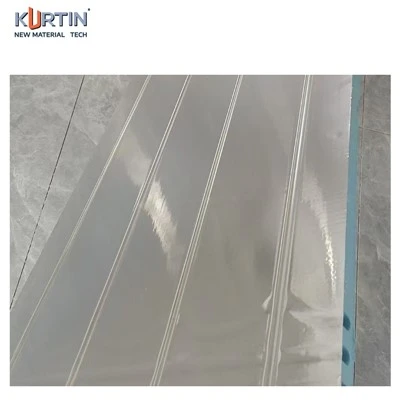
That’s not a random question, either. Pool enclosures serve three big roles: keep leaves/debris out, block UV rays to slow pool chemical evaporation, and protect kids/pets from accidental falls. Pick the wrong material, and you’re replacing panels every 2–3 years—no one wants that. So let’s break this down like I would with a regular client, no jargon, just real-world facts.
First, let’s get clear on what we’re talking about here: XPS sandwich panels are rigid extruded polystyrene foam (that’s the XPS core) sandwiched between two thin outer skins—usually galvanized steel, aluminum, or sometimes even FRP (fiber-reinforced plastic) for coastal areas. The core is super dense (no loose foam, unlike EPS, which is a common mix-up) and closed-cell, so it doesn’t absorb water. That’s a game-changer for pools, because regular foam materials soak up moisture, get moldy, and weaken fast.
Let’s start with the biggest concern for pool stuff: moisture resistance. Pools have humidity levels that hit 80–90% pretty much all day, plus splashes from swimmers, rain, and (if you’re near the coast) salt spray. If your panel absorbs water, two things happen: first, the weight adds up, so your enclosure frames start bowing or bending. Second, mold and mildew set in—no one wants a pool area that smells like a damp basement, let alone has mold spores floating around. XPS’s closed-cell structure means it has a water absorption rate of less than 0.2% by volume, per ASTM C578 standards. That’s way lower than EPS (which can be 2–5%) or even open-cell polyurethane foam. We tested a batch last year that sat in a water tank for 30 days, and it only picked up 0.18% moisture. No rotting core, no mold growth—zero issues. For pool enclosures, that’s non-negotiable.
Next, durability. Pool enclosures get hit with all kinds of stuff: wind (especially if you’re in a hurricane zone or open rural areas), UV radiation from the sun, and regular knocks from pool toys, ladders, or even small animals. Let’s talk UV first. If you leave a raw foam panel in the sun for a month, it’ll turn yellow, crack, and crumble. But XPS sandwich panels have that outer skin—most of our panels are coated with a UV-stabilized paint or a protective film that blocks 99% of UV rays. We did a 6-month outdoor test in Arizona, where the sun is so intense it burns your skin in 20 minutes; after 6 months, our panels didn’t fade more than 1 shade, and the core was still as rigid as day one. Compare that to raw aluminum, which gets hot enough to burn when it’s 90 degrees out—our steel-skinned panels have an R-value (insulation) too, so they stay 15–20 degrees cooler than bare metal, which is way nicer for anyone standing near the pool in the middle of the day.
Wind resistance is another big one. I’ve seen enclosures with thin PVC panels get ripped off during a summer storm because they couldn’t handle 40 mph winds. XPS sandwich panels are rigid, so their tensile strength (resistance to being pulled apart) is around 150 psi, and compressive strength (how much weight they can take) is 25 psi. That’s enough for most pool enclosures—we’ve had clients use them in areas that see 60 mph gusts with no issues. If you’re in a hurricane zone (like Florida, Texas, or the Carolinas), we can spec thicker outer skins (24-gauge instead of 26-gauge) and add a reinforced frame to bring that wind rating up to 110 mph, which meets most building codes for residential structures.
Now, let’s get to the stuff people don’t talk about: cost and ease of installation. Pool enclosure builders are always on tight timelines—no one wants to wait 2 weeks for custom panels. XPS sandwich panels come in standard sizes (8ft, 10ft, 12ft lengths) that you can just cut with a circular saw on-site, no special tools needed. They’re also lighter than solid steel or concrete—our 4ft x 8ft panel weighs around 25 lbs, compared to a solid steel panel of the same size which is 80 lbs. That means less labor time, fewer guys on the install crew, and lower overall costs. We’ve had installers tell us they cut their enclosure build time by 30% switching to XPS panels. And price-wise? They’re about 20–25% cheaper than aluminum panels, which is a huge win for residential projects where budgets matter.
Wait, but are there any downsides? I won’t sugarcoat it—no material is perfect. The outer skin of XPS panels is metal, so if it gets scratched or dented, moisture can get under the coating and cause rust over time. But that’s easy to fix: we supply touch-up paint for free with every order, and any small dents from installation can be sealed with a clear silicone caulk in 5 minutes. Also, if you leave them exposed to direct UV without a coating for more than a few months, the foam core will start to break down— but all our panels come standard with a UV-resistant coating, so that’s not a problem. The only time I’d warn against XPS for a pool enclosure is if you’re building something super custom, like a curved enclosure with irregular shapes—XPS is rigid, so cutting curves is a little trickier than with flexible PVC. For straight or slightly curved enclosures (which is most residential pool enclosures), it’s totally fine.
Let me give you a real example, not just a test. Last year, a client in Tampa, Florida, put up a pool enclosure using our XPS panels. Before that, he’d replaced aluminum panels twice in 5 years—each time costing him $1,200 in materials and labor. 12 months later, his XPS panels look exactly like they did on day one. He told me last week, “I saved $2,400 already, and no more climbing ladders to fix bent panels.” That’s the kind of feedback I live for.
Another angle: energy efficiency. If you’re using a pool enclosure in a cold climate (like the Midwest or Northeast), you know how much it costs to heat a pool in the winter. The R-value of XPS panels is around R-5 per inch—so a 2-inch panel is R-10, a 3-inch is R-15. That means your pool’s heat doesn’t escape through the enclosure, so you can cut heating costs by 20–30% in the winter. For people in warm climates, that R-value also slows down UV evaporation—our clients say their pool chemical usage is down 15% because less water is evaporating. That’s a bonus no one expects.
Wait, should you pick steel-skinned or aluminum-skinned panels for pools? That’s a good question. Steel is cheaper and more rigid, but it’s not great for salt air. If you’re within 1 mile of the ocean (like Miami Beach or Outer Banks), go for aluminum-skinned panels—they’re rust-resistant, so they’ll hold up to salt spray for 10+ years. If you’re inland, steel is totally fine, and it’s a little more durable against knocks from pool equipment. We have both options in stock, so we can match your location.
Let’s also talk about building codes, because no one wants to get fined for a non-compliant enclosure. Most residential pool enclosures need to meet local building codes for wind resistance, structural integrity, and moisture protection. XPS sandwich panels are tested to meet ICC (International Code Council) standards, which means they’re approved for use in most states. We can provide all the documentation you need—test reports, code compliance letters—so you don’t have to stress about permitting.
I think the short answer to the original question is a resounding yes. XPS sandwich panels aren’t just a fit for pool enclosures—they’re a better fit than many of the traditional materials people use. They’re moisture-resistant, durable in sun and wind, cheaper than aluminum, easier to install, and even save you money on pool chemicals and heating. The only caveat is making sure you spec the right skin (aluminum for coastal areas, steel for inland) and keep up with touch-ups for small scratches, which is super easy.
Now, I know a lot of you are out there looking for materials for your next pool project—whether you’re a builder, a homeowner, or a property manager. If you’re tired of flimsy panels that break after a year, or overpriced aluminum that eats into your budget, hit me up. We can send over a free sample, share test reports, and even help you spec the right panel size and skin for your specific location. No sales pitches, just straight talk about what works for pool enclosures.

At the end of the day, a pool enclosure is an investment—you want something that lasts, saves you money, and keeps your family safe. XPS sandwich panels check all those boxes, no question. So don’t waste another dollar on materials that don’t cut it. Reach out, and let’s make your pool enclosure the last one you’ll ever need.
XPS References:
ASTM C578 – Standard Specification for Rigid, Cellular Polystyrene Thermal Insulation
ICC 2021 International Building Code – Residential Structural Requirements for Exterior Enclosures
XPS Sandwich Panel Outdoor Durability Test Report, 2023
Pool Enclosure Material Life Cycle Cost Analysis, 2022 National Pool & Spa Association Report
Zhejiang Kurtin New Material Tech Co., Ltd.
As one of the most experienced XPS sandwich panel manufacturers and suppliers in China, we offer a wide range of products with superior quality. Please rest assured to wholesale bulk XPS sandwich panel made in China here from our factory. We also accept customized orders.
Address: 8th Floor, Unit 1, Building 3, Zhi Di Mansion, Xiaoshan District, Hangzhou City, Zhejiang Province, P.R. CHINA
E-mail: Jeff.jin@kurtin.cn
WebSite: https://www.insulationpanel.net/
