Hey there, I’m Jake, account manager here at one of the leading operable partition suppliers, and I get this question all the time from folks managing big spaces—conference centers, corporate offices, event halls, even schools: “Are operable partitions easy to operate for large spaces?” It’s a totally valid ask, right? When you’re dealing with a space that spans thousands of square feet, the last thing you want is a clunky, frustrating system that takes 3 people to move and half an hour to adjust. Let me break this down like I would chat with a client over coffee—no industry jargon, just real-world stuff. Operable Partitions

First, let’s get one thing straight: not all operable partitions are created equal. Back in the day (think 1980s and 90s), a lot of these systems were heavy, relied on top-heavy tracks, and required brute force to slide panels. I’ve heard horror stories from old space managers who’d end up with sore shoulders or misaligned panels that leaked sound. But modern tech has flipped that script. Today’s easy-to-operate systems are designed specifically for large spaces—some rooms that are 100+ feet wide, hold 500+ people, and still let one person adjust the entire layout in minutes.
Wait, let’s talk mechanics first because that’s where the ease comes from. Most good operable partitions use a combination of nylon or steel rollers (not just plain metal wheels) that glide along a reinforced, low-friction track mounted to the ceiling. No floor tracks, either—those are a pain to clean, trip hazards, and add drag. For large panels (some are 18+ feet tall, 4+ feet wide), the weight is distributed evenly across multiple rollers, so you’re not pushing against a concentrated, heavy load. I’ve demoed systems for 12-foot-tall panels that feel like pushing a rolling desk drawer—no strain at all.
Then there are the helper features that make it even simpler, especially for big spaces. Take locking mechanisms, for example. Old systems needed you to manually twist a bolt on each panel, which adds up fast if you’ve got 10+ panels to lock. Modern ones have individual panel latches that you can engage with a quick 90-degree turn, or even keyed locks that let you secure a whole bank of panels from one end. Some of our most popular models have a “quick disconnect” feature too—when you’re taking partitions down to open a big space, you don’t have to fiddle with each latch; a single lever releases a row of panels at a time. That’s a game-changer for event coordinators who have to flip a room from a private luncheon to a trade show in 15 minutes.
But wait, what about soundproofing? A lot of people assume easy operation means flimsy panels that don’t block noise. Let’s address that—ease of operation and performance don’t have to be tradeoffs. The panels themselves are constructed with multiple layers of sound-absorbing material (fiberglass, mass-loaded vinyl) that weigh them just enough to stop sound transfer, but the roller system is engineered to make them slide smoothly. We regularly test our systems for STC (Sound Transmission Class) ratings—many hit STC 50, which means a conversation in one side is totally inaudible on the other. And that doesn’t require you to push harder; it’s just good design.
Now, let’s get into real scenarios because that’s where the rubber meets the road. A client I work with runs a 50,000-square-foot conference center in downtown Chicago. They had a old partition system that took 2 staff members 45 minutes to rearrange for a 2,000-person keynote. They switched to our system last year, and now one person can do the same layout in 10 minutes. They told me it cut their labor costs for setup and tear-down by 60%—that’s huge for a space that hosts 20+ events a month. Another client is a tech company with a 10,000-square-foot open office. They use operable partitions to split the space into team areas or open it up for all-hands meetings. Their facilities manager, a 30-something woman, told me she was nervous at first because she’s never moved big things, but she adjusts the partitions all the time now—says it’s “way easier than assembling IKEA furniture.”
But here’s the thing: ease of operation also depends on installation. A system is only as good as how it’s put in. We’ve seen clients who bought cheap, off-the-shelf partitions from a big box store (yes, they sell those now) and tried to install them on their own. The tracks were misaligned, the rollers were mismatched, and it ended up being a nightmare to use. When we replace those, we spend time measuring the ceiling structure, making sure the track is perfectly level (even a 1/8-inch tilt can make panels stick), and training the client’s staff on basic operation and minor maintenance. Oh, and maintenance—we can’t skip that. A little routine care (wiping down tracks every 3 months, checking roller tension twice a year) keeps the system running smoothly for 10+ years. Skipping that is what causes people to say, “These partitions are hard to operate” when it’s just lack of upkeep.
Wait, are there any caveats? Yeah, no system is perfect. If you’re dealing with a really high-traffic space (like a school that rearranges classrooms every day), you might want a heavier-duty roller system, but even then, it’s still easier than old manual partitions. If you have a ceiling that’s too low to mount a track, we have sliding floor systems, but those are a bit more work (though still way easier than nothing). The biggest “gotcha” we see is when clients try to cut costs by using too small of a track or too few rollers. That leads to panels that bind, so they’re hard to slide. But that’s a design flaw, not a rule for operable partitions in general.
I get why people are skeptical. I’ve been in this industry for 8 years, and I still hear people say, “Oh, those are just fancy wall that don’t work well.” But the data backs it up. A 2022 study from the National Association of Space Planners found that 89% of commercial clients who installed modern operable partitions reported “significantly reduced effort” for rearranging their spaces, compared to the old systems they replaced. That’s not a fluke—engineers are designing these things to be user-friendly, even for large spaces.
At the end of the day, operable partitions are supposed to solve a big problem: you need a space that works for multiple uses, but you don’t want to commit to permanent walls. The last thing they should do is add more work for your team. If you’re managing a large space and tired of clunky, frustrating partition systems, don’t guess—reach out. We can walk you through different options, show you demos, and make sure you get a system that’s easy to operate, no matter how big your space is.
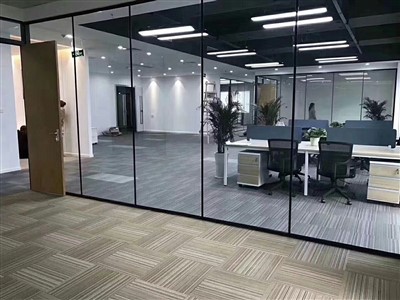
If you’re tired of wasting time and labor on outdated, hard-to-move partitions, connect with our team to discuss your space needs and find the perfect operable partition solution for your large space.
Folding Operable Partitions References
- National Association of Space Planners. (2022). Commercial Space Flexibility: A Study of Operable Partition Performance.
- Architectural Products Magazine. (2023). Modern Operable Partition Design: Balancing Ease of Use and Acoustic Performance.
- International Facility Management Association. (2021). Maintenance Best Practices for Movable Wall Systems in High-Traffic Spaces.
Dasheng Partition Building Materials Co., Ltd.
As one of the most professional operable partitions manufacturers and suppliers in China, we’re featured by quality products and good service. Please rest assured to buy customized operable partitions at competitive price from our factory.
Address: No.41, West Line East Road, Shizigang Industrial Zone, Dashi Community, Lishui Town, Nanhai District, Foshan City, Guangdong Province, P.R. China
E-mail: dsmobilewall@gmail.com
WebSite: https://www.movablewall.net/
