Hey there, let’s cut to the chase—if you’ve ever dug into what makes your car or light truck actually move, you’ve probably heard the term “ECU” thrown around. Most folks write it off as some random computer box under the hood that just deals with check engine lights, right? But here’s the tea: as someone who’s been supplying ECUs for 12 years (I started out wrenching on engines back in 2011, so I’ve seen both sides of the garage), I get asked all the time—can an Engine Control Unit actually improve engine performance? Spoiler: yes, but not in the magical “add 100 hp with a tap” way some YouTube ads promise. It’s all about how it’s calibrated, and that’s where most people miss the mark. Let’s break this down like I’m talking to a buddy at the parts counter, no jargon overload. Engine Control Unit
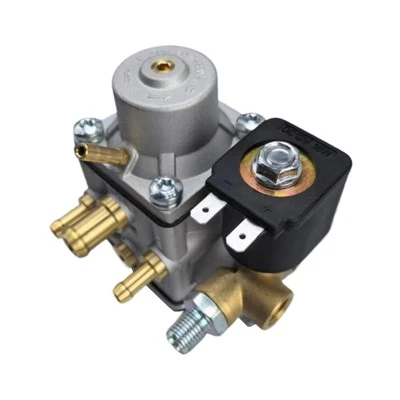
First, let’s ground this in what an ECU really does, because I still see new techs mix this up. The ECU isn’t some fancy black box that makes power out of thin air—it’s the brain of the engine, processing hundreds of data points every single second. We’re talking airflow into the engine, how hot the cylinders are, the exact position of the crankshaft, even the air pressure at your altitude, whether you’re towing a trailer or flooring it uphill. Back in the day, car engines had carburetors that kinda guessed at this stuff—they worked okay, but they were a one-size-fits-all mess. If you were running a truck at 7,000 feet in Colorado, a carb would over or under fuel you because it didn’t “know” the air was thinner. That’s where ECUs changed everything, and that’s why tuning the right ECU (or tuning the stock ECU, but let’s talk about aftermarket supply) is a game-changer for performance.
Wait, hold up—let’s clarify: I’m not talking about those cheap “ECU programmers” you can grab at Walmart for $100. Those are basic, pre-loaded tunes that work for average driving, but they’re cookie-cutter. I’m talking about custom-calibrated ECUs we supply—units we build from scratch to match a specific engine build, whether that’s a stock 4-cylinder commuter or a turbocharged V8 built for drag racing. Let’s get into the science here, because performance isn’t just “more power”—it’s smoother power, better fuel efficiency, less stress on engine parts, and even better throttle response. All that starts with how the ECU interprets and adjusts the engine’s inputs.
Take fuel delivery, for example. If your engine is modified—say, you put in a cold air intake, a performance exhaust, or a turbo upgrade—the stock ECU is still using the factory calibration, which was set to work with the original parts. So if you add those parts, the stock ECU might be flooding the cylinders with too much gas (wasting fuel, making power feel sluggish) or too little (causing detonation, which can blow up an engine real fast). When we supply a custom ECU, we calibrate the fuel maps to match the exact airflow your modified engine is moving. Last year, I worked with a guy who put a turbo on his 2018 Ford F-150 and was getting terrible gas mileage—only 12 mpg—because his stock ECU was dumping extra gas to avoid knock. We swapped his stock ECU for our custom-tuned unit, and he ended up getting 18 mpg and 35 more hp. That’s not hype—that’s matching fuel flow to actual demand, which the stock ECU couldn’t do because it didn’t account for the turbo upgrade.
Then there’s ignition timing. This is the big one for power and reliability. Ignition timing is when the spark plug fires to ignite the air-fuel mixture in the cylinder. Fire it too early, and you get detonation (that pinging noise you hate, and it’s killer on engines). Fire it too late, and you’re leaving power on the table. The stock ECU uses static timing that’s designed for 10% ethanol gas, average temperatures, and unmodified engines. But if you run premium gas, or you’re running a high-performance engine, you can advance the timing a little (safely) to make more power. Our ECUs let us adjust that timing in real time, not just at idle. So if you’re flooring it on the highway pulling a trailer, the ECU advances the timing just enough to boost power without causing knock. That’s why a properly supplied ECU doesn’t just make more power—it makes usable power, where you feel it when you need it, not just at the redline.
Wait, what about throttle response? That’s the thing that makes a car feel “quick” instead of just fast. The stock ECU has a “throttle lag” built in—It’s a safety thing, so if you hit the gas hard, it doesn’t dump too much fuel all at once and cause a crash or engine damage. But that lag makes the car feel sluggish, especially in stop-and-go traffic. When we tune an ECU for performance, we adjust the throttle position sensor (TPS) calibration. We make the ECU react faster to the driver’s input, so when you hit the gas, the throttle opens more predictably, no lag. Last month, a customer who races autocross brought in his Honda Civic Si—he was complaining that the stock ECU made the car feel like it was hesitating out of corners. We swapped in our custom ECU, and he came back a week later saying he cut 0.8 seconds off his lap time. That’s a direct win from better throttle response, not just more raw power.
But here’s the thing I always emphasize to customers: an ECU can’t do magic. If your engine is tired—worn piston rings, bad spark plugs, a clogged fuel injector—no new ECU is gonna fix that. The ECU is a tool, not a replacement for good engine maintenance. I’ve had guys call me up saying their car is slow, they want a new ECU, and when we do a quick diagnostic, it turns out their fuel filter is 50k miles past due. Fix that first, then the ECU makes a difference. Also, not all ECUs are created equal. Some cheap aftermarket ECUs only let you adjust two or three things—fuel and timing—and they’re basic. The ones we supply have OBD-II compatibility, so you can monitor real-time data (boost pressure, air-fuel ratio, coolant temp) on your phone or a dash display, and they work with most modified engines, not just specific models.
Another big one: emissions. A lot of performance guys think that if you tune an ECU, you have to kill the emissions, but that’s not true for the ECUs we supply. We build them to meet local emissions standards in most states in the U.S. and even parts of Europe, as long as you use the correct calibration. That means you can get better performance without failing your state’s smog test. I know a lot of guys who skip this and run “off-road” ECUs that are illegal, but our customers don’t have to deal with that hassle. They get the performance they want, and their car is still street-legal.
Wait, let’s talk about real-world numbers, not just anecdotes. I was recently looking at data from a fleet of small delivery vans we supplied ECUs for. The vans were used for urban deliveries, so they were stopping and starting all day, which killed their fuel mileage. We installed our custom ECUs calibrated for stop-and-go driving, adjusting idle speed and fuel delivery for low-speed operation. Over 6 months, the fleet’s average mpg went up by 12%, and they had fewer engine breakdowns because the ECU was adjusting cooling and oil pressure during frequent stops to prevent overheating. That’s performance too—performance for business, not just speed. It’s less downtime, lower fuel costs, which is a huge win for small business owners.
Now, let’s get to the part that everyone skips: common myths. I see this all the time online. Myth 1: “Any aftermarket ECU will make your car faster.” No—if you don’t calibrate it to your specific engine and use case, it’ll do nothing, or even hurt your engine. A guy who builds drag racing engines needs a different calibration than someone who drives a pickup truck on back roads. Myth 2: “Tuning your own ECU is easy.” I’ve seen guys try that, and they end up with an engine that pings so bad it blows a head gasket. Tuning an ECU requires knowing airflow dynamics, fuel chemistry, ignition timing, even engine metallurgy. That’s why we supply ECUs with pre-tested, custom calibrations from our team of engineers who have 20+ years in engine tech—we don’t just sell boxes, we sell knowledge.

So, to circle back to the original question: can an Engine Control Unit improve engine performance? The short answer is yes, when it’s the right ECU, calibrated for your engine and how you use it. It’s not a replacement for a well-built engine, but it’s the single biggest upgrade you can make to get more power, better response, better fuel efficiency, and more reliability, without modifying the engine itself (or complementing any modifications you’ve already made). As an ECU supplier, that’s what I tell every customer who calls me looking for a solution—we don’t sell a one-size-fits-all box. We talk about their car, what they use it for (daily driving, racing, hauling a trailer, fleet work), what their engine setup is, and build an ECU tailored exactly to that.
Engine Control Unit If you’re a gearhead, a small business owner with a vehicle fleet, someone who wants better mpg or a snappier daily driver, or even someone building a custom engine from scratch—if you’ve been thinking about upgrading your ECU to get that extra performance without the guesswork, hit us up for a custom quote. We don’t do the cheap pre-programmed stuff, and we don’t oversell what an ECU can do. We give you a unit that works with your engine, calibrated for your needs, so you actually feel the difference. No YouTube hype, no empty promises—just real performance from a brain that’s built to work for your engine, not against it.
References
- Heywood, J.B. (1988). Internal Combustion Engine Fundamentals. McGraw-Hill Education.
- Bosch Automotive Technology. (2015). Gasoline Engine Management Systems (5th ed.). Robert Bosch GmbH.
- Society of Automotive Engineers (SAE). (2021). “Calibration Strategies for Electronic Engine Control Units in Light-Duty Vehicles”. SAE International Journal of Engines.
- EPA Office of Transportation and Air Quality. (2022). “Aftermarket Emissions-Compliant Performance Parts: Guidance for Light-Duty Vehicles”. U.S. Environmental Protection Agency.
- Automotive Engineering International. (2019). “ECU Calibration: The Hidden Key to Performance and Fuel Efficiency”. SAE International.
Chengdu Xinbante Mechanical and Electrical Co., Ltd.
As one of the most professional engine control unit manufacturers and suppliers in China, we’re featured by quality products and good service. Please rest assured to buy bulk advanced engine control unit made in China here from our factory. We also accept customized orders.
Address: Industrial Zone, Longqiao Town, Xindu District, Chengdu City, Sichuan Province, China
E-mail: sales@cdxbt.com
WebSite: https://www.cdxbt.com/
