Hey there, Stone Flat Engraving Machine

If you’re in the stone engraving game, you’ve probably stared at a flatbed engraving machine before—you know, the ones that carve text, logos, and simple designs right onto granite, marble, or bluestone. But let’s be real, a lot of folks ask us: “Can this thing actually make 3D engravings?” I get it, 3D stuff sounds way fancier than a flat, two-dimensional etch. Most people associate 3D stone work with big, bulky CNC routers that spin cutting tools like mad, not a flat engraving machine that’s built for flat surfaces. As a supplier of these machines, I field this question at least three times a week, so let’s break it down straight, no jargon, no fluff.
First, let’s get clear on what a “stone flat engraving machine” actually is. These are typically gantry-style machines with a fixed worktable, a spindle, and a control system that moves the tool (usually a router bit or diamond drag cutter) along the X, Y, and sometimes Z axes. Their whole design is for precision on flat stock—so you don’t get the big, heavy rotary tables that 3D routers use to tilt or rotate the stone. That leads a lot of people to write off 3D capability entirely, but here’s the secret: 3D doesn’t have to mean the kind of deep, sculpted relief you see on a medieval cathedral wall. There are two main types of 3D engravings people care about, and flat machines can do both if set up right.
Wait, let’s define those types so we’re on the same page. The first is “low-relief 3D”—think of a photo where the highlights (like a person’s cheekbone) are etched a little deeper than the shadows (like the area around the eye). It’s not something you’d mistake for a statue, but you can feel the difference with your finger. The second is “true 3D” or “high-relief,” where you’ve got layers of depth that stick out more, even if the stone itself stays flat. Now, let’s be honest: a standard flat engraving machine isn’t going to carve a 2-inch deep relief on a 4-inch thick granite slab. That’s not what it’s built for, and trying to push it will burn out the spindle, snap the cutter, or give you uneven results. But for most small to medium projects—like custom memorials with a photo portrait, house numbers with a subtle arch above them, or decorative tiles with a raised floral design—low-relief 3D is totally doable.
Here’s how it works. The magic isn’t in the machine’s physical build, it’s in the software you feed it. A lot of people only use their engraving machines for simple vector files—like a logo saved as an SVG, where every line is the same depth. But modern engraving software (the kind we sell with our machines) can take a 2D image, like a JPG of a family, and convert it into a grayscale map. The lighter parts of the image get a shallower etch, and the darker parts get a deeper etch. That’s how you get that subtle depth—your machine is just following the Z-axis depth data from the software, not a fixed flat depth. We’ve had customers use this for years: a local monument shop we work with carved 500 headstones last year that had a photo of the deceased, with the eyes etched 0.12 inches deep and the background just 0.03 inches deep. You can see the 3D effect from 10 feet away, and it’s all from a standard flat engraving machine.
But wait, there are limits, right? I don’t want to oversell this because I’m a supplier, not a scam artist. Let’s lay out the pros and cons of using a flat machine for 3D work. The pros first: it’s way cheaper than a dedicated 3D CNC router. Our flat machines start at around $12k, while a mid-range 3D stone router is more like $35k. It’s also faster—for small projects, you don’t have to mess with setting up a rotary axis or tilting the stone, so you can go from design to finished piece in an hour instead of half a day. Plus, most of our customers already use these machines for flat work, so adding 3D is just a software update, not a whole new setup.
Now the cons, because honesty matters. First, depth is limited. A standard flat engraving machine can only go about 0.25 inches deep in most stone, and that’s with a sharp diamond bit—if you’re working with hard granite, it’s more like 0.15 inches. You can’t carve deep, dramatic 3D scenes; if you try, the tool will bounce off the stone or leave a rough, uneven edge. Second, complex curves are tough. If you’re trying to carve something like a Greek god statue, with undercuts or curved surfaces, a flat machine can’t handle that because it doesn’t have a 4th or 5th axis to rotate the stone. It’s stuck moving the tool up and down, not the stone itself. Third, material matters a lot. Soft stones like marble or limestone work great for 3D, but hard granite or bluestone will make the tool wear out fast, so you’ll have to swap bits more often. That doesn’t mean it’s impossible, just that it’s not as efficient as it would be on a dedicated 3D machine.
We’ve seen a lot of customers make the mistake of buying a flat machine and expecting it to do all the work of a $30k router, and then get frustrated when it can’t carve a 1-inch deep dragon onto a boulder. But when they adjust their expectations and stick to low-relief, photo-based 3D, they love it. For example, a customer in Ohio uses our machine to make custom outdoor address plaques. They take a photo of a customer’s house, convert it to a grayscale etch, and add a 3D effect where the roofline is a little deeper than the sky. It’s subtle, but homeowners will point it out and say, “Wow, that looks like a real house.” They can turn around a plaque in 2 hours, which is way faster than if they sent it to a third-party shop for 3D work.
Another thing to mention: accessories can make a big difference. If you want to upgrade your flat machine for 3D engraving, you don’t have to buy a whole new machine. We sell optional diamond drag bits that are better for grayscale work—they leave a smoother edge than standard router bits, which is crucial for photo engravings. We also offer software add-ons that let you import any image, adjust the depth map, and previews the 3D effect before you even start carving. A lot of people don’t know that those add-ons are available, so they buy a machine and wonder why their 3D engravings look flat. It’s all about having the right tools, not just the machine itself.
Let’s also address a common myth: some people think that 3D engravings have to be raised off the stone, like a tile with parts sticking up. But no, low-relief 3D is just as valid. The definition of 3D is any work that has depth, not just parts that are physically above the surface. A flat engraving machine can do that because it’s controlling the Z-axis (the depth) of the tool as it moves. So when you’re etching a name, you can make the letters’ edges a tiny bit deeper than the center, so they pop a little—That’s another type of 3D work, and it’s super popular for memorials and trophies.
Now, as a supplier, I want to be clear about who this is for. If you’re a small business owner doing custom gifts, plaques, or small memorials, a flat engraving machine is a great way to add 3D capabilities without breaking the bank. If you’re a large shop doing big, dramatic 3D sculptures or architectural reliefs, you’re better off with a dedicated 3D router. But for 90% of the people who reach out to us asking about 3D, a flat machine is the perfect fit.
I get it, it’s easy to get caught up in the hype of fancy, high-end equipment. But a lot of our long-term customers tell us that they didn’t need all the extra features—they just needed a machine that could do what they needed, including some 3D work. We’ve had guys who started with a flat machine doing only flat logos, and a year later, they’re adding 3D photo engravings because the software and tools made it easy. That’s the stuff that matters.
If you’re still on the fence, here’s what I’d suggest. Don’t go into it thinking your flat machine will replace a 3D router, but do think about how much 3D work you actually need. If it’s just occasional, low-relief pieces, then yes, it can totally work. If you’re planning to do half your work as 3D high-relief, then maybe look at both options. But at the end of the day, stone flat engraving machines are more versatile than most people give them credit for. They’re not just for flat designs—they can add that subtle, eye-catching 3D depth that makes your work stand out, without the cost and hassle of a bigger machine.
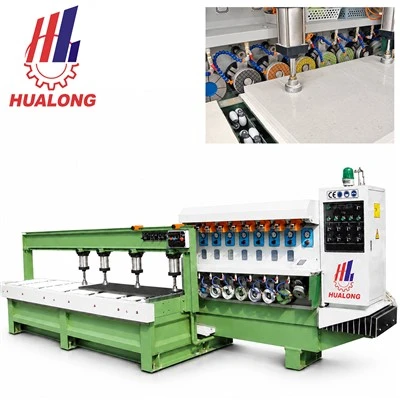
If you’re ready to talk about how to set up your flat machine for 3D engraving, or you just want to see some examples of what we’ve done with our customers, reach out. We’re here to help you figure out what works for your business, no pressure, no salesy talk.
Waterjet Cutting Machine References:
- Industrial CNC, “Grayscale Engraving: The Basics of 3D Stone Etching,” 2022.
- Stone World Magazine, “Low-Relief Engraving Techniques for Memorials and Tiles,” 2023.
- Machining Essentials, “Z-Axis Control for Flatbed Engravers: Capabilities and Limitations,” 2021.
Fujian Province Hualong Machinery Co., Ltd.
Fujian Province Hualong Machinery Co., Ltd. is one of the most professional stone flat engraving machine manufacturers and suppliers in China, featured by quality products and good price. Please rest assured to buy high-grade stone flat engraving machine for sale here from our factory.
Address: Huangshi Industrial Zone, Putian City, Fujian Province, China
E-mail: hualongpro@hualongm.com
WebSite: https://www.stonecuttingmachine.com/
