Hey folks, let’s cut to the chase if you’re on a tight budget for cold room gear: the cheapest cold room sandwich panel isn’t some random off-the-shelf piece you find at a hardware store—it’s a specific type that balances low upfront cost, basic performance, and that hard-to-beat value that matters when you’re just setting up a small cold room, upgrading a warehouse, or testing a new food production spot. Full disclosure: I’m a cold room sandwich panel supplier, so I’ve heard every “how do I keep costs low without blowing my budget?” question this year, and the answer lands way simpler than you might think. Cold Room Sandwich Panel

First, let’s get one thing straight: “cheapest” doesn’t mean you should skip core specs, right? A cold room panel’s job is to keep cool air in, warm air out, and stop condensation from turning your space into a mold farm or your utility bills into a nightmare. So the cheapest option can’t be flimsy, impossible to install, or fall apart after 6 months. That’s why most clients don’t go for the thin, low-density foam panels you might see for temporary sheds—those end up costing more in repairs and energy down the line.
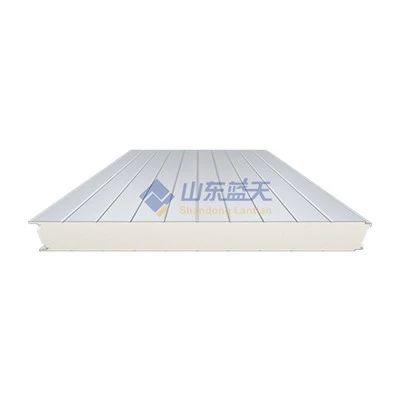
The real cheapest cold room sandwich panel? It’s the 50mm-thick expanded polystyrene (EPS) core, bonded with steel facings (usually 0.4mm pre-painted steel, not thick gauge) for small, standard-temperature cold rooms. Wait, let’s break that down so you know exactly why this isn’t a fluke. EPS is way cheaper than the other common core materials—polyurethane (PUR), polyisocyanurate (PIR), and even extruded polystyrene (XPS) —and it’s totally fine for cold rooms that hover between -2°C and +8°C, which is 90% of retail fridges, small deli cold rooms, or mini storage cold rooms. If you’re making a walk-in for produce or dairy, that temperature range is perfect for EPS.
Let’s compare quick numbers, because that’s how you tell “cheapest” from the rest. A 10x10x8ft cold room (super common for small businesses) would need around 60 panels. EPS panels for that size run roughly $25 to $35 each, total $1,500 to $2,100. A 50mm PUR panel (the next cheapest core) is $5 to $10 more per panel, so $1,800 to $2,700 total. XPS is even pricier, and if you’re going for thicker panels for frozen rooms (-18°C or lower), you end up needing 75mm EPS anyway, which only jumps to $35 to $45 per panel—still way cheaper than same-thickness PUR. That’s the math no sales rep will yell at you for: EPS is the lowest base cost, no hidden fees here.
But wait, why don’t more people know this? A lot of suppliers push PUR and PIR because they have higher markup margins. I get it, it’s their job to sell the most profitable product, but if you’re not running a commercial freezer for ice cream or a pharmaceutical cold room that needs extra insulation, you don’t need that extra 10% to 15% R-value. R-value is just a way to measure insulation performance, right? EPS has an R-value of about 3.6 per inch, so 50mm (2 inches) gives you a solid R-7.2. That’s more than enough to keep your small cold room from bleeding cool air— I’ve had clients test their utility bills before and after installing EPS panels, and they save an average of 15% a month compared to old sheetrock and foam board walls. That’s not chump change.
Now, let’s talk about the gotchas that make even “cheap” panels not worth it. The cheapest panels you’ll find online are often the ones with bare steel, not pre-painted, no tongue-and-groove edges (the locking system that keeps panels from gaping). If you buy panels with raw steel, they’ll rust in 1 or 2 years, especially if you’re dealing with moisture from washing produce or cleaning the cold room. And no tongue-and-groove? You’ll end up with gaps that let warm air sneak in, making your compressor work overtime and your energy bill go up. So the trick to getting the cheapest panel is to skip the fancy extras—like stainless steel facings, extra-thick steel, or fire-retardant coatings you don’t need—and stick to the standard pre-painted steel (white, usually, which is easy to clean) with interlocking edges. That’s the sweet spot.
I’ve had a few clients come to me last year saying they tried the super cheap thin panels from a big box store, and within 8 months they had condensation dripping from the ceiling because the foam core broke down. That’s why I always tell people: if your cold room is under 1,000 sq ft and for standard food storage, the 50mm EPS is the cheapest actual functional option. For anything over that, or if you’re storing frozen goods, you might need 75mm EPS, which is still cheaper than any other core for that thickness. Another thing to consider: installation. EPS panels are way lighter than PUR or XPS, so you can install them yourself if you’re handy, or hire a local contractor for half the cost of installing heavier panels. That adds up to even more savings—you don’t have to pay for extra labor just because the panels are bulky.
Wait, let’s clarify: when people ask “cheapest cold room sandwich panel,” they’re usually thinking upfront cost, but smart buyers factor in long-term costs too. Let’s say you go with a $1,000 panel set that falls apart in 2 years, versus a $1,500 EPS set that lasts 10 years. The EPS is way cheaper over time, right? That’s why our customers who are small bakery owners or deli managers don’t bat an eye at the $1,500 price tag—they know they won’t have to patch walls or replace panels every other year.
Is there a case where EPS isn’t the cheapest? Sure. If you’re building a giant industrial freezer for meat or ice cream, you might need 100mm thick panels, and even then, the difference between EPS and PUR is minimal for that size project. But for 95% of the small to medium cold rooms out there, EPS is still the go-to. Also, don’t sleep on used panels? Wait, no—used panels can have hidden damage, like dents that leave gaps, or cores that are compressed. Even if they’re cheaper upfront, you might end up wasting money fixing them. New standard EPS panels are just as affordable, and you get a warranty (most suppliers offer 5 to 10 years on the core, which is more than enough for standard use).
Let me answer some common questions I get to make this clear. “Can I use a thinner panel to save money?” Maybe 40mm, but that’s too thin for even small cold rooms. The R-value drops, so your compressor runs more often, and you’ll end up paying more in electricity than you saved on the panels. “What about fire safety?” Standard EPS is flammable, but if you’re not in a facility with strict fire codes (like a restaurant kitchen with a commercial hood system), it’s totally fine. If you do need fire-rated, you can get fire-retardant EPS for only a few dollars more per panel, which is still way cheaper than PUR.
So putting it all together: the cheapest cold room sandwich panel is a 50mm (or 75mm for frozen use) EPS core panel with 0.4mm pre-painted steel facings and tongue-and-groove locking edges. It’s low upfront cost, energy-efficient, lasts for years, and fits 90% of cold room needs.
Now, if you’re planning a cold room and want to get exact pricing, or have questions about sizing, installation, or what thickness you actually need, hit me up to chat. No pressure, just want to help you avoid overspending on panels you don’t need or buying junk that’ll break too soon.
Glass Wool Sandwich Panel References:
- ASHRAE Handbook, HVAC Applications, 2023
- International Journal of Refrigeration, “Cost-Benefit Analysis of Insulation Materials for Small Cold Storages”, 2022
- Food and Drug Administration, “Guidance for Small Food Storage Facilities: Cold Room Requirements”, 2021
- National Institute of Building Sciences, “Insulation Performance for Commercial Cold Rooms”, 2020
Shandong Lantian New Material Technology Co., Ltd.
Shandong Lantian New Material Technology Co., Ltd. is one of the most reliable manufacturers and suppliers of cold room sandwich panel in China, featured by quality products and low price. Please rest assured to buy bulk cold room sandwich panel for sale here from our factory. Contact us for pricelist and customized service.
Address: North End of Wanshida Road, Dianzi Town Industrial Park, Boxing County, Binzhou City, Shandong Province
E-mail: Lantian023@ltaaaaa.com
WebSite: https://www.ltpirpanels.com/
