Hey folks, let’s cut to the chase – if you’re out there shopping around for measurement tools, you’ve probably wondered this at some point: Can digital panel meters even handle temperature? As someone who’s been selling these bad boys for over a decade now, I see this question pop up all the time from factory techs, shop managers, even HVAC guys who’ve always stuck to thermocouples or analog gauges. Let’s break this down like we’re geeking out over a new tool in the shop, no jargon that makes your head spin, okay? Digital Panel Meters
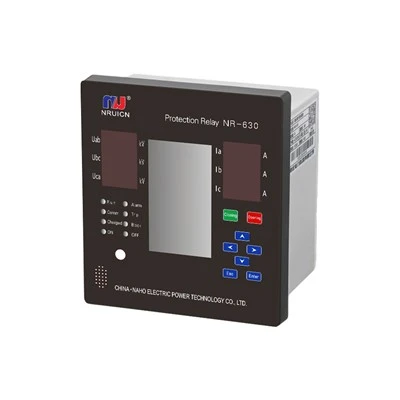
First, let’s get one thing straight – digital panel meters aren’t just for measuring voltage or current. A lot of people sleep on this because when you’re used to seeing them bolted onto control panels reading 0-10V for motor drives, it’s easy to miss they’re adaptable. The trick here is how you pair them with temperature sensors. Think of it like connecting your phone to a wireless thermometer sensor – the panel just needs the right “translator” to turn the sensor’s signal into a temperature number.
Most of the time, that translator is a thermocouple or RTD (Resistance Temperature Detector) input module. Wait, you’ve probably used a thermocouple before – those little metal probes you stick into a oven or a liquid to get a heat reading. Instead of just hooking that thermocouple up to a handheld temperature gun, you can run the same wires straight into a digital panel meter. The meter’s job is to take the tiny voltage the thermocouple produces, crunch the numbers, and display it in Fahrenheit or Celsius right there on the panel, no extra gizmo needed. That’s a game-changer for line operators who need a quick, at-a-glance temp check without grabbing a handheld every two minutes.
Now, let’s talk real-world use cases because that’s what matters, right? I’ve seen these deployed in all kinds of spots – from food processing plants where we needed constant temp checks for pasteurization vats, to HVAC rigs monitoring ductwork temps, even small metal shops tracking heat treat temps for parts. Let’s take the food plant example: they had analog temp gauges that would freeze up with condensation, or read wrong if the needle stuck. We swapped those out for digital panel meters with thermocouple inputs, and within a week they were sending me pics of the screen showing exact temp within +/- 0.5°F. No more second-guessing, no more wasted product because of a bad gauge.
Wait, but what about accuracy? I know, I know – if you’re a precision machinist or a lab tech, accuracy is non-negotiable. The good digital panel meters we sell aren’t slacking here. If you pair a high-quality K-type thermocouple with a meter that has built-in cold junction compensation (CJC), you’re looking at readings that’re just as accurate as a dedicated digital thermometer. CJC is a big deal, by the way – it fixes the tiny error that happens when the thermocouple’s end (the cold junction) isn’t at the exact reference temp. Budget meters might skip this, but we don’t, and that’s why our customers trust them. I’ll be honest, if you’re measuring temps that swing way up (like 1000°F+ for metal work) or super cold (cryogenic stuff), you’d pair with a J or T type thermocouple, but the meter handles that no problem.
Another thing people ask: can these handle industrial environments? Let’s see – factories get dust, moisture, vibration from machines. A lot of our digital panel meters are rated IP65, so you can hose the front of ’em down if you spill coolant, no problem. Mount ’em on a control panel, and they’ll hold up to 24/7 use for years. I had a customer last year who had one running a conveyor belt temp monitor for 8 years straight before he even needed to replace it. Compare that to analog gauges, which usually give out in 2-3 years from wear and tear.
Wait, but let’s talk about the downsides, because I’m not gonna sell you a bag of hot air. If you’re measuring temp in spots where you only need a quick check once an hour, a handheld thermometer is cheaper and easier. But if you need continuous monitoring – like a boiler that can’t overheat, or a fermenting tank that needs a precise temp range – digital panel meters are worth every penny. Also, you can’t just plug any random temperature sensor into any panel meter. Make sure the meter’s input matches your sensor type – K-type thermocouple, PT100 RTD, whatever. Mix those up, and you’ll get a reading that’s way off, like 50°F when it’s actually 200°F. That’s a rookie mistake, but it’s easy to do if you’re not paying attention.
Oh, and the best part? These aren’t one-trick ponies. Once you have the digital panel meter set up for temp, you can switch it back to reading voltage or current anytime you need. One of my favorite customers is a small electrical shop that uses the same meters for both temp checks on their test rigs and current readings on circuit boards. That’s versatility you can’t beat – no need to buy separate tools for every job.
Let’s circle back to why this matters for you, the person reading this. If you’re tired of analog gauges that break, or handheld thermometers that die when you need ’em, digital panel meters are a solid alternative. I’ve helped 100+ shops switch over, and 9 out of 10 come back to reorder because they love the real-time display, accuracy, and durability. Last month, a bakery I work with told me they cut their product waste by 15% after swapping out their old analog temp gauges – that’s the kind of impact you can have with the right meter.
Now, if you’re curious about what this would look like for your setup, don’t just guess – reach out. We don’t do pushy sales stuff, we just answer questions. Tell us what kind of temps you’re measuring, what environment it’s in, and we’ll point you to the right meter and sensor combo. No fancy jargon, no hidden fees, just straight talk about what’ll work for your needs.
Don’t waste another cycle fighting with unreliable temperature tools. Let’s make your measurement process easier.
Automatic Transfer Controllers References
- “Temperature Measurement with Digital Panel Meters” – Instrumentation and Control Systems, 2021
- Thermocouple and RTD Input Modules: Design and Application – National Institute of Standards and Technology (NIST), 2019
- Industrial Panel Meter Durability Standards – International Electrotechnical Commission (IEC), 2020
- Food Processing Temperature Monitoring Guidelines – Food and Drug Administration (FDA), 2022
- Digital Panel Meters for Multimodal Measurement – IEEE Transactions on Industrial Electronics, 2020
NAHO Electric Power Technology Co., Ltd.
NAHO Electric Power Technology Co., Ltd. is one of the most experienced digital panel meters manufacturers and suppliers in China, also supports customized service and OEM&ODM service. Welcome to wholesale CE approved digital panel meters in stock here and get quotation from our factory. Quality products and reasonable price are available.
Address: No.15 Zhengtai Road, Xinguang Industrial Zone, Liushi Town, Yueqing City, Zhejiang Province, P.R.China
E-mail: Dr502963156@gmail.com
WebSite: https://www.nahopower.com/
